
Come late winter into spring, with March being the peak season, Southern California transforms into a canvas painted with vibrant hues of wildflowers. The phenomenon known as the “superbloom” is a natural spectacle that blankets the landscape in myriad colors, attracting visitors from all corners of the globe. From desolate deserts to coastal cliffs, the California Superbloom offers a variety of locations to witness this annual floral extravaganza.
This year, in 2024, it is looking like Southern California will once again experience a superbloom. What is a “superbloom,” you ask?
A superbloom is a rare desert botanical phenomenon that occurs in California and Arizona when an unusually high proportion of wildflowers whose seeds have been dormant in desert soil bloom at roughly the same time. This is typically a result of an unusually wet rainy season. And California has certainly seen that in the last few months.
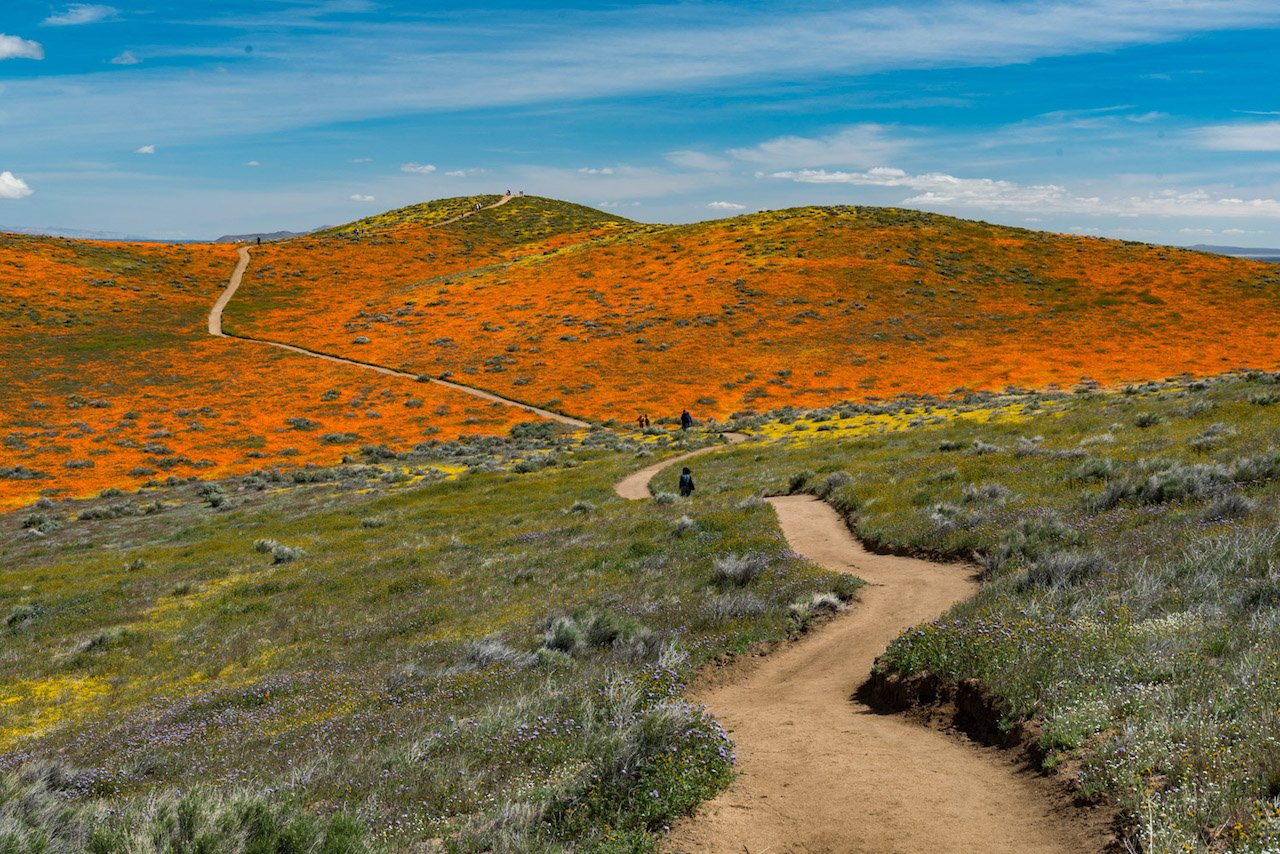
Over the years, this term has gained popularity amongst social media influencers and travelers vying for a look at the vibrant, beautiful flowers that blanket the California hillsides during these rare occurrences.
Super Spectacular or Super Bust?
Because of its overwhelming popularity, I was hesitant to check it out a few years back, in 2019, when I visited my sister, who was living in L.A. at the time. But as I always say, there is a reason destinations are so popular, so why not go see what all the fuss is about? So, if you are wondering whether the California superbloom is super spectacular or a super bust, then this blog is for you.
I 100% would recommend experiencing the California superbloom at least once in your life if you have the chance. I cannot even begin to describe how spectacular it was to see hillsides covered in orange and red California poppies.
And while, yes, there were a TON of people there, some who clearly couldn’t adhere to the signs that said do not walk on the flowers, it is still worth it to add to your travel bucket list. Plus, there are ways to ensure you experience it with as little environmental impact as possible.
- Stay on official trails only
- Leave no trace – a.k.a. Pick up your trash
- Don’t bring your dogs
- Don’t pick the wildflowers (duh!)
Where to see California wildflowers during the superbloom
Antelope Valley California Poppy Reserve
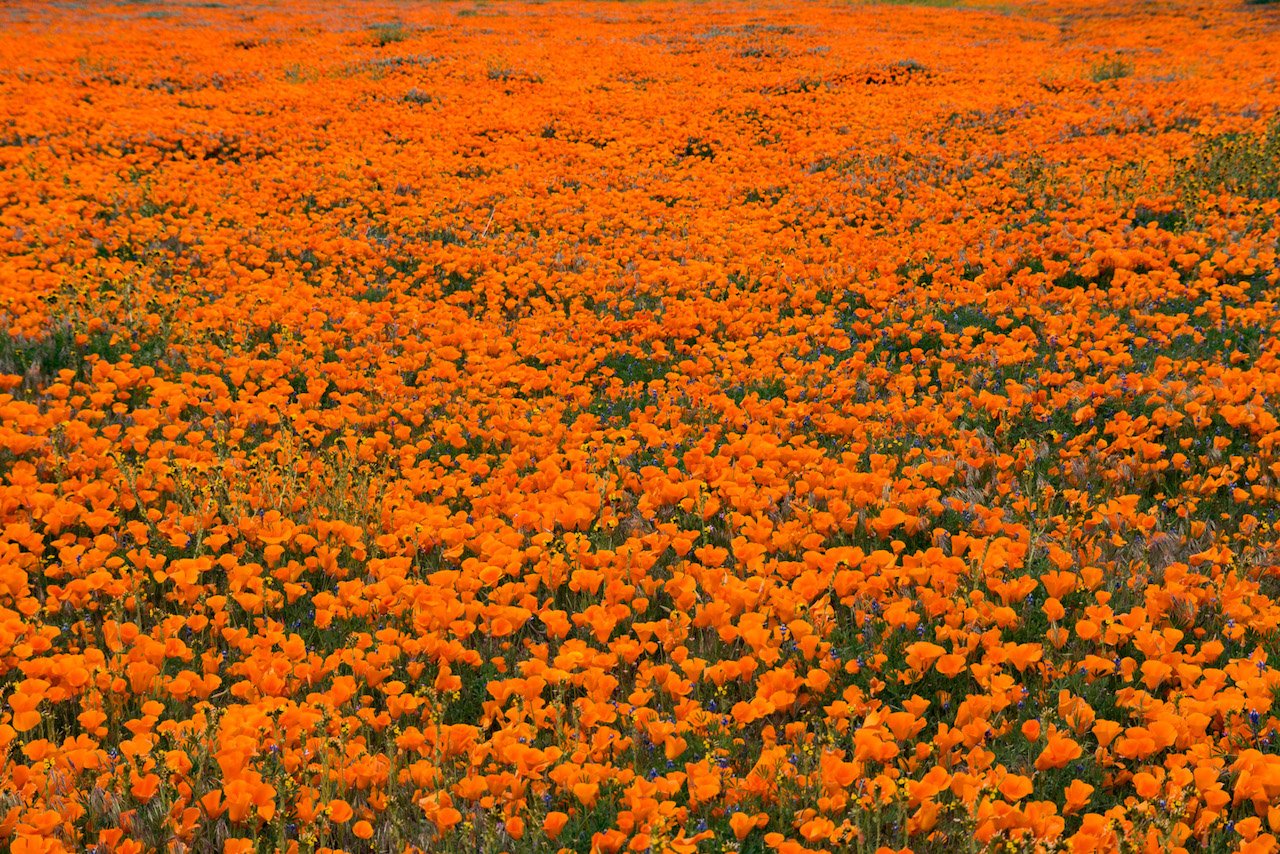
The most popular place to see the California superbloom is at the Antelope Valley California Poppy Reserve. Located along the edges of the Mojave Desert, the Antelope Valley is the most renowned destination to witness the super bloom. Each spring, the rolling hills come alive with the vibrant orange and blossoms of California poppies, creating a breathtaking vista that stretches as far as the eye can see.
Eight miles of trails meander through the reserve, offering visitors the opportunity to immerse themselves in the sea of flowers and capture stunning photographs against the desert backdrop. The season typically begins as early as mid-February and lasts through May.
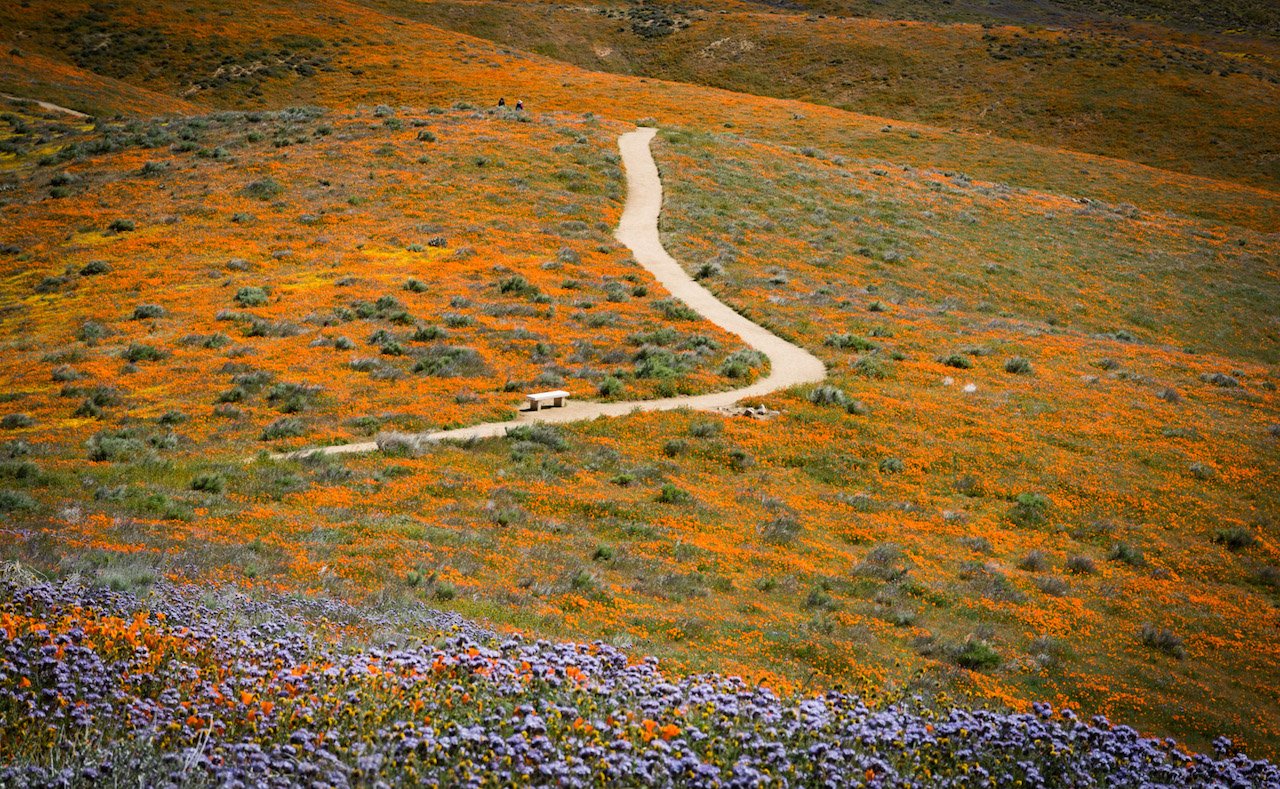
One thing I distinctly remember was the strong winds we experienced. I even saw their website’s advice about the winds. So, I would be prepared with some sort of wind jacket and a hat with a strap.
Anza-Borrego Desert State Park
Tucked away in the Colorado Desert, Anza-Borrego Desert State Park boasts an impressive array of desert wildflowers that burst into bloom during the spring months. From brilliant desert sunflowers to delicate lupines, the park showcases nature’s resilience in the face of harsh conditions.
As the largest state park in the contiguous U.S., it spans over 600,000 acres and consists of 500 miles of dirt roads and many miles of hiking trails. Visitors can explore the park’s extensive network of hiking trails, which lead to hidden oases, rugged canyons, and panoramic viewpoints overlooking the vast desert and its blooming population of wildflowers.
Because this park is so large, I joined one of the many Anza-Borrego Facebook groups to get tips on where certain blooms were occurring within the park, when peak season was, etc. Since I don’t live in California, I found it helpful when planning my trip out there.
Walker Canyon
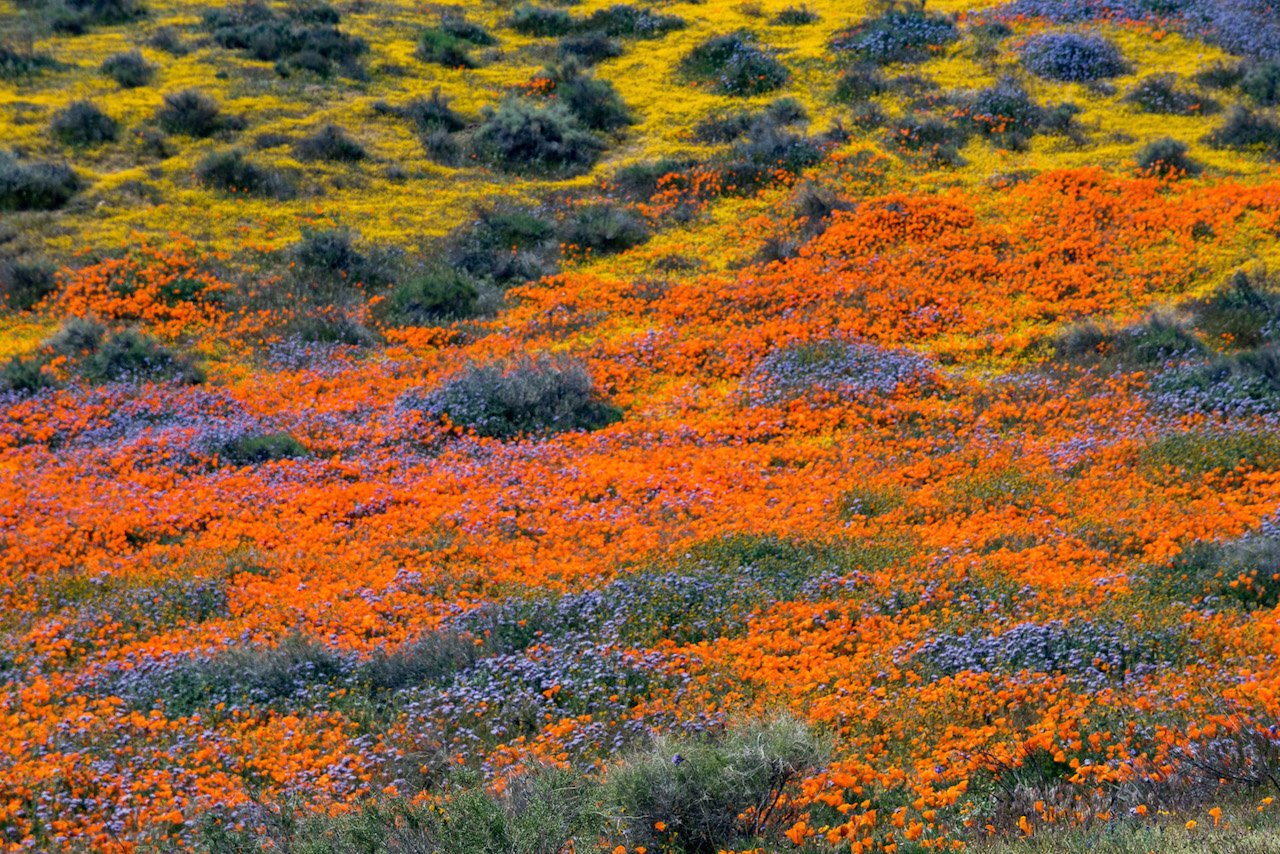
Nestled in the foothills of the Santa Ana Mountains, Walker Canyon has gained fame in recent years for its stunning displays of California poppies during the superbloom. While the canyon can get crowded during peak bloom periods, early-morning visits offer a chance to enjoy the spectacle in relative solitude and to witness the interplay of light and color as the sun rises.
Chino Hills State Park
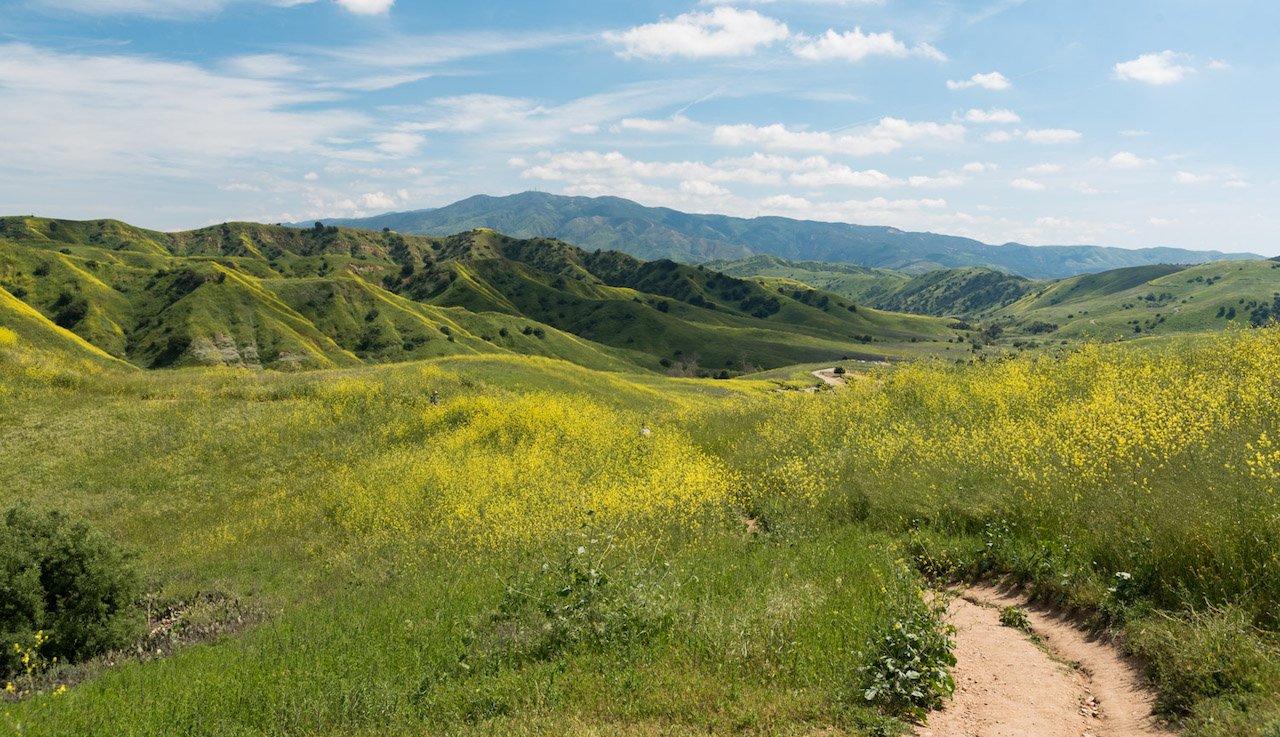
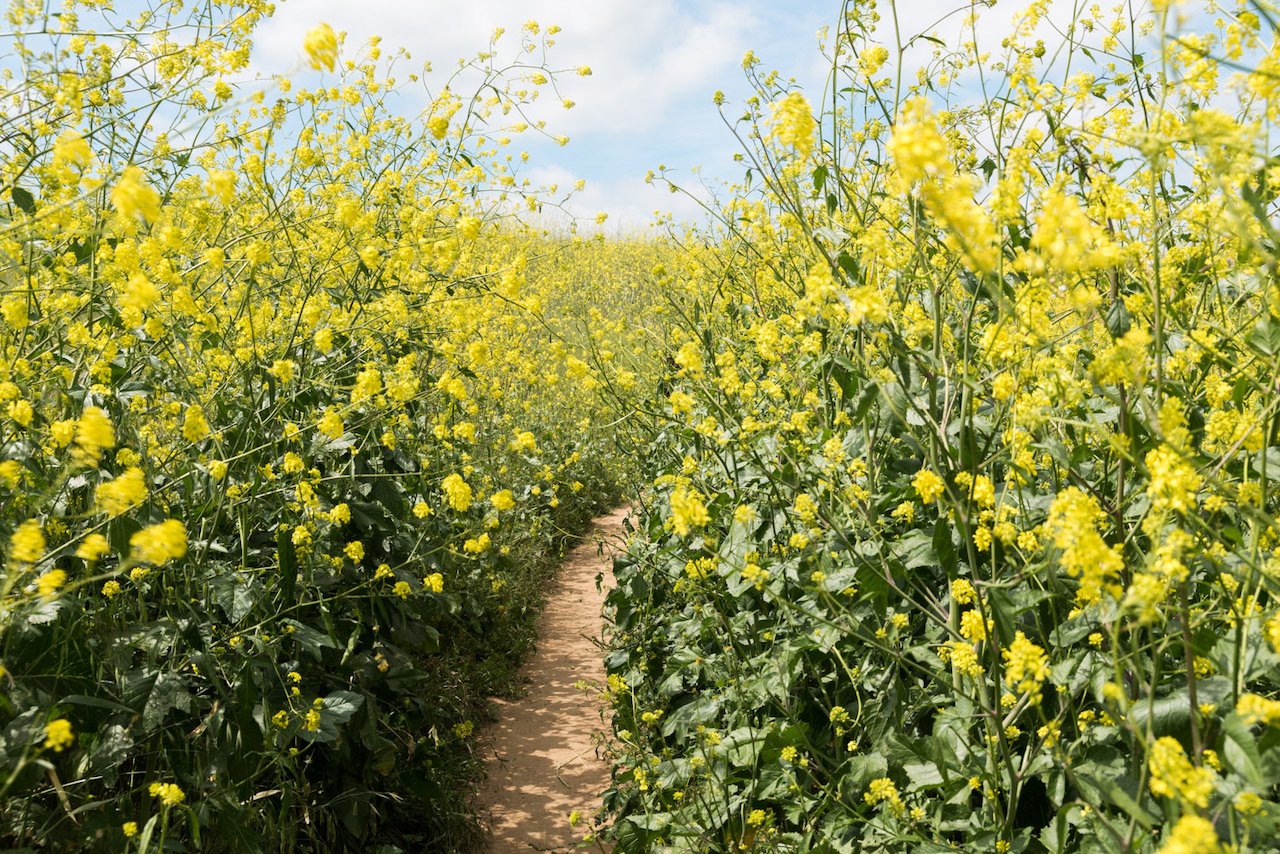
I wouldn’t say Chino Hills State Park is the MOST popular place to view the California superbloom, but I found it a nice break from the massive crowds while still seeing beautiful blooms. It’s best known for its solid hills of California orange poppies, lupines, and the yellowing mustard flowers.
Aliso Canyon is a great trail to start with, and other popular trails include Bane Ridge Trail, Bovinian Delight Trail, Telegraph Canyon Trail, and Little Canyon Loop, which is the trail we took. And since this park is only a 30-minute drive from Walker Canyon, these two are great paired together during your wildflower hunt.
Carrizo Plain National Monument
If you are willing to venture off the beaten path, the more remote Carrizo Plain National Monument offers an unspoiled setting to experience the California superbloom. Situated in the heart of California’s Central Valley, the plain explodes with a kaleidoscope of wildflowers, including tidy tips, goldfields, and owl’s clover. The monument’s vast open spaces and pristine natural beauty make it one of the best places for viewing. The large enclosed grassland plain spans approximately 50 miles in length and up to 15 miles across in southeastern San Luis Obispo County.
Joshua Tree National Park
While Joshua Tree National Park is best known for its iconic Joshua trees. The park also boasts an impressive diversity of wildflowers that bloom in the spring. From the fiery red blossoms of the ocotillo to the delicate blooms of the desert dandelion, the park’s floral tapestry adds a splash of color to the stark desert landscape. Explore the park’s extensive trail system, which winds through rugged canyons, towering rock formations, and expansive desert plains, offering glimpses of the diverse flora and fauna that call this desert oasis home.
*all images were taken by Jessica Hughes and are subject to copyright.