Your guide to Southwest Montana
From sacred hot springs and historic mining towns to ghost stories and scenic mountain landscapes, this Southwest Montana road trip explores one of the West’s most overlooked regions—where history, healing waters, and small-town charm still thrive.
Sacred Soaks, Spirits, and a Bit of Soul: A Road Trip Through Southwest Montana
Photographs and Words by:
Southwest Montana
Few places in America still feel as wild and untamed as the West once did. But in Southwest Montana, rugged mountain ranges still rise above broad valleys as rivers carve through open landscapes and endless skies stretch beyond the horizon. Unlike many of the West’s most famous destinations, this corner of Montana has largely escaped the crowds, inflated prices, and packed itineraries that have become part of modern travel. What remains is something even more rare: a place with much to see and plenty of room to roam in between.
Tucked between Yellowstone and Glacier National Parks and overshadowed by gateway cities like Bozeman and Missoula, Southwest Montana is often treated as the space in between. But those who hurry through miss one of the state’s greatest treasures. Here, ghost towns cling to the hillsides, historic mining communities preserve stories of boom-and-bust fortunes, and natural hot springs bubble up from beneath the earth as they have for centuries.
Southwest Montana is a place where the land and its people tell a shared story. Indigenous tribes once gathered at the region’s sacred hot springs, using them for healing and as neutral ground for diplomacy. Later came miners, ranchers, railroad workers, and dreamers, all drawn by the promise of a better life beneath Montana’s big sky. Today, the region remains a tapestry of historic towns, underground mines, healing waters, and an enduring spirit that lives on with every story told, making this classic American road trip worth sinking your boots into.
Butte, Montana
“Butte was mercurial…The wicked, wealthy, hospitable, full-blooded little city welcomed me with wild enthusiasm of the most disorderly kind.” – Theodore Roosevelt
This quote greeted me as I laid my luggage on the bed of my hotel room at the Miner’s Hotel in downtown Butte, Montana. A somewhat “tame” description of the historic mining town that was known not only for its rich mining history but also for earning its infamous name as the “town of ill repute” in the late 1800s and into the 20th century. The hilltop town drew a massive population of miners hoping to strike it rich in the area’s copper mines, so much so that it developed a lineup of saloons, brothels, and gambling halls, making it one of the most notorious cities in the American West.
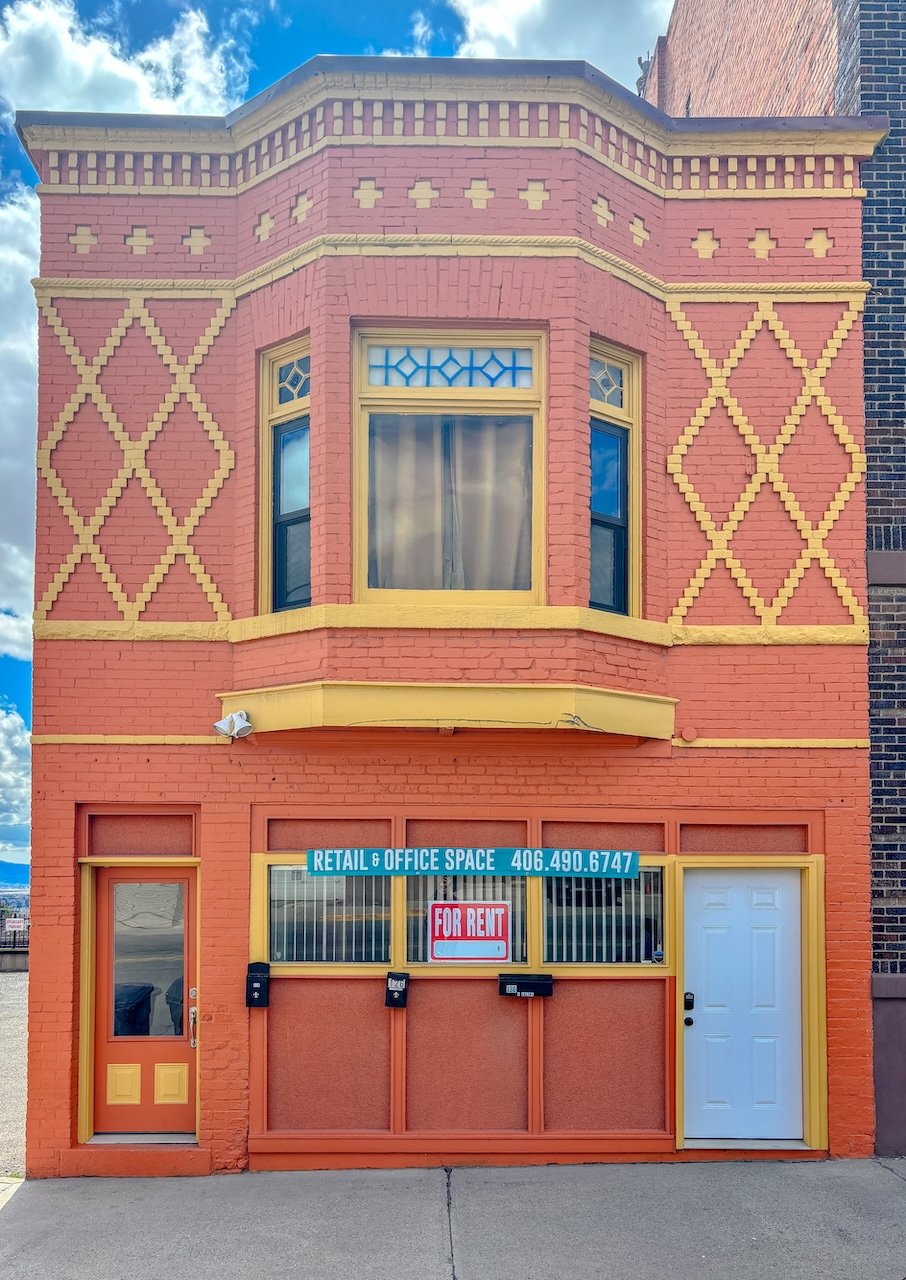
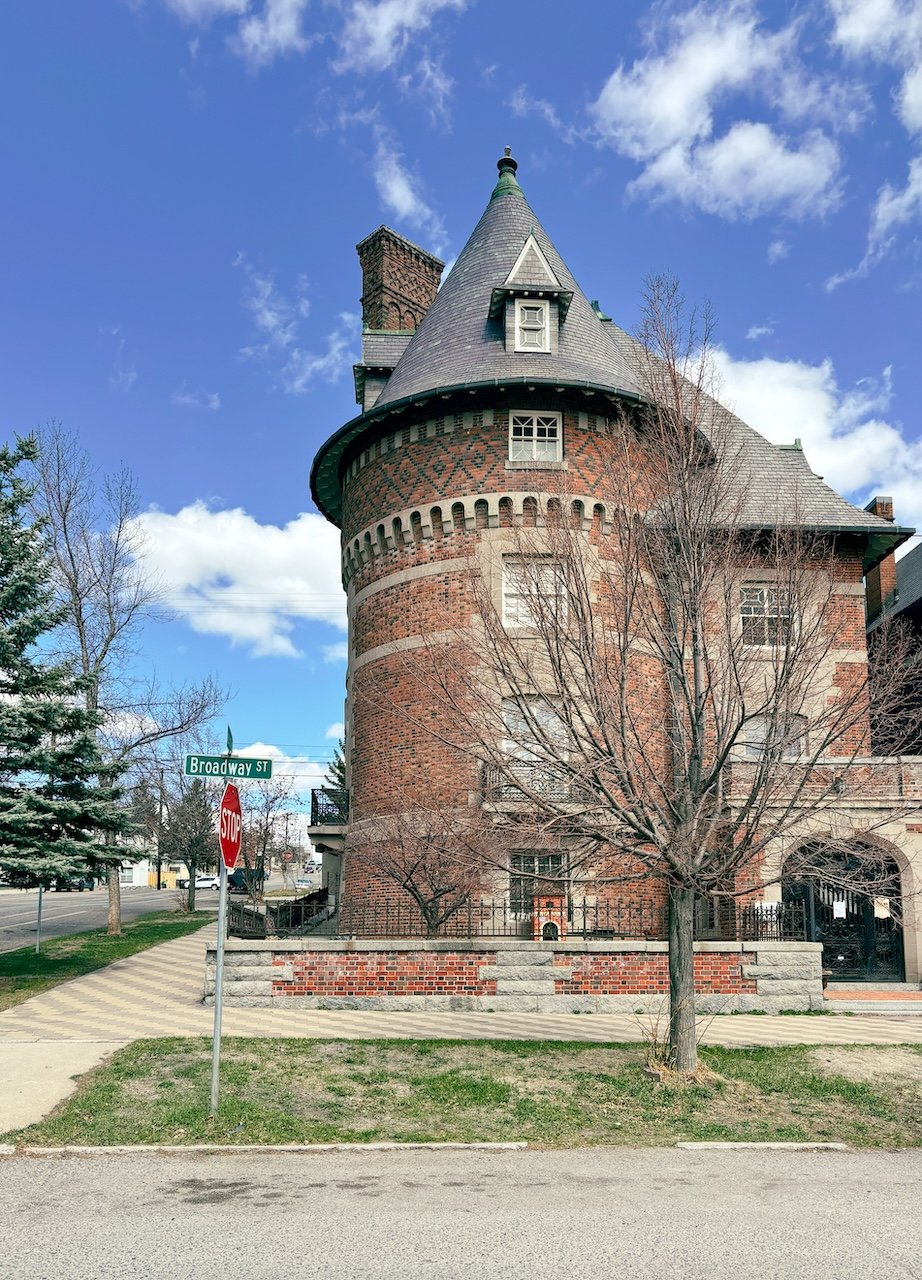
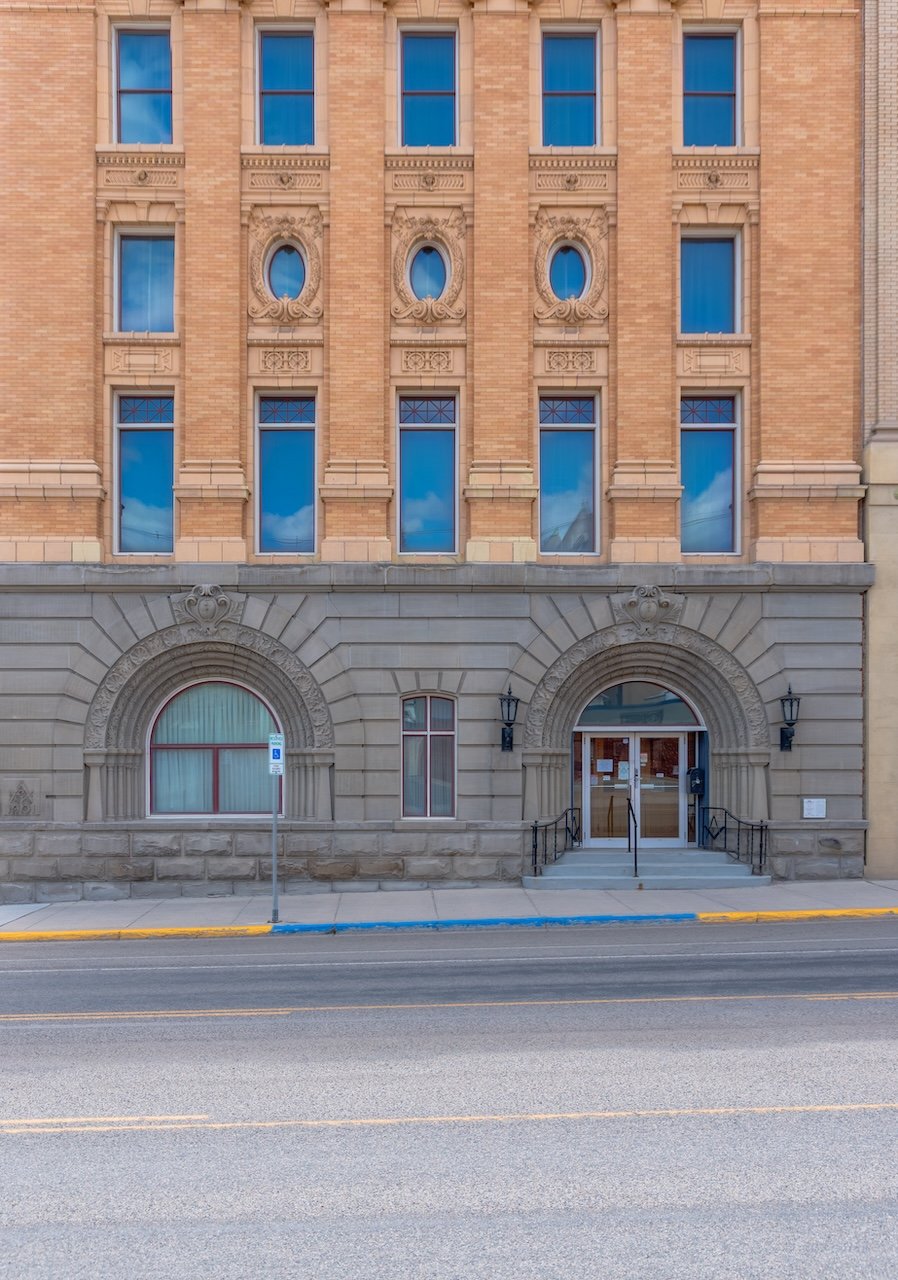
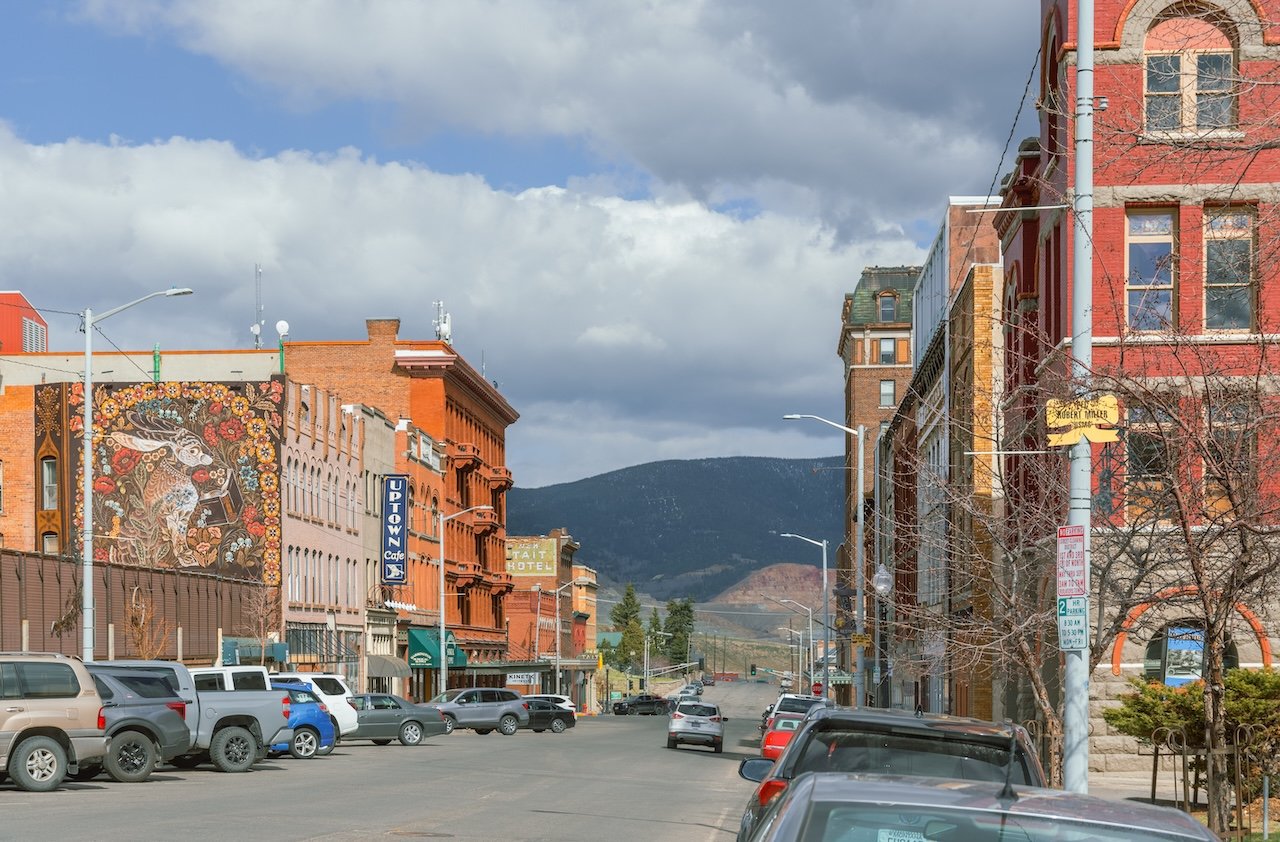
I spent hours with my camera in hand, walking the downtown streets, rich with the history of what was once the richest mining town in the late 1800s. Once known as “The Richest Hill on Earth,” Butte, Montana, was built on mining claims and the resilient spirit of those who came to strike it rich. In fact, it grew so large that it was a state before it became a city in Montana, and for a while was called “Butte, America.” As the biggest and richest mining town in the late 1800s, the city’s wealth sprang up along its hilly streets with lavish Victorian mansions and buildings, many of which still stand today, making the town itself a national historic district. The Butte-Anaconda Historic District contains nearly 6,000 historic properties, making it one of the nation’s largest historic districts.
Do: The Spooks and Spirits Tour. At night, really, the only thing alive and kicking is the ghostly haunts on the Spooks and Spirits Tour with owner Chris Fisk. A lifelong ghost hunter, Fisk appeared on Travel Channel’s Ghosts of Devil’s Perch, leading a team of paranormal investigators, so I knew we were in good hands.
Butte’s infamous red-light district once housed hundreds of saloons, open gambling, and legendary brothels, earning its claim as “the most wide open town in the wide open west.” When miners struck gold, gamblers, prostitutes, and saloons soon followed. Its red-light district once supported as many as a thousand women who worked in the city’s brothels.
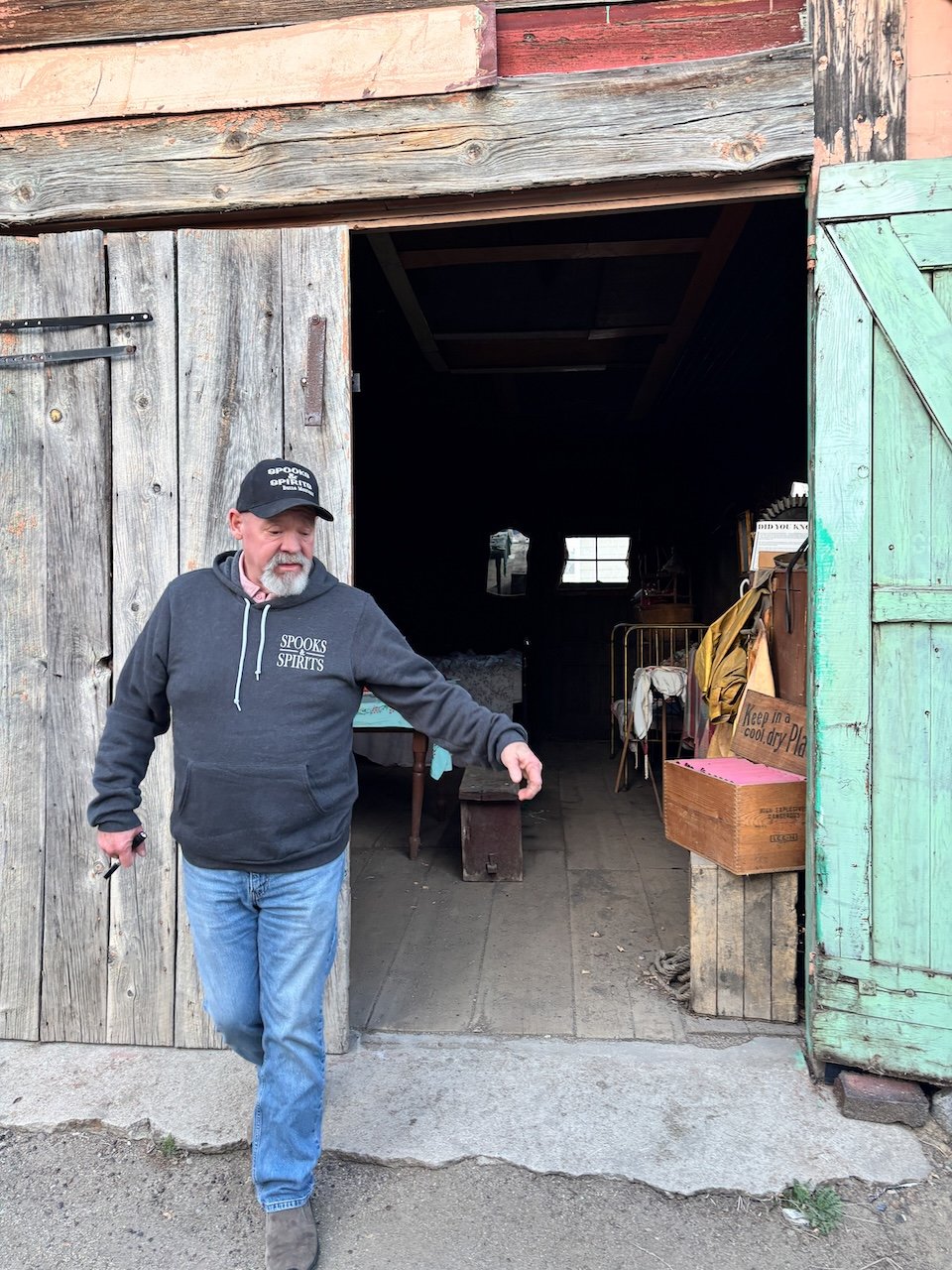
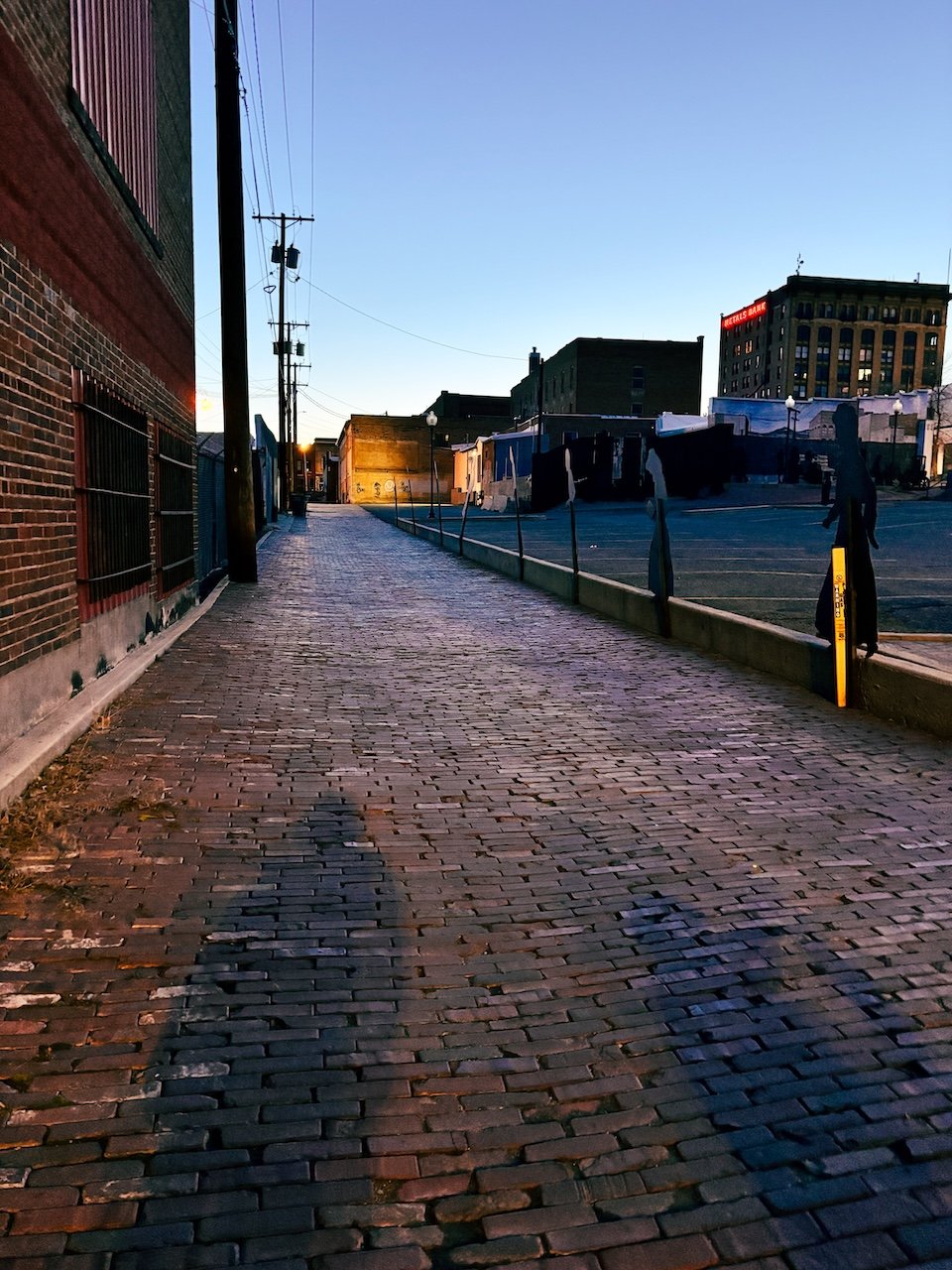
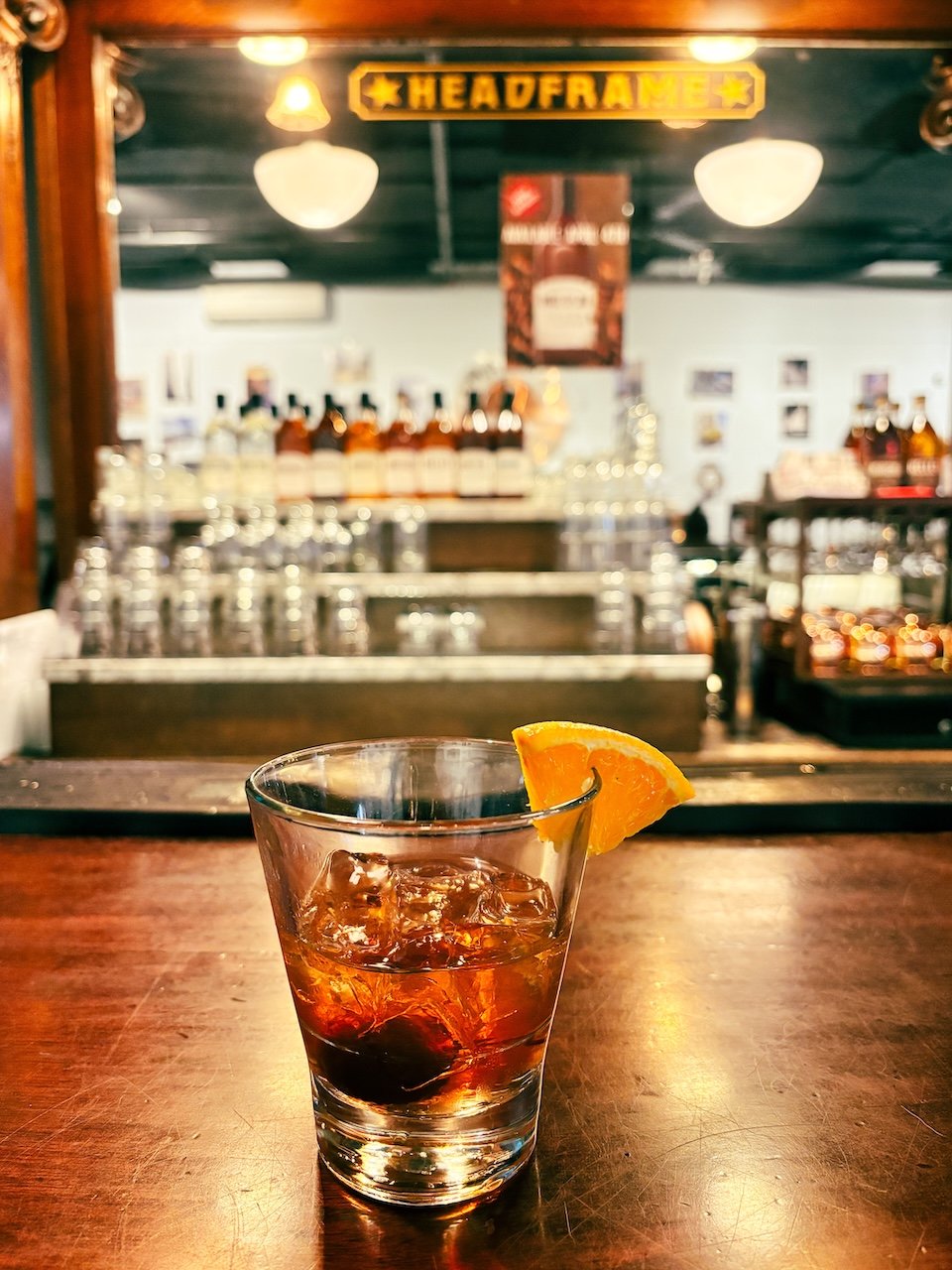
Our tour kicked off with a drink at Headframe Spirits (Butte’s first legal distillery) to lift our spirits before we headed out to encounter the ghosts of Butte’s haunted past. Tony Hoffman, a lifelong Butte resident, history teacher, and owner of Headframe Spirits, shared historical insight into what the brothel was like when it operated. The main character and source of his stories was the legend herself: Ruby Garrett—the last madam of the country’s largest house of ill repute.
We visited the town’s most infamous brothel. Located along Venus Alley in the heart of Butte’s red-light district, where most brothels operated, the Dumas Brothel operated from 1890 until 1982!
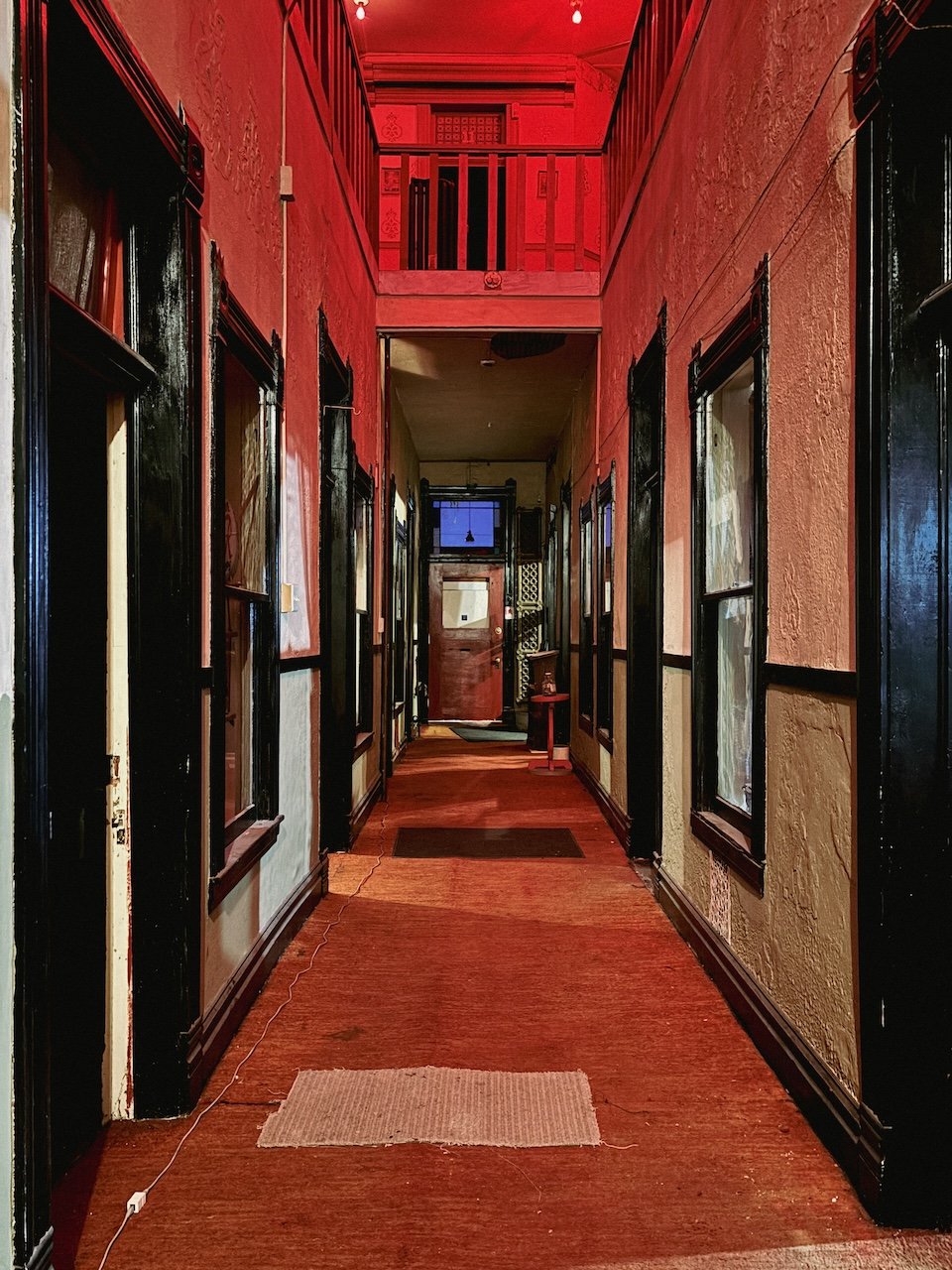
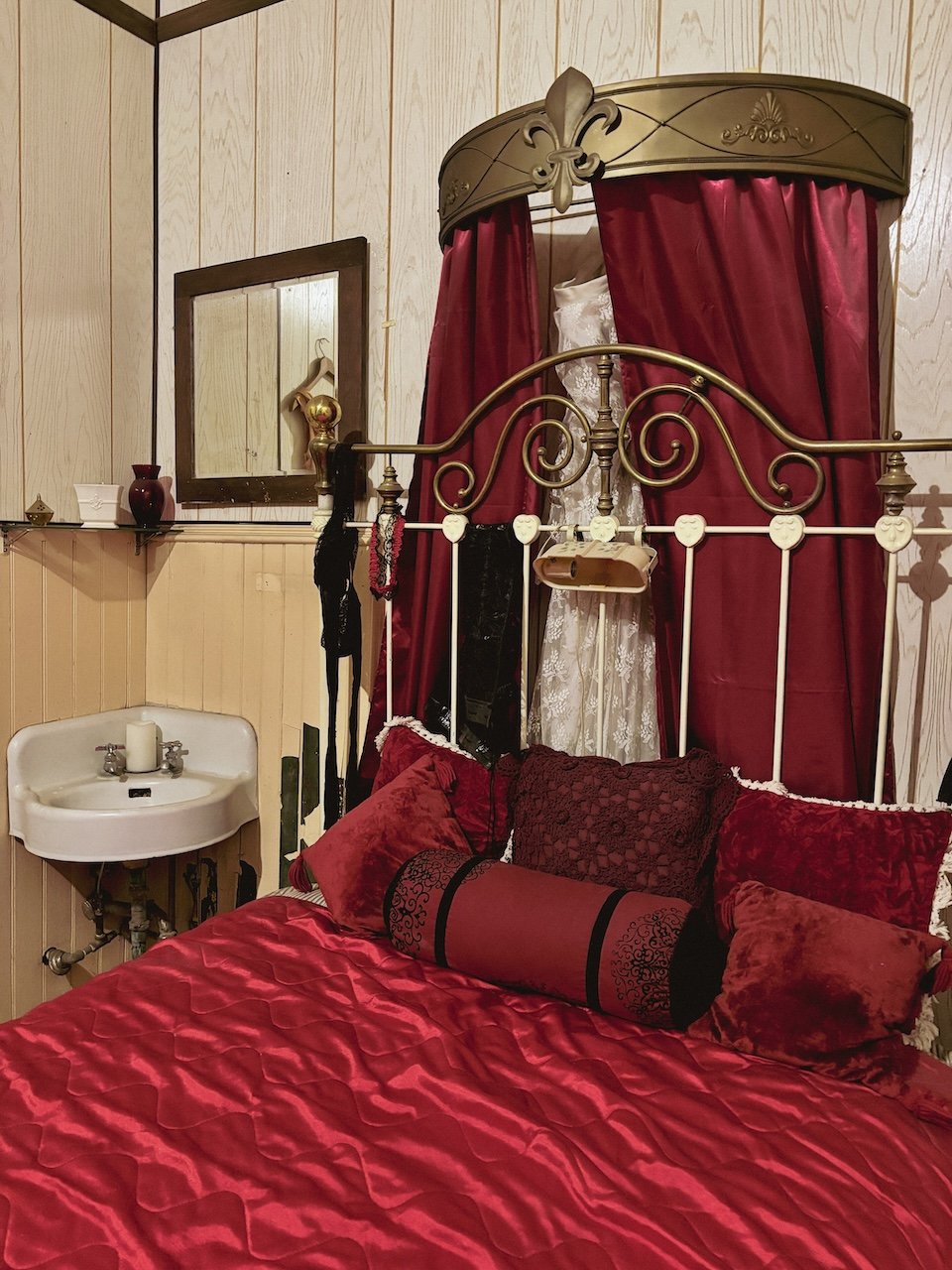
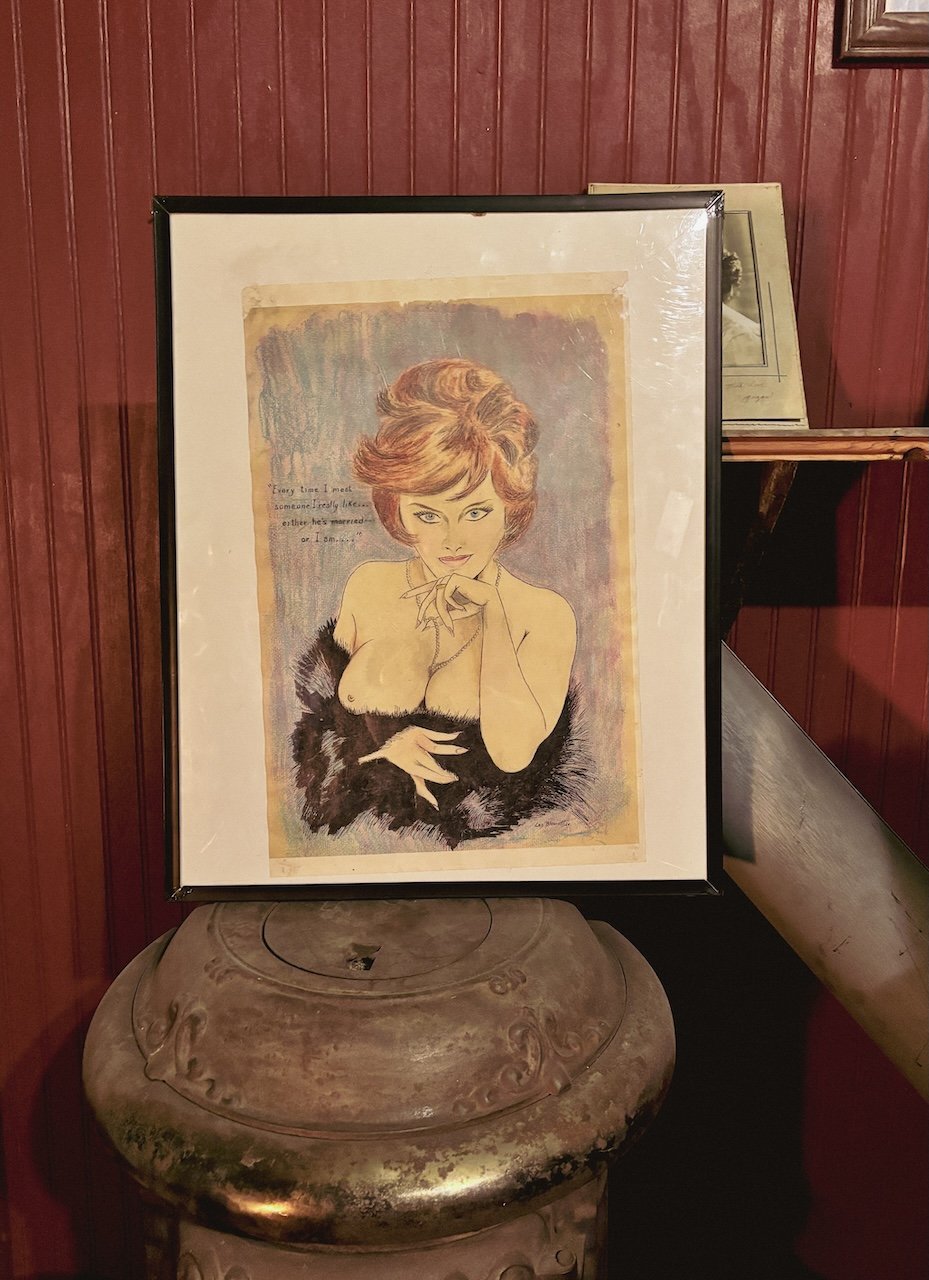
Inside, the scene is rough: slanted ceilings and floors barely hold on, broken windows are shuttered, and ragged beds still cry out with stories to tell. We walked through the red-lit halls, summoning ghosts using EMF meters and red-light sensors. I won’t reveal what I saw; you’ll have to see for yourself.
World Museum of Mining
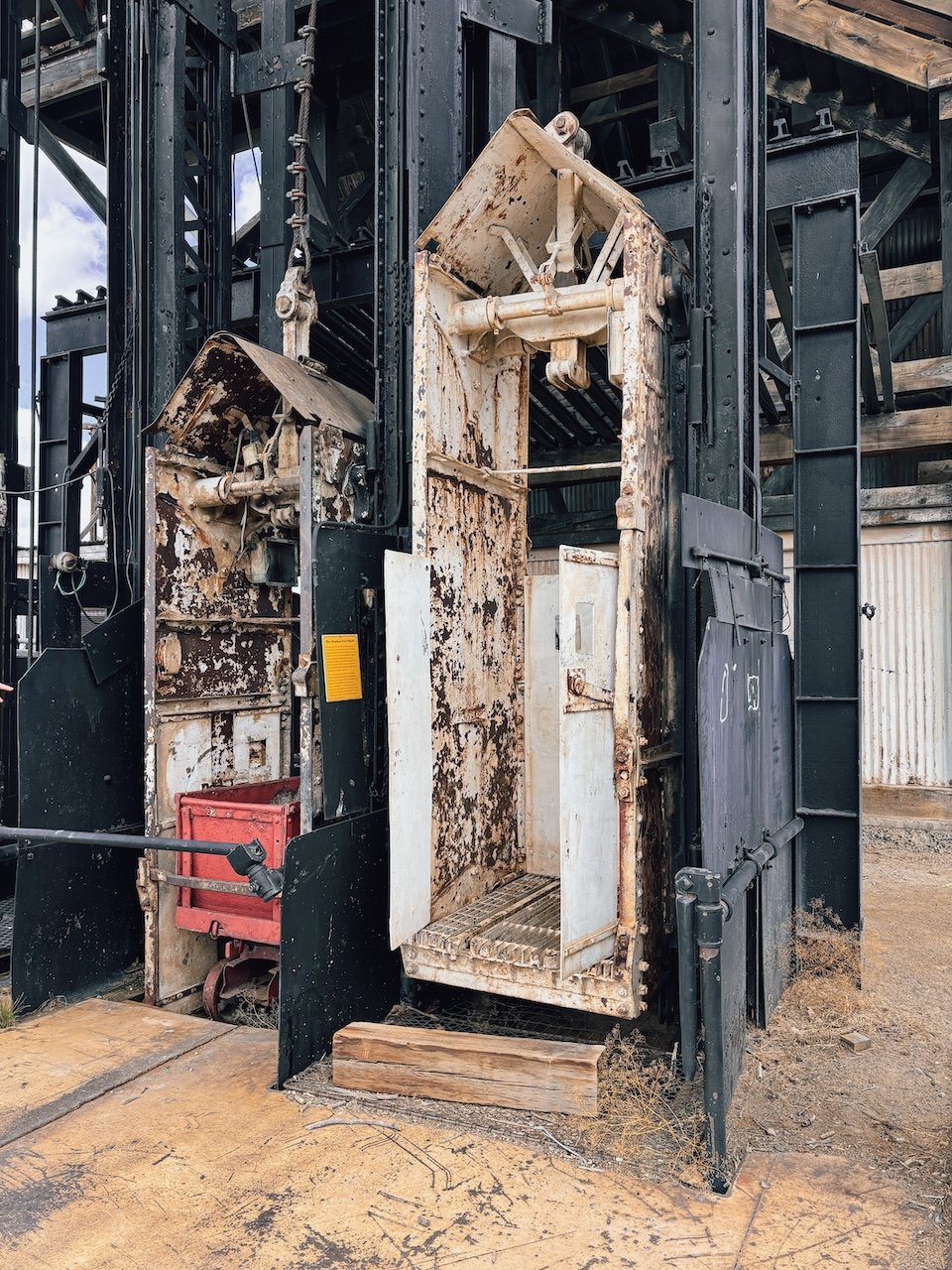
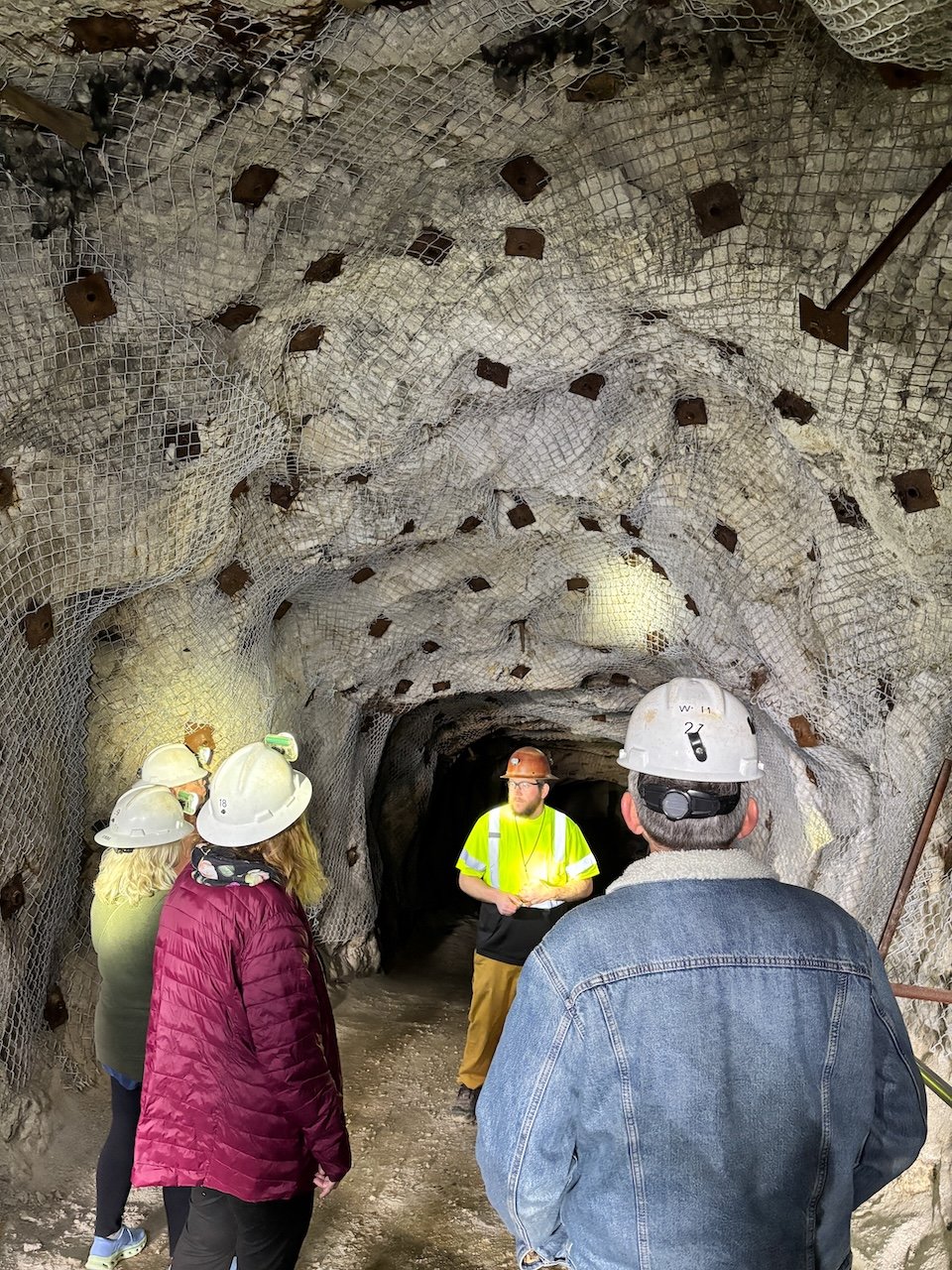
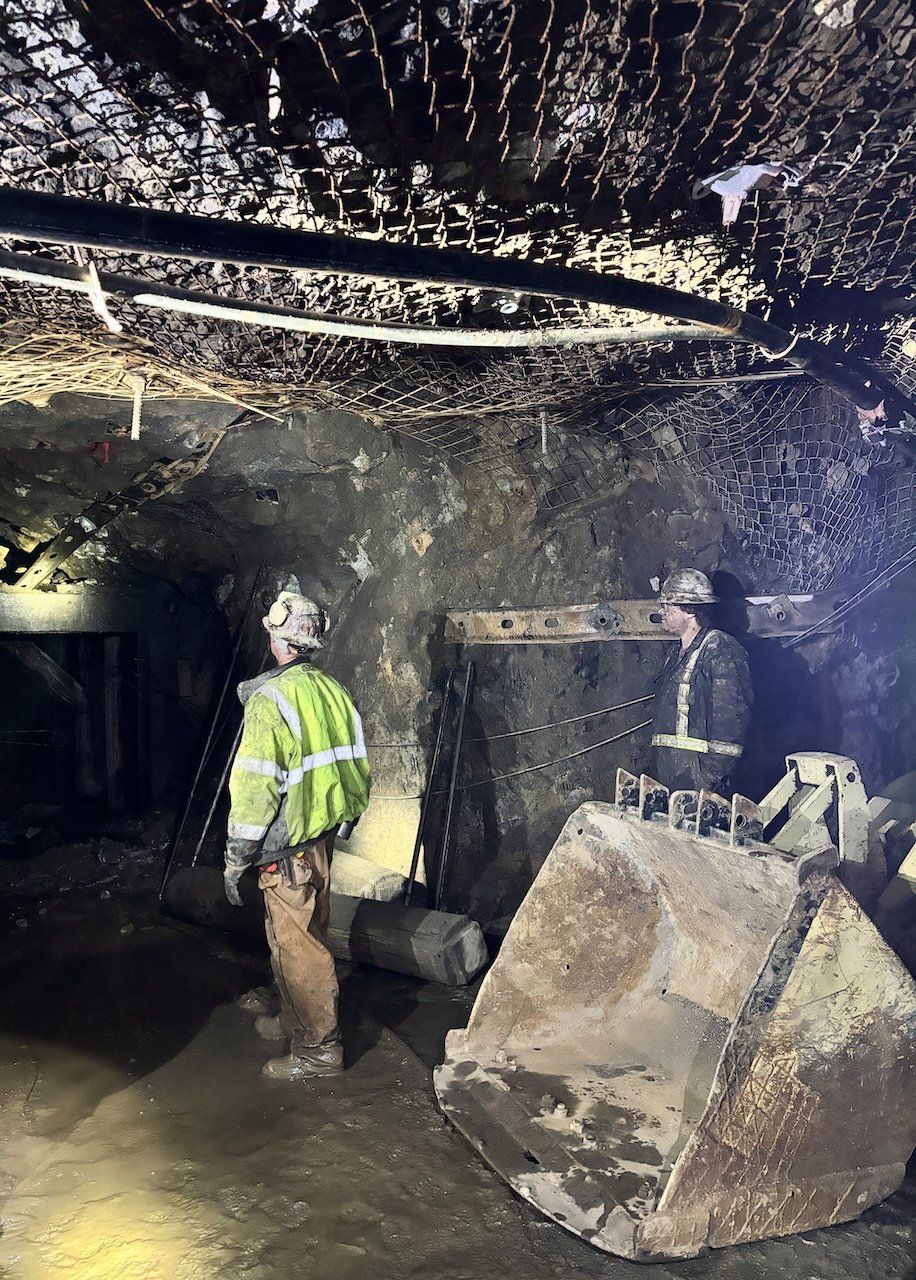
Worth the stop: See why Butte earned the nickname ‘richest hill on Earth’ on a tour of the Orphan Girl Mine at the World Museum of Mining. During this roughly one-hour tour, we explored the historic silver mine’s operations above and below ground. Equipped with hard hats and headlamps, it was hard to imagine miners working underground with only a candle flicker to guide them.
Between Butte and Helena: Places worth the stop
Ringing Rocks
What may look like an ordinary pile of rocks is actually the stage for one of Mother Nature’s most unique musical performances (with a little help from swinging hammers). Ringing Rocks is a large outcropping of igneous boulders that seem to ‘sing’ in bell-like tones when struck. The ringing is believed to come from the rock’s composition and the joining patterns that have developed over time as the rocks erode.
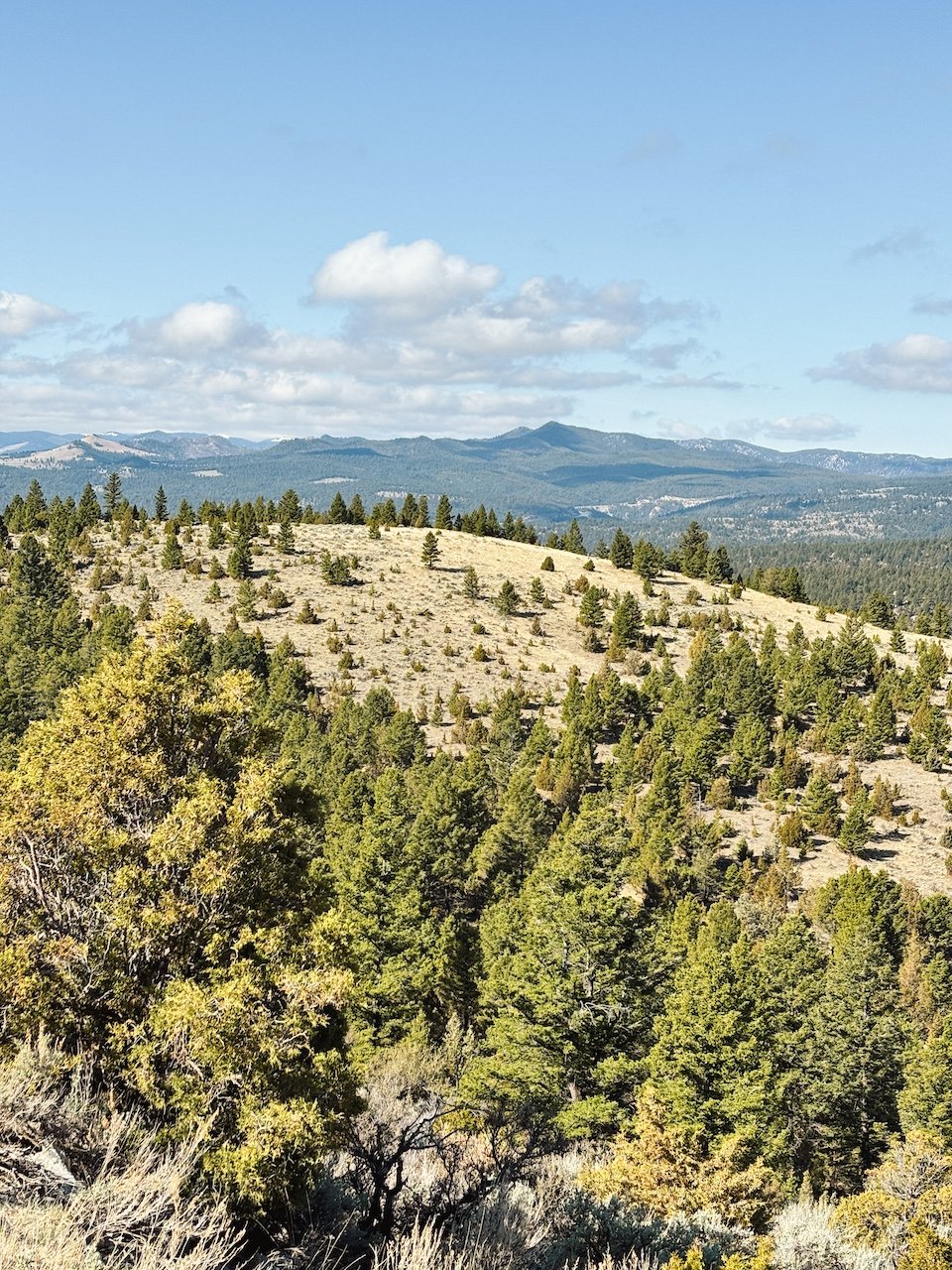
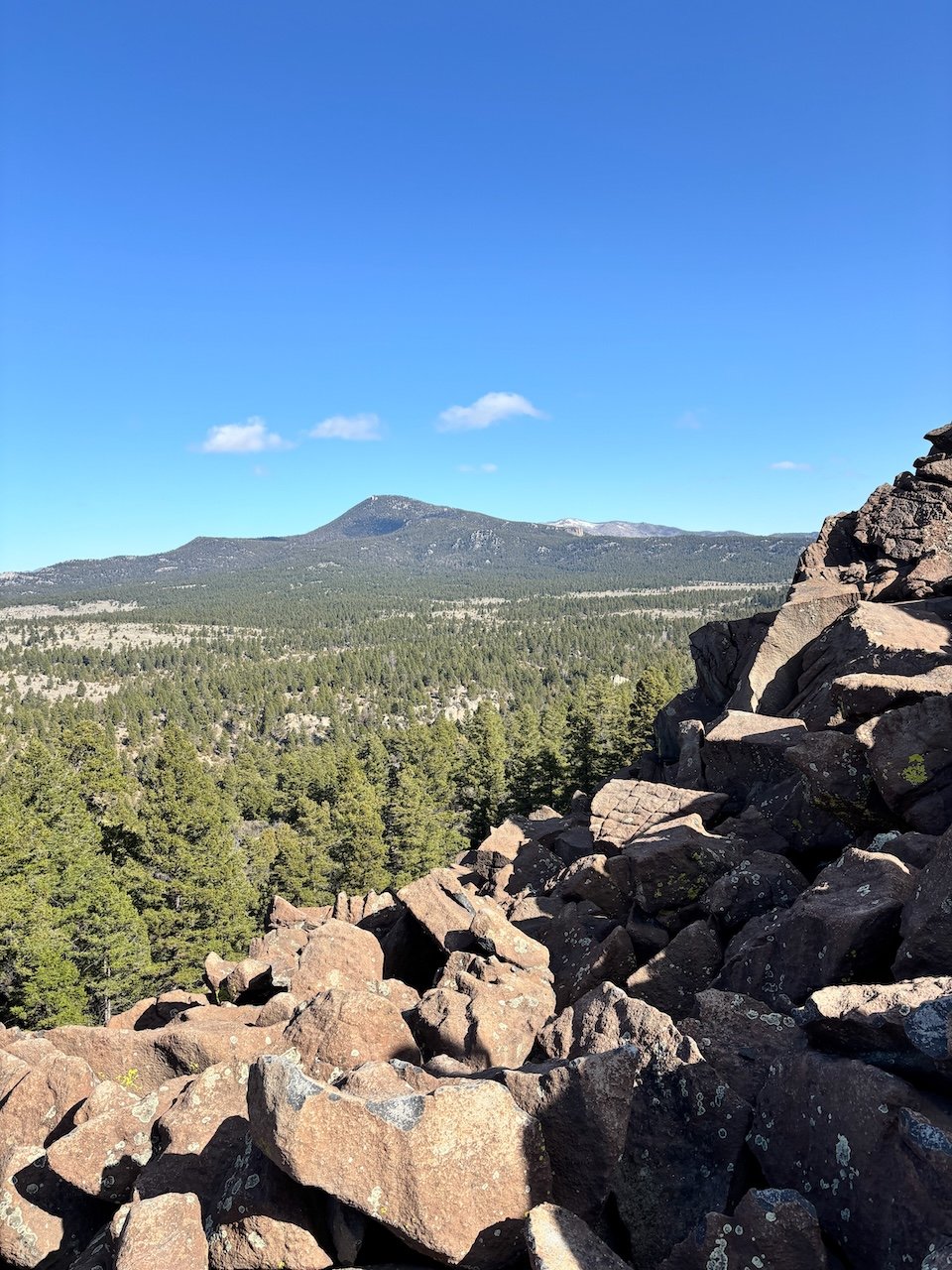
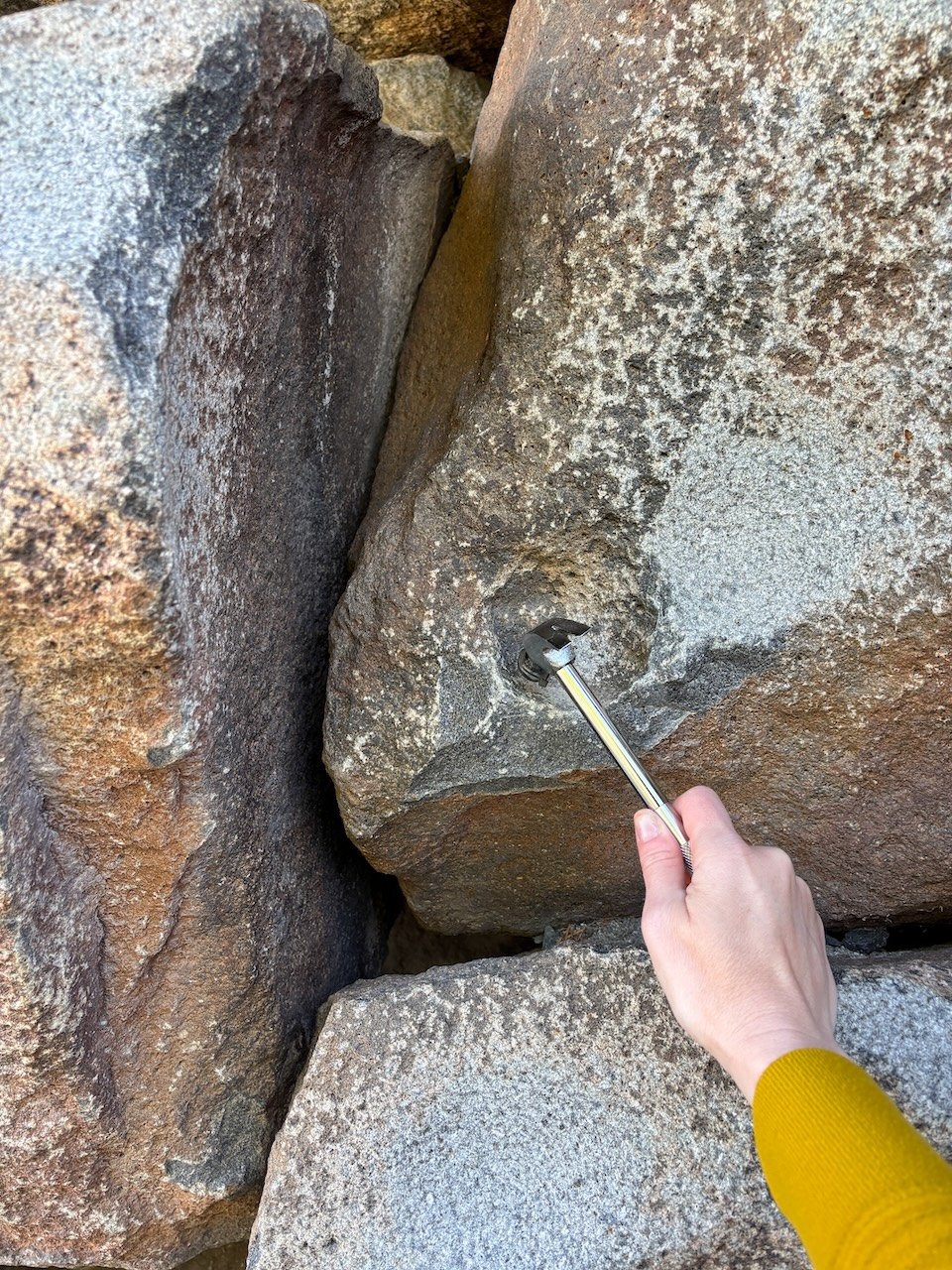
Its remote location adds to the appeal. From Butte, it’s a roughly one-hour drive through the Boulder River Valley, eventually reaching a rocky road that led us as far as our car would go (definitely recommend a high-clearance vehicle). A jungle gym of boulders stacked so high that climbing toward the top reveals near-360-degree views of the Tobacco Root Mountains in the distance and the sprawling valley floor below. With hammers in hand, we fanned out so each of us could find our own music within the Montana mountains. Some rocks made no sound at all, while others sang and rang so loud they echoed into the mountain air.
A unique experience for sure, and not sure why or how someone discovered these boulders’ musical talents, but there we were banging our hammers against the rocks in hopes of making magical music.
Norris Hot Springs – Water of the Gods
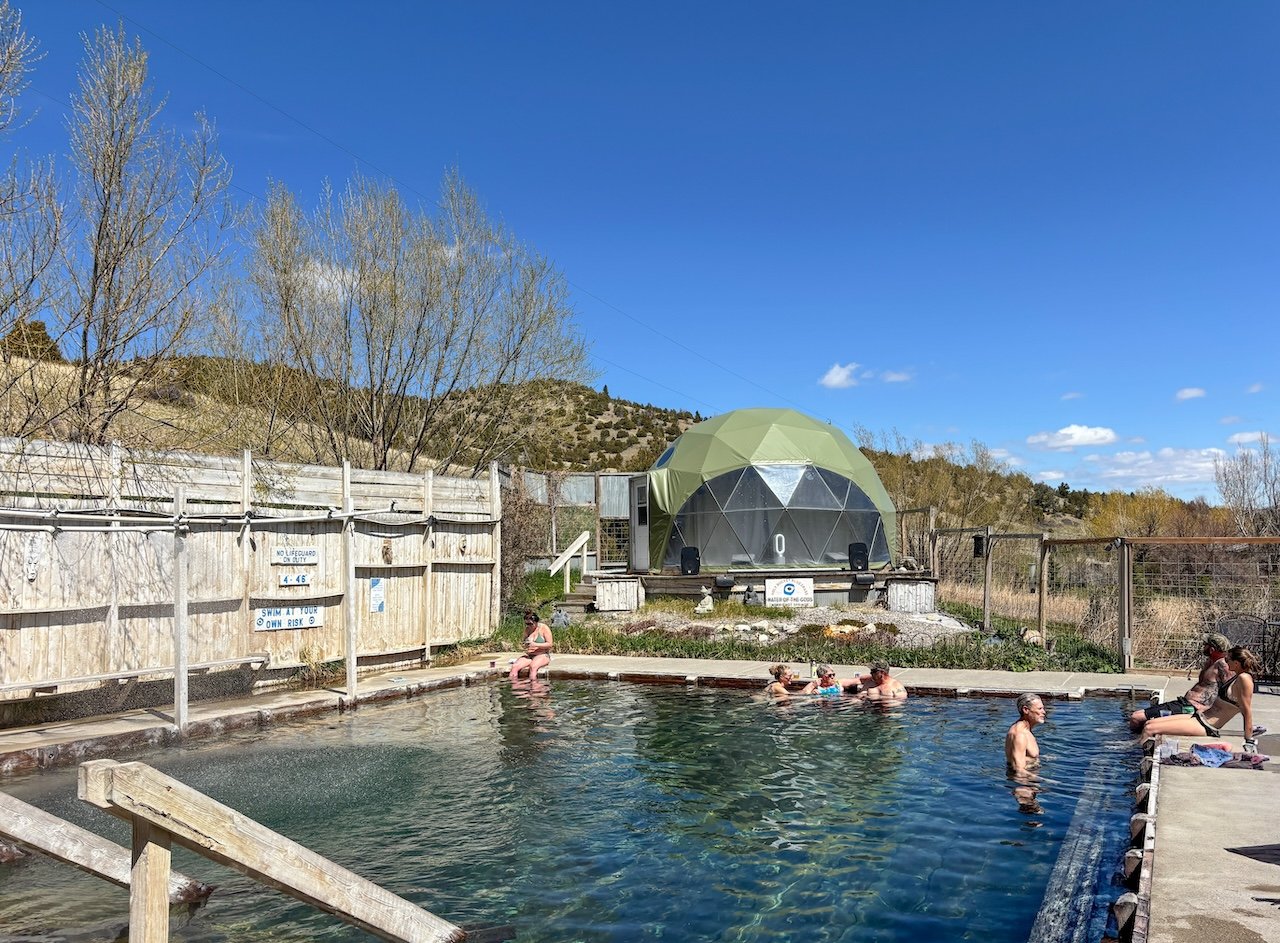
Next on our Southwest Montana tour was a natural hot spring near Bozeman that looked like little more than a roadside stop, but skipping it would be a mistake. Soaking in hot springs is a Montana tradition dating back centuries, and Norris Hot Springs preserves the area’s history with the country’s “only wood-bucket hot springs.” Historically, hot springs in Montana served as a neutral place where Native American tribal members didn’t fight and were considered healing waters for all; thus, the name “Water of the Gods” was given to natural spring waters in the area.
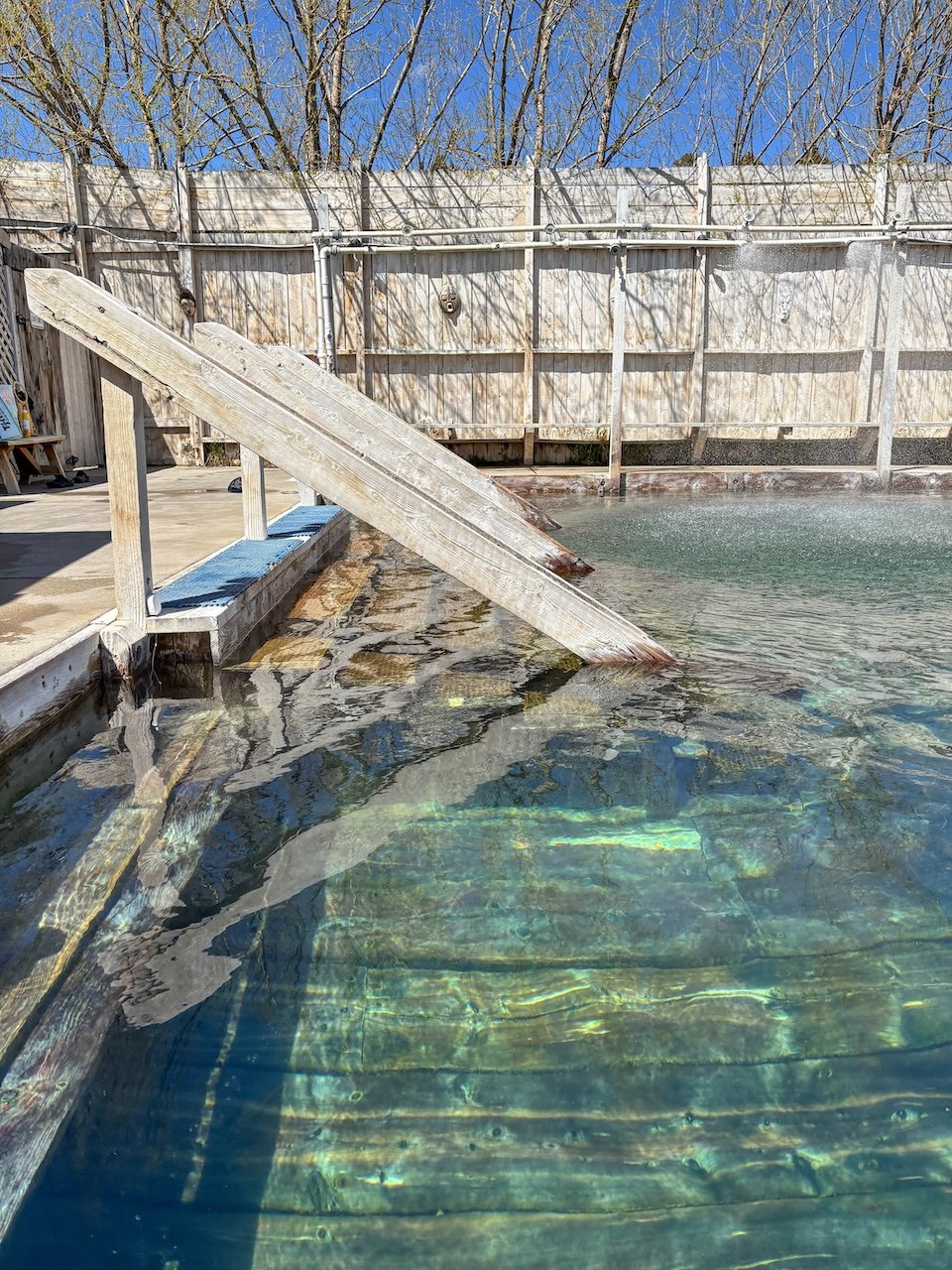
At Norris Hot Springs, the original 30×40-foot pool (built by the area’s miners in the 1880s) still stands, with its wooden plank bottom, and holds nearly 38,000 gallons of natural artesian mineral water above ground. The 120-degree waters bubble up from the earth’s surface and are cooled with sprayers and jets, keeping the promise of a perfect soak year-round.
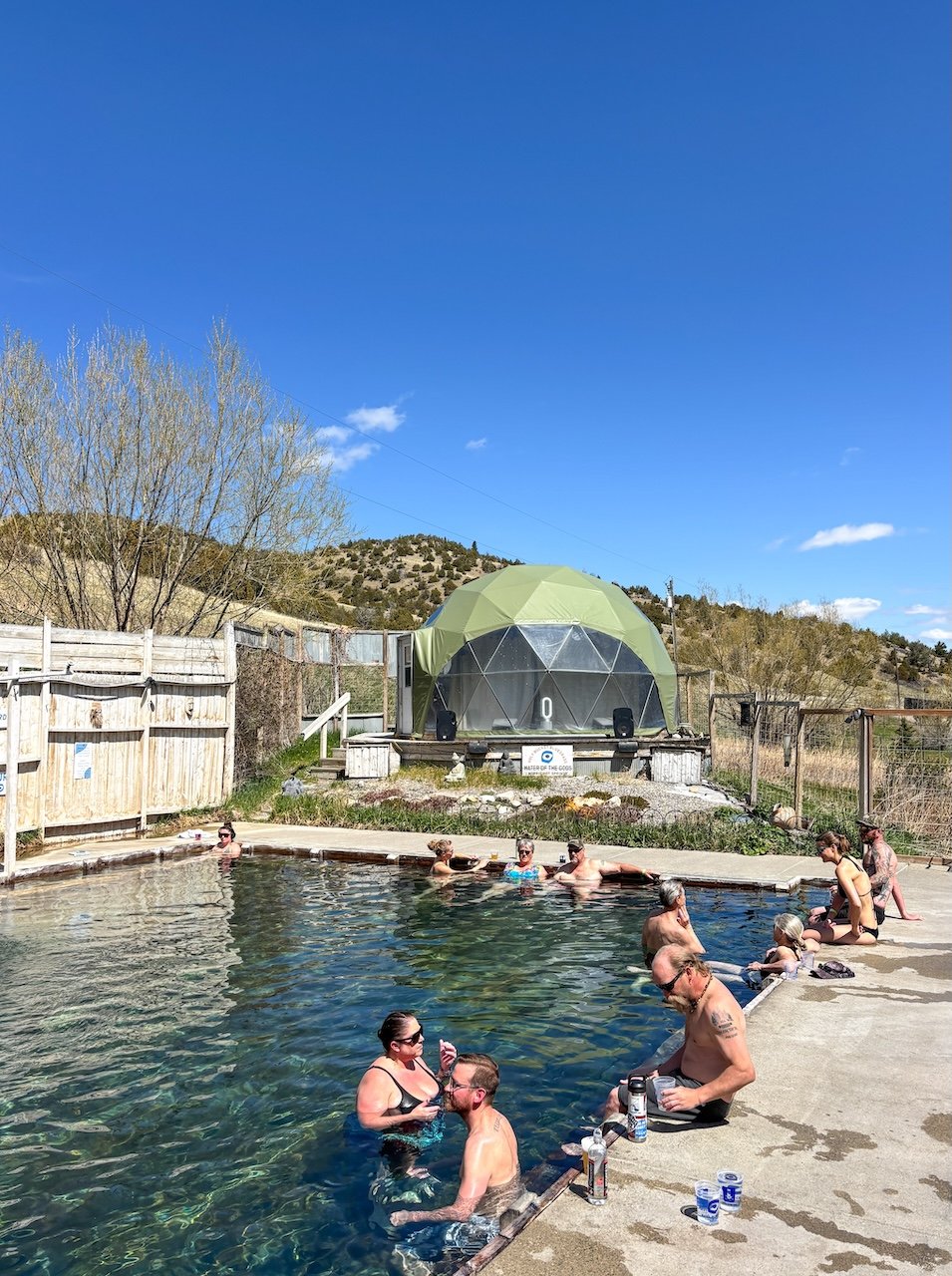
An on-site garden and greenhouse produce 4,000 pounds of food a year, feeding the kitchen’s menu with fresh fare that changes regularly (sometimes weekly) with what is in season. Healthy salads, salmon, and sandwiches kept me full and wanting more. But don’t worry, they’ve kept one tried-and-true item: the nachos, because, well, there might be a revolt if removed. What’s better than a healing soak with beer and nachos to balance it all out?
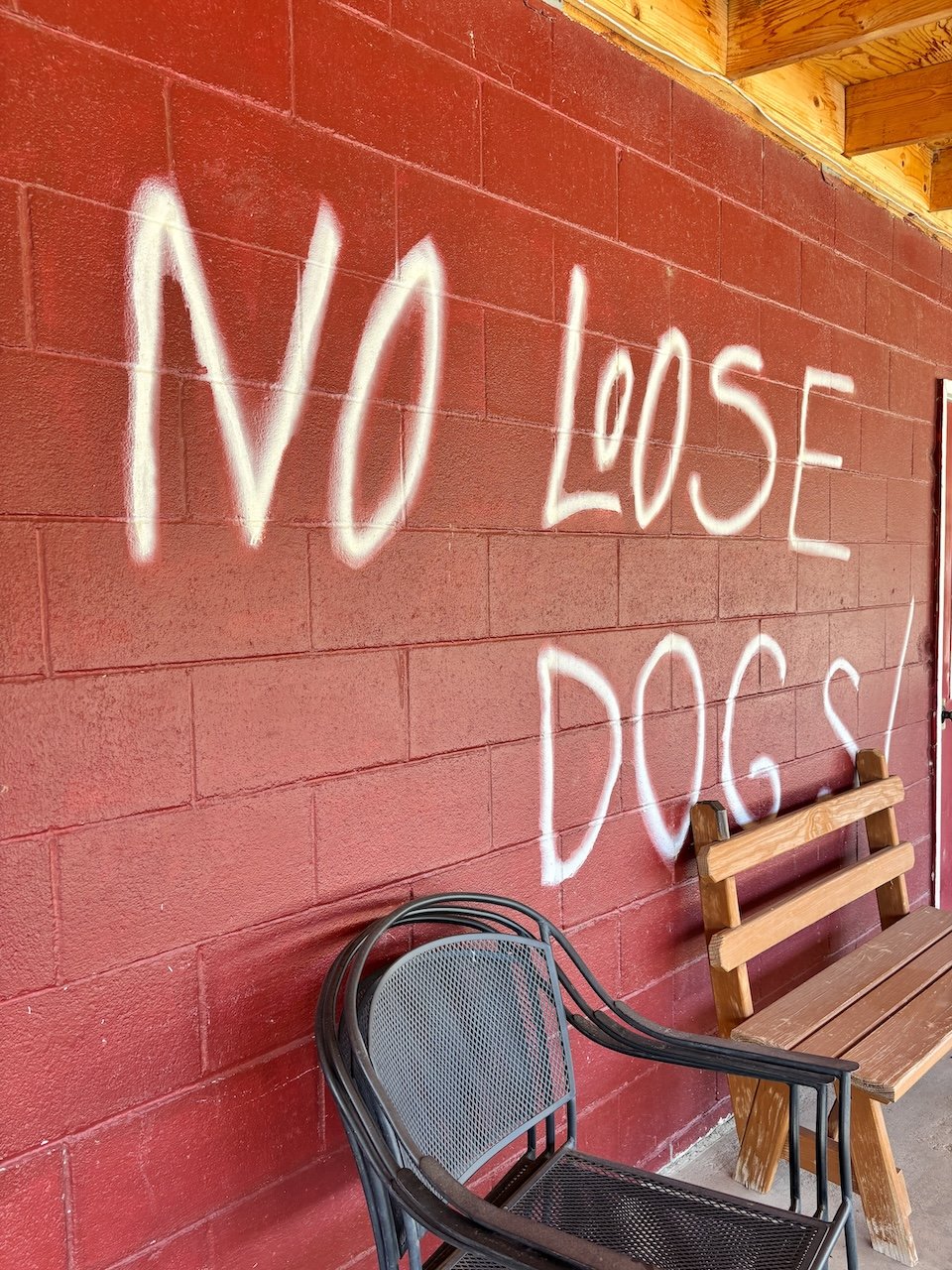
The original owner, Doris from Norris, is a local legend who still lives nearby. Humorous stories of her rowdy nature circulate about the local community, including stories about her hunting people down with a gun if they get too rowdy at the hot springs. She was even known to kill rattlesnakes with her bare hands if they crossed the property line. She also didn’t, and they still don’t, allow dogs to be loose on the property. She was dead serious about it, so much so that she spray-painted a sign on one of the walls, “no loose dogs,” so people would get the message (obvious misspelling). They even named the drink menu, “No Loose Dogs Saloon.”
*Doris passed away on July 11, 2026. She was 96 years old.
Elkhorn Mining Camp
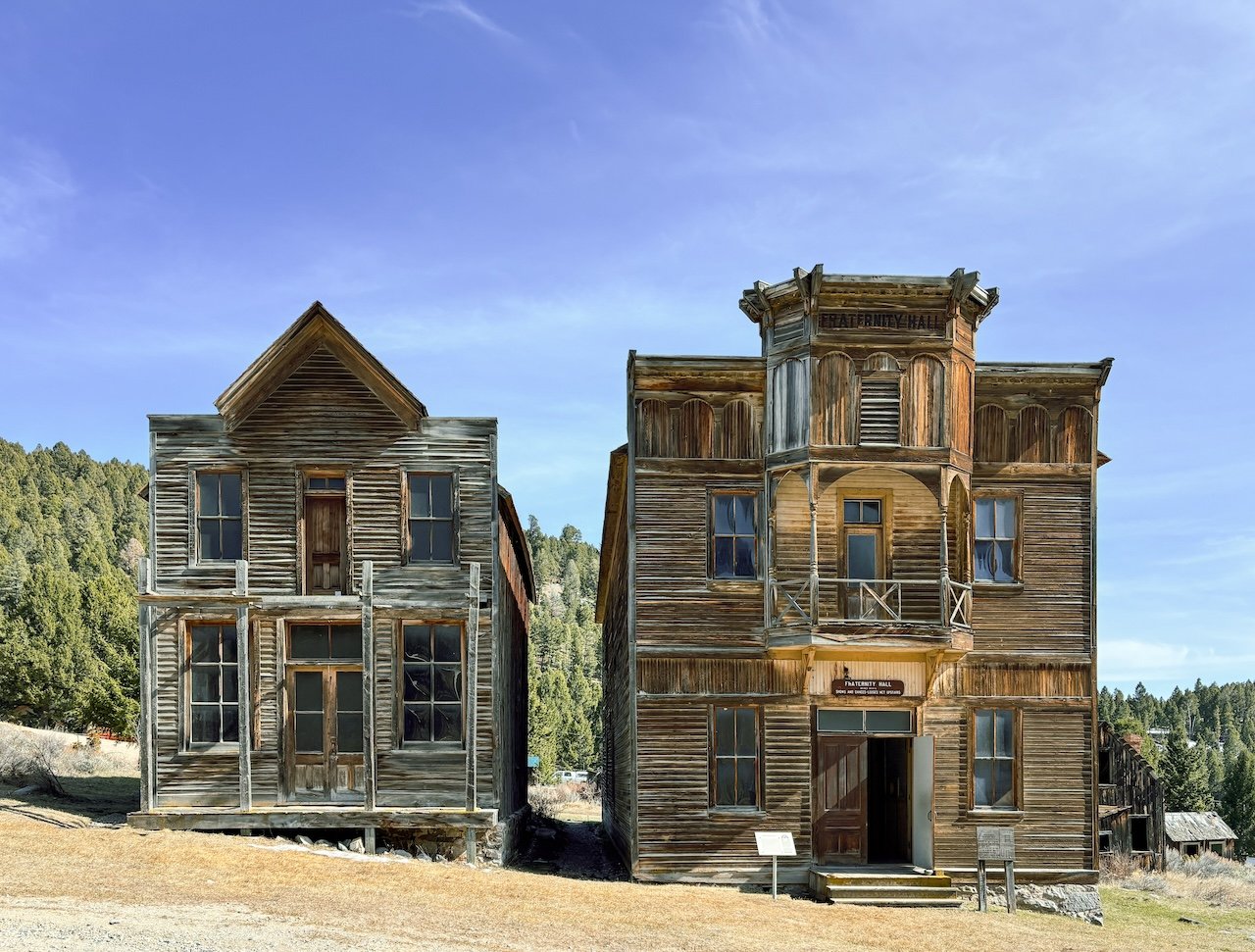
An old mining camp that became a ghost town and then a Montana State Park, Elkhorn Mining Camp is a true treasure of Montana’s history. Prospectors came to the Elkhorn Mountains in 1868 looking for gold, but found only silver ore. The Elkhorn Mill was among the first built, and the Elkhorn Mine became the largest silver producer in 1881. By 1890, the Elkhorn Mine had over 12,000 feet of underground tunnels.
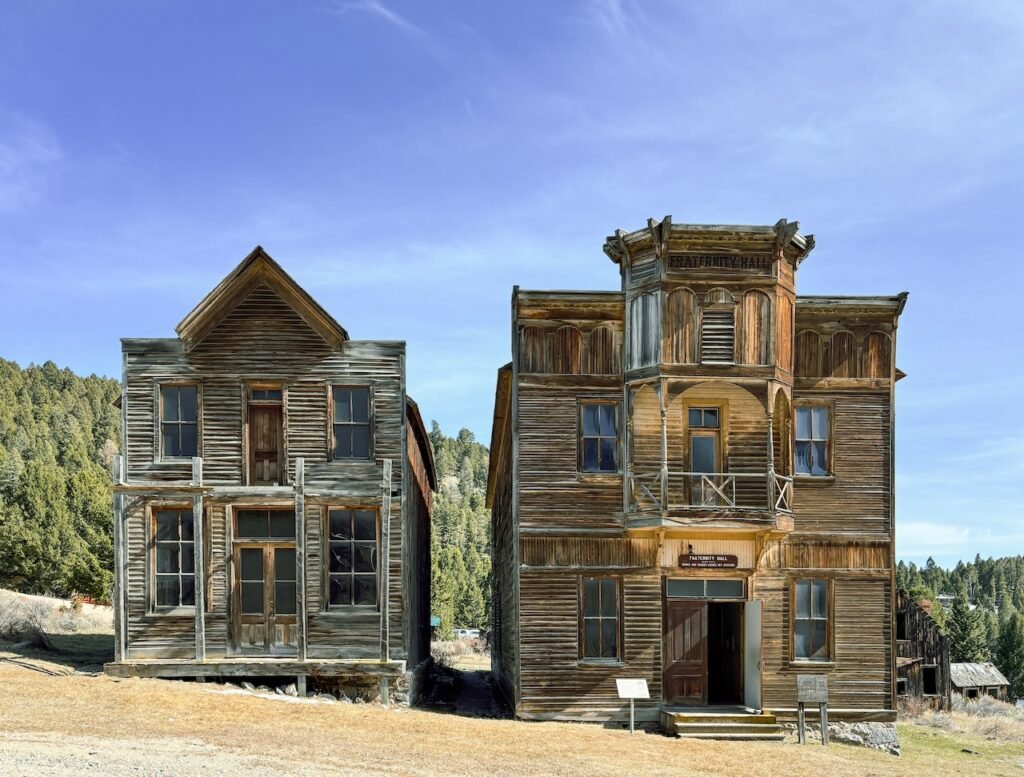
We took a walk through the old town where you can see the old water tank, the Elkhorn Cemetery, the old shoemaker’s shop, and a sign for the Hoffman Barbershop—the only place you could get a bath in Elkhorn during the 1880s. During its mining heyday, the town welcomed many unique businesses, including a butcher shop, candy stores, a traveling photography studio, and a hat-and-bonnet store. Because of old mining claims, much of the area around Elkhorn and its buildings is privately owned, except Fraternity and Gilliam Hall, which are public and part of the Montana State Park.
Boulder Hot Springs
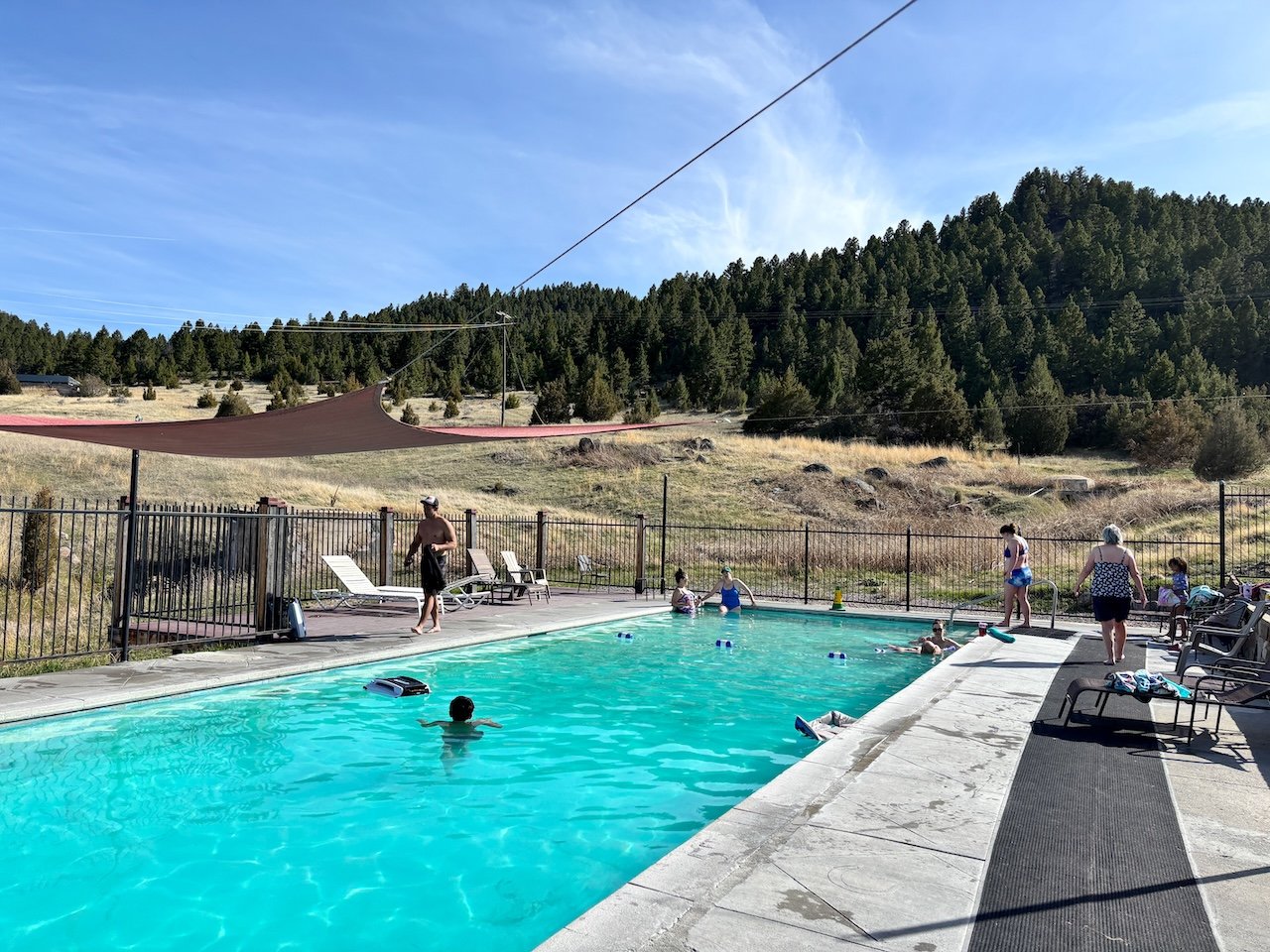
Not too far from Elkhorn State Park, there’s another Montana hot springs worth dipping your toes into: the historic Boulder Hot Springs resort. Located 30 miles south of Helena, Boulder Hot Springs is another place where Native American tribes considered geothermal springs neutral ground for rest and healing, a tradition that gave the valley its namesake, Peace Valley.
Beyond its ancient healing waters, the property’s hotel and buildings feel frozen in time—in all the best ways. Construction of its permanent bathhouse (and tavern) began in the 1860s, and by the late 19th century, the property had become a resort that once catered to celebrities and presidents, with reports that Teddy Roosevelt stayed here.
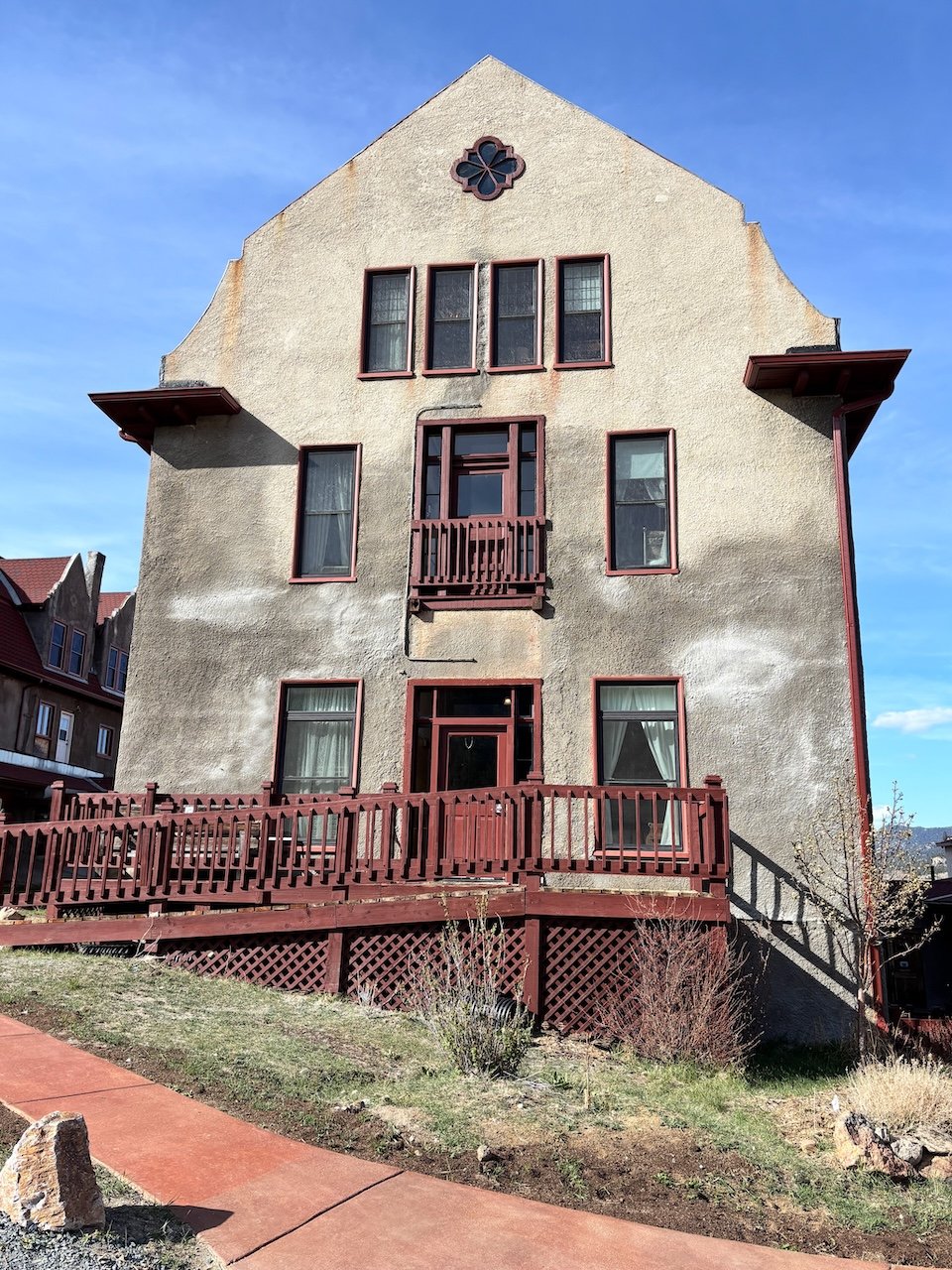
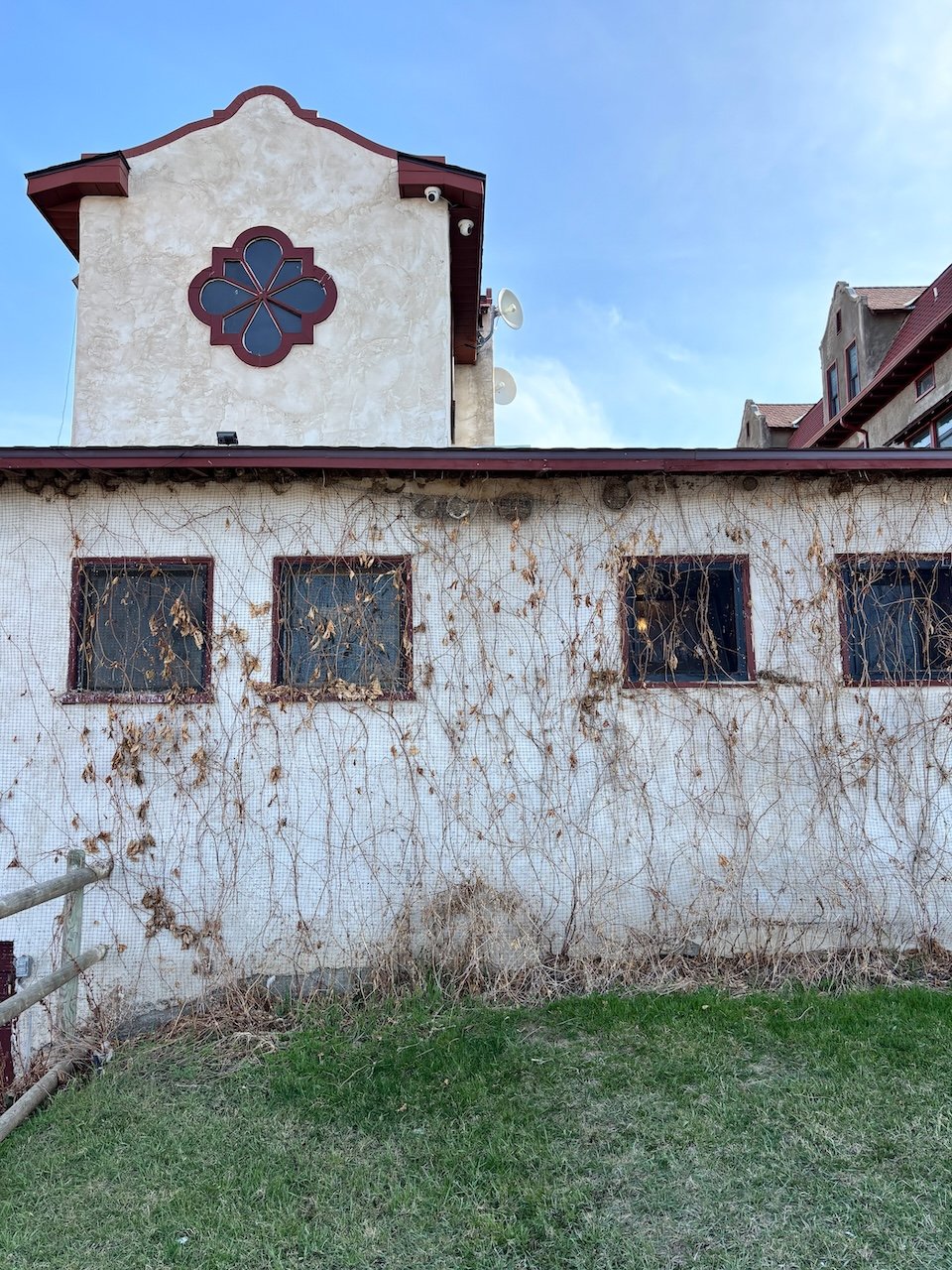
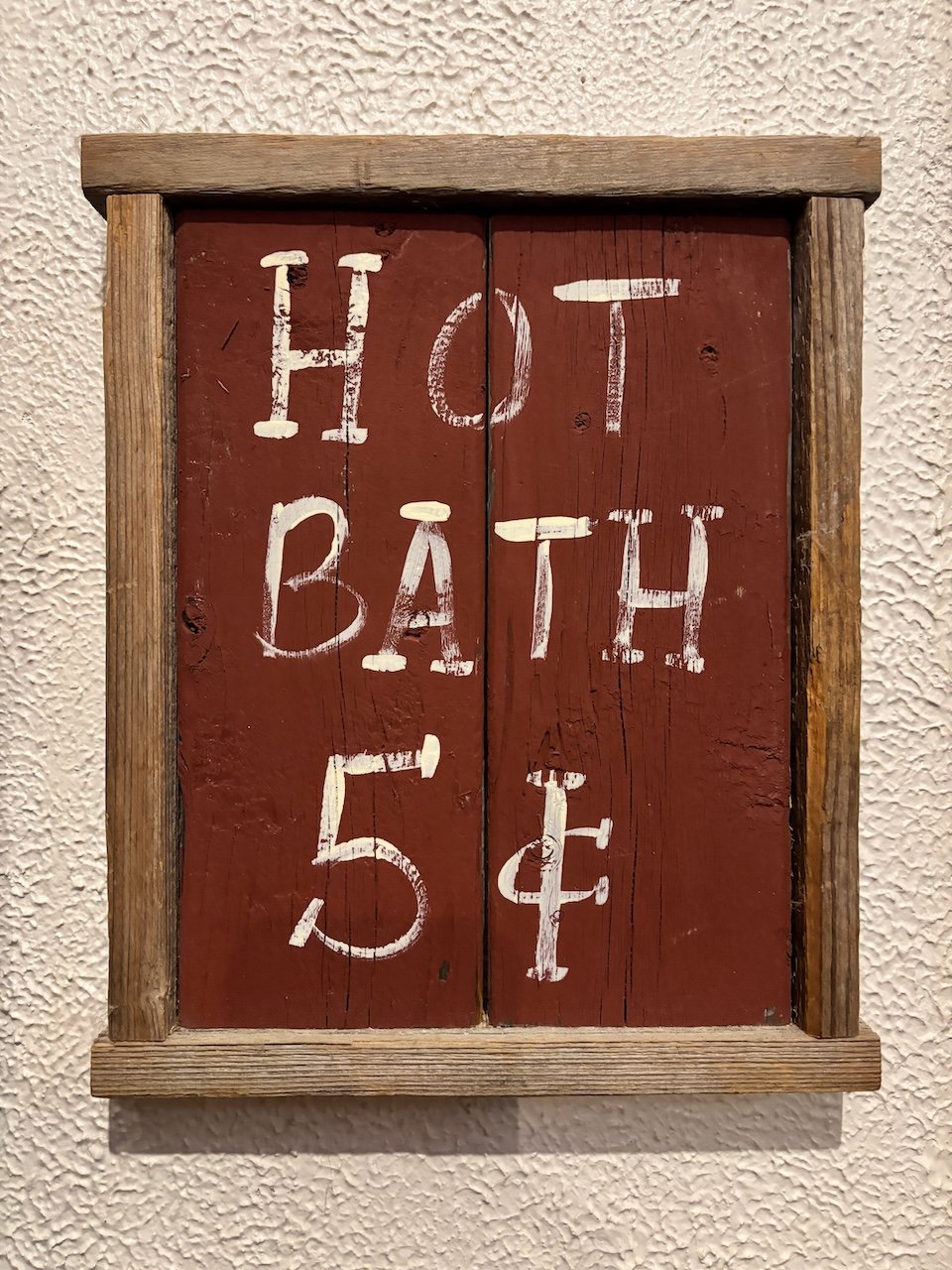
Today, the 300-acre property prides itself on being a natural healing place, accessible for everyone. Its casual vibe and welcoming spirit add to its allure, while its geothermal waters remain the main attraction. As it has for centuries, steam rises from naturally occurring springs that pour hot, mineral-rich water into the facility’s main outdoor pool, while indoor hot plunges and steam rooms offer year-round soaks.
Its facade resembles a Spanish Mission, with an opulent interior featuring fancy fresco work, exclusive amber Tiffany (possibly) glass lighting, and hand-stenciled walls that keep this historic property among Montana’s most storied hot-spring destinations.
Helena, Montana
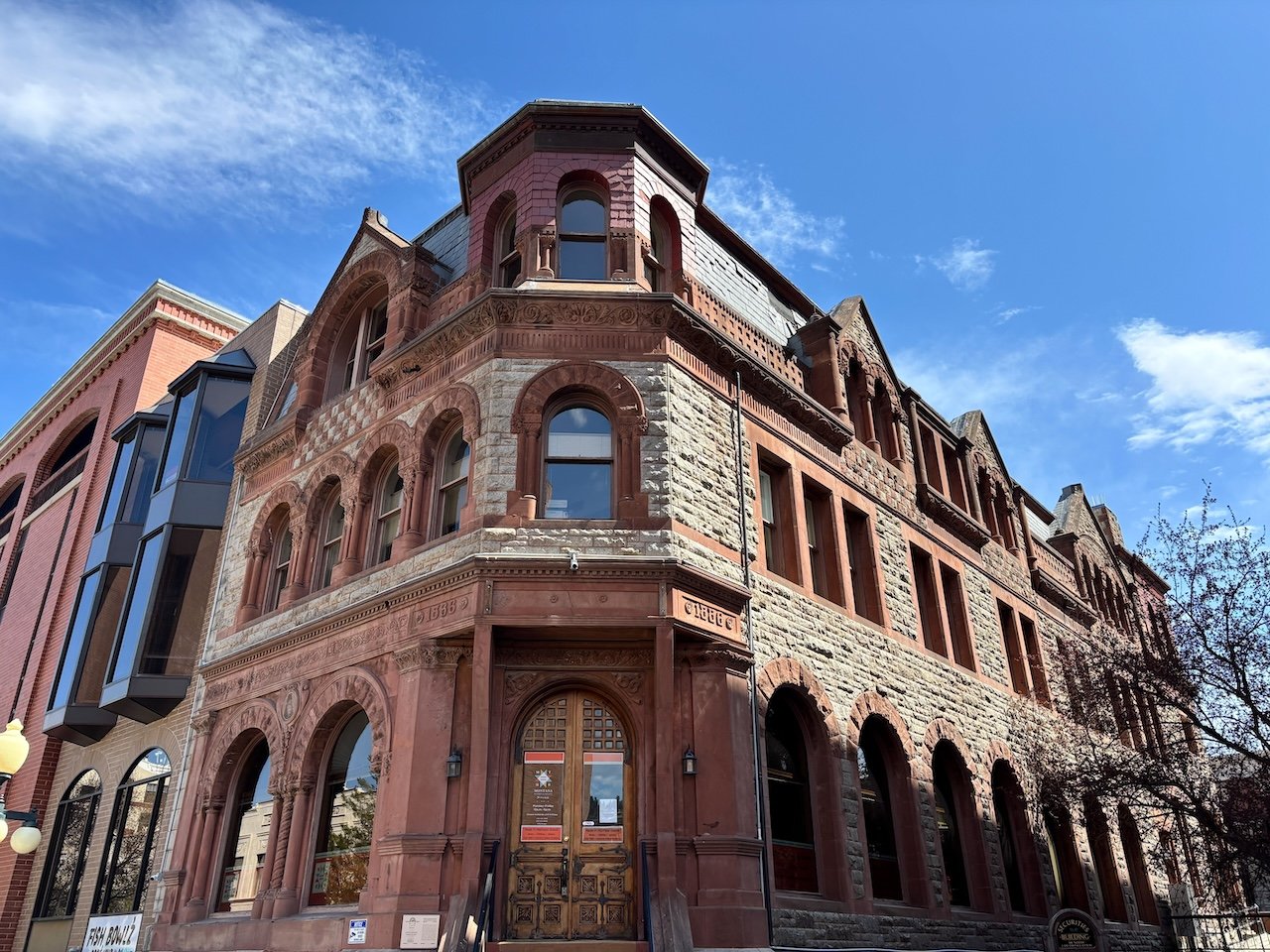
The state’s capital city, Helena, crowns the northern section of your Southwest Montana road trip. My only knowledge of Helena before this trip came from Legends of the Fall, which portrayed it as a bustling town of bankers and businessmen. While I wouldn’t classify Helena that way today, it certainly has much to offer for an overnight stay. Like many mining towns out West, the promise of riches drew people to Helena in the mid-to-late 1800s. But after mining went bust, Helena was the only town not to become a ghost town.
Helena State Capitol Building
Worth the stop: The phrase “they don’t make them like they used to” likely referred to the Helena State Capitol building. Completed in 1902, the building still stands as a beacon of beauty and innovation as the nation’s first electrified Capitol building, powered by Butte’s Berkeley Pit.
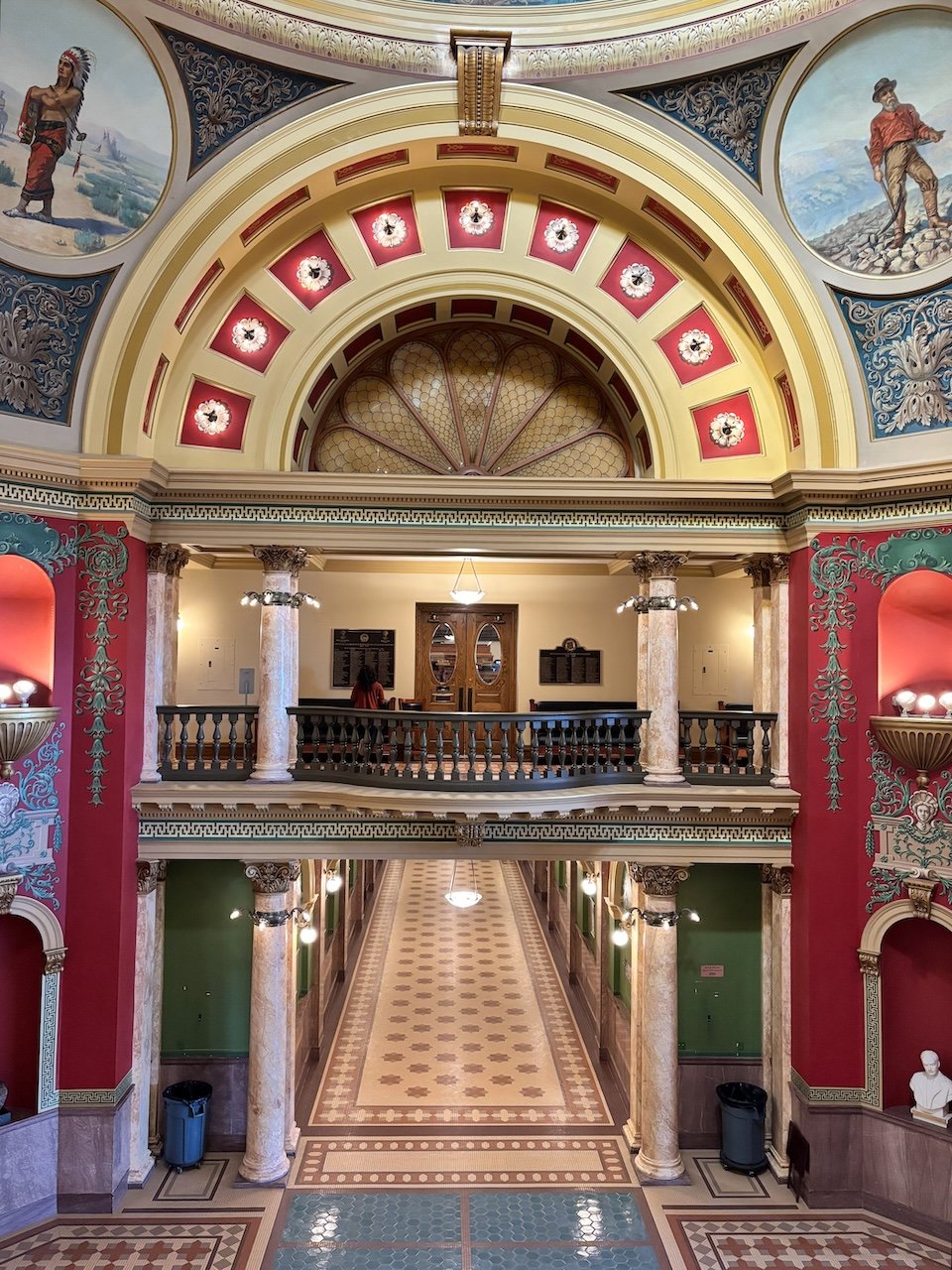
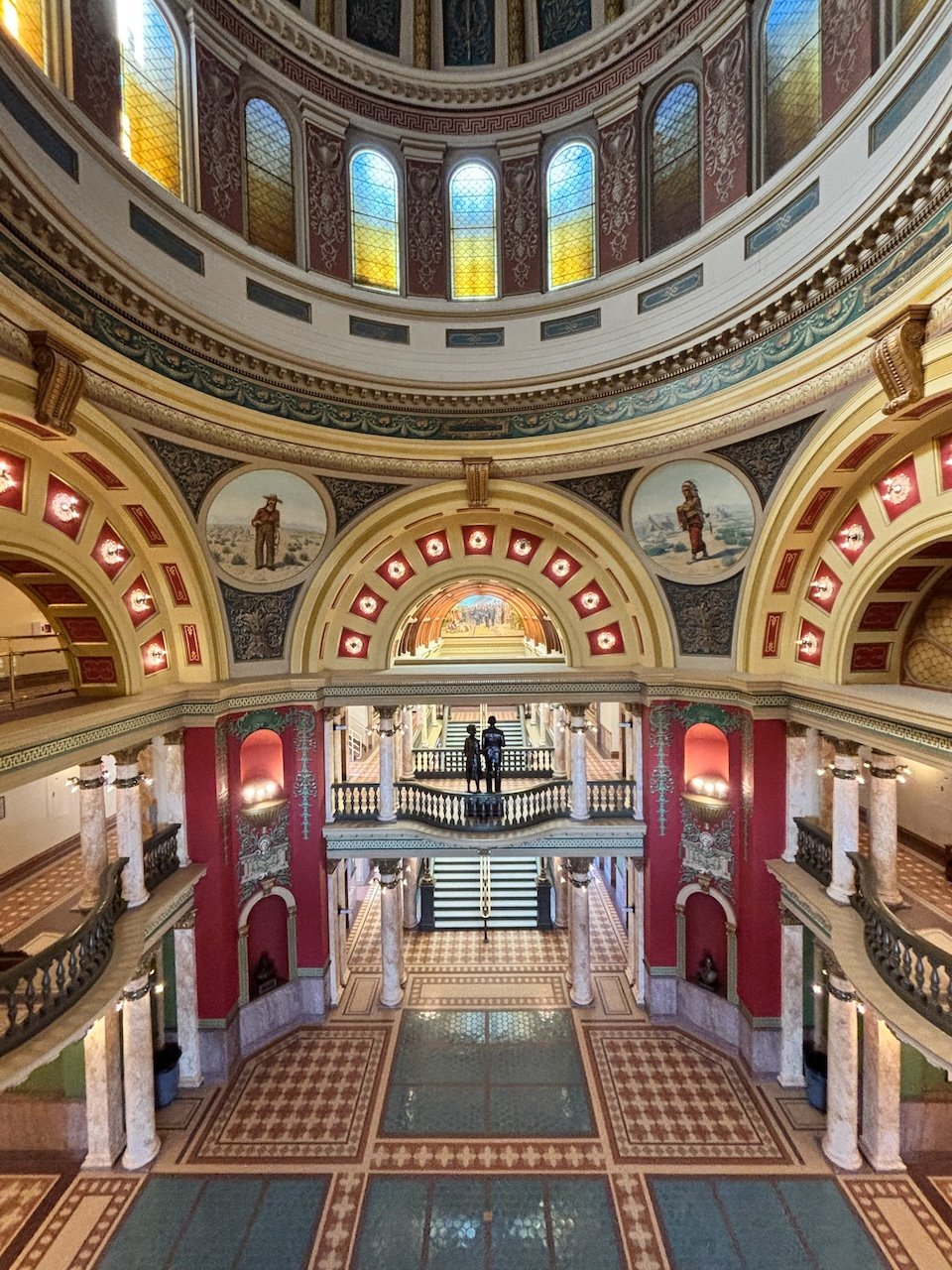
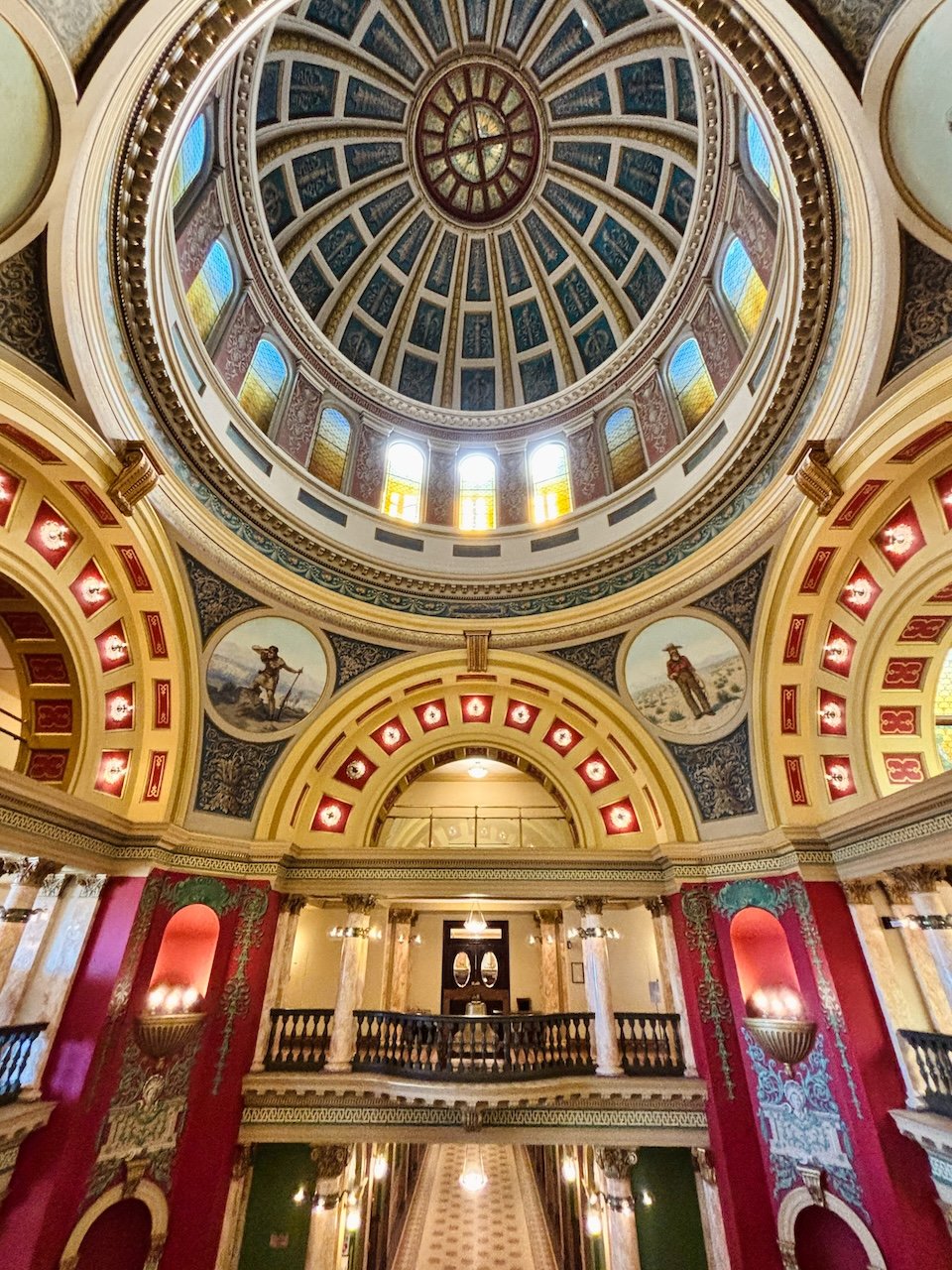
While most everything inside the building is original, including Helena’s pride and joy: a large Charlie Russel painting estimated to be worth $20 million, Montana’s state constitution is one of the newest printed because the original was lost on a boat in the Missouri River. I highly recommend the tours offered by the Montana Historical Society (Monday-Friday).
Do: Red Light Rendezvous Tour of Helena
“A town without prostitution is a stupid place,” a common sentiment shared by locals of Helena when the town’s most famous brothel closed its doors. Like Butte, Helena was also famous for its many vices of gambling, drinking, and prostitution. Unfortunately, very little remains of its sordid past, as the 1935 earthquake removed or destroyed many historic buildings, except Reeder’s Alley—the oldest intact structure in early Helena. And nearby, what stands today as the town’s visitor center, which once housed two brothels in the 1860s, is where the Red Light Rendezvous Tour begins.
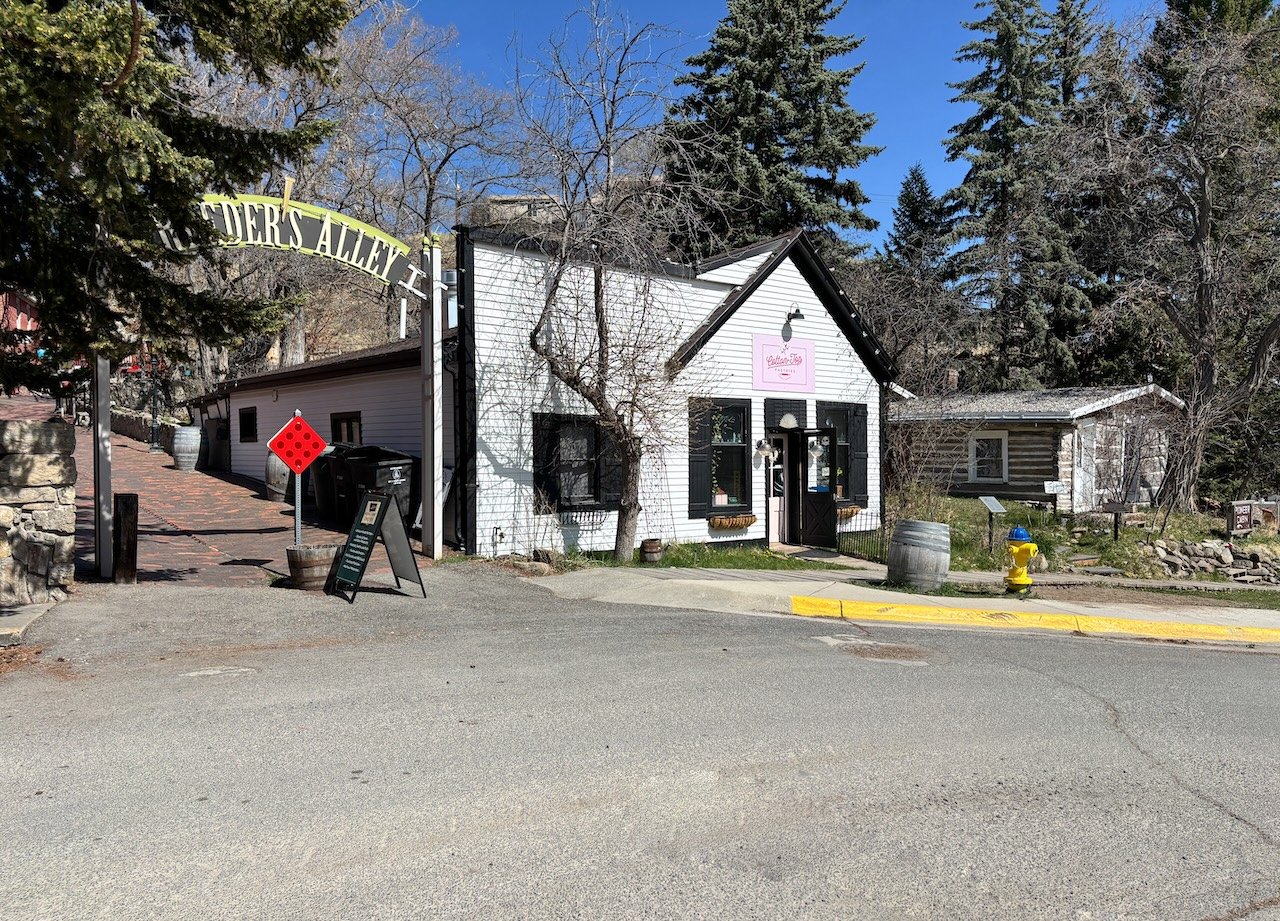
Led by knowledgeable local historians, the walking tour highlights much of Helena’s history through storytelling and visual references. Helena was home to some of the more ‘high-end’ prostitutes called the Hurdy Gurdy girls—women who worked in the dance halls, some making as much as $50 a night—these were the early prostitutes of Helena and were the talented women who could dance. The high-class prostitutes in Helena were businesswomen and entrepreneurs, many of whom worked at The Castle, a fancy brothel in Helena that reached its height in the 1890s before prostitution ended in 1973.
Where to eat: For a unique dining experience just outside of town, try Wassweiler. Housed in what used to be an old hotel, bathhouse, and hot springs, the restaurant sits in the only hot springs hotel structures left in the Helena area. The fine-dining restaurant is best known for its premium steaks and candied bacon.
Another option for a good cut of meat is the Union inside the Old Salt Coop. This cool, modern Montana steakhouse prides itself on its beef sourcing and on being a regenerative “culture” for good Montana meat. They play into modern meat trends, using bone marrow as a main ingredient and sheep’s cheese just to be different.
End with an evening soak at Broadwater Hot Springs
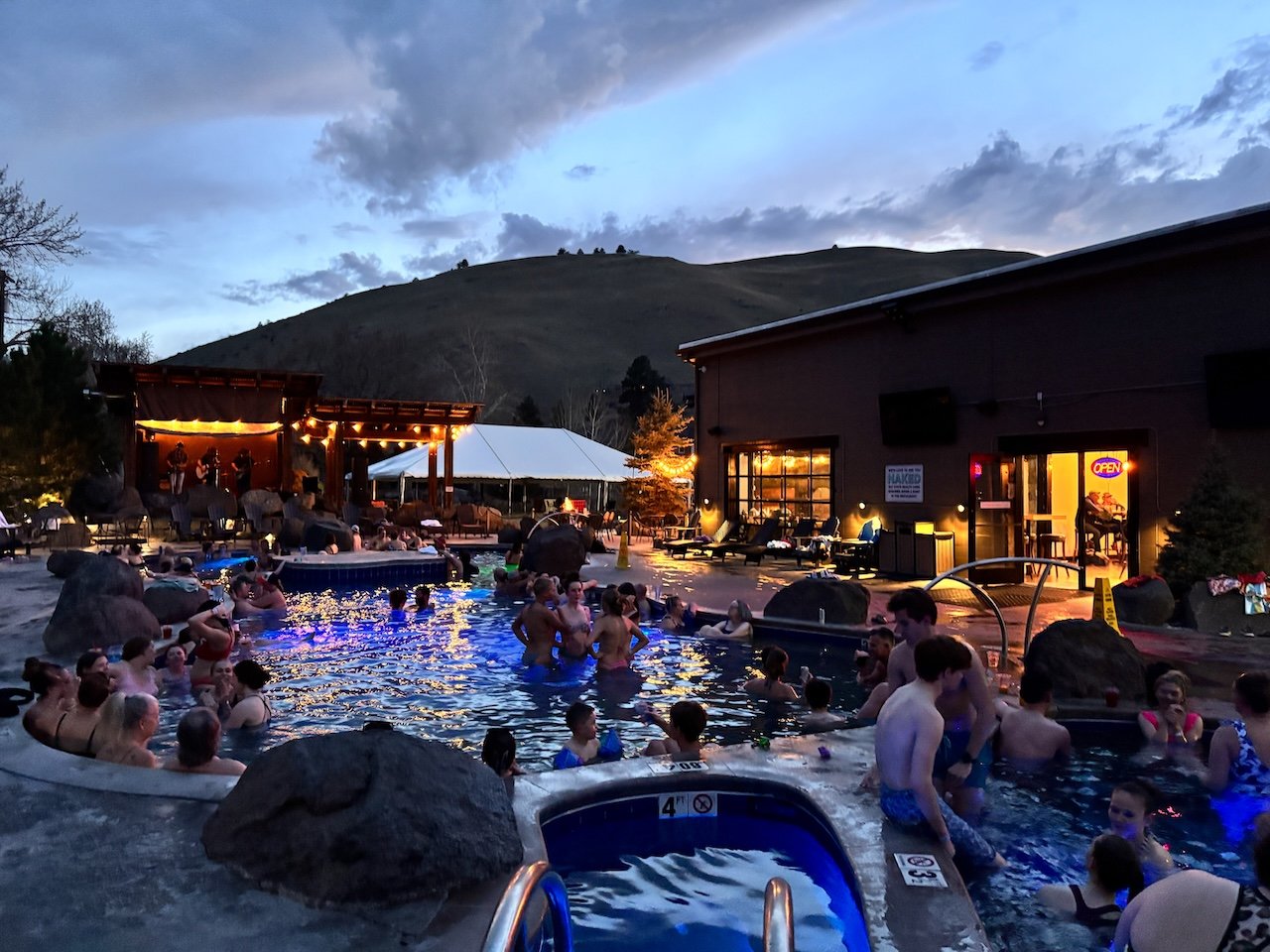
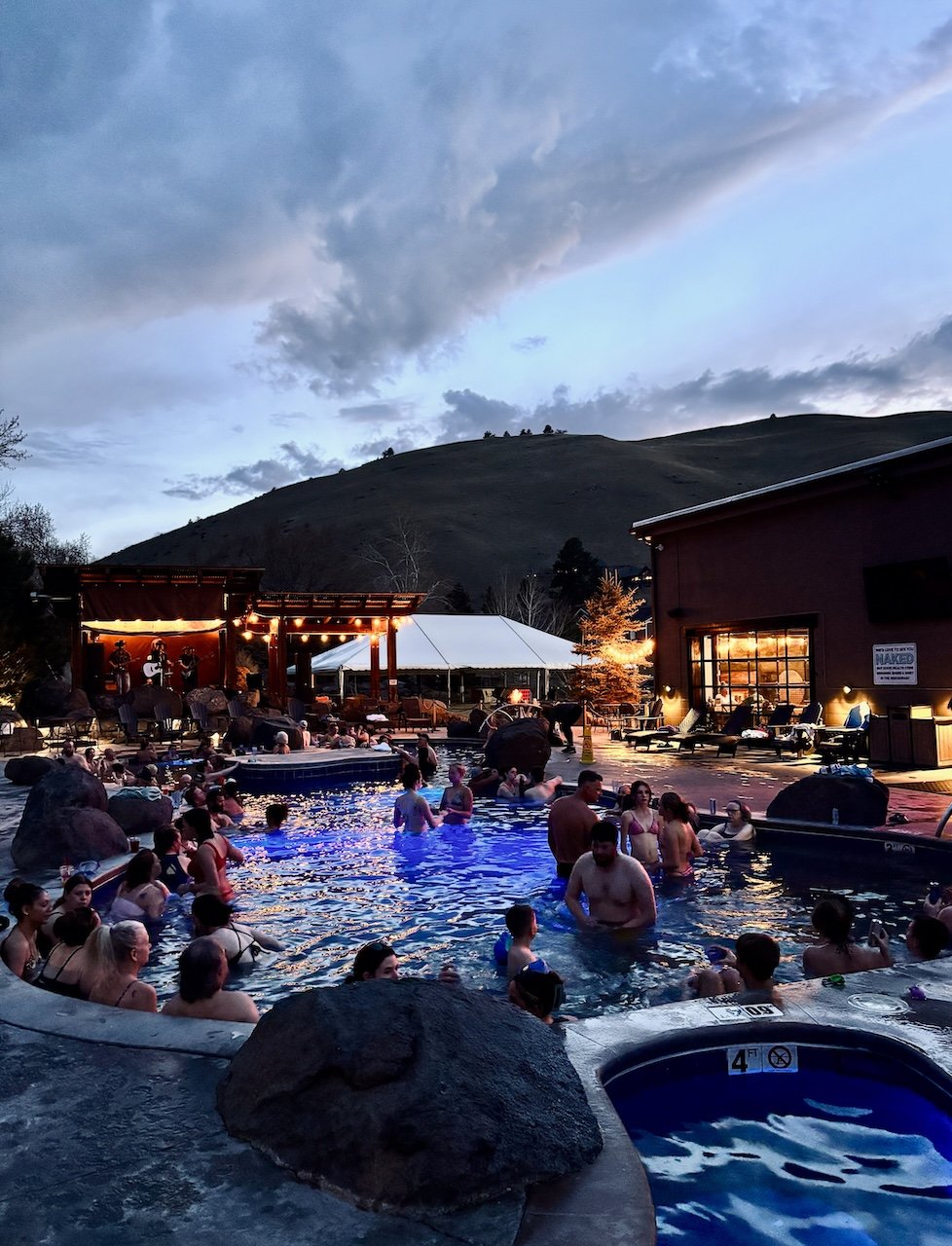
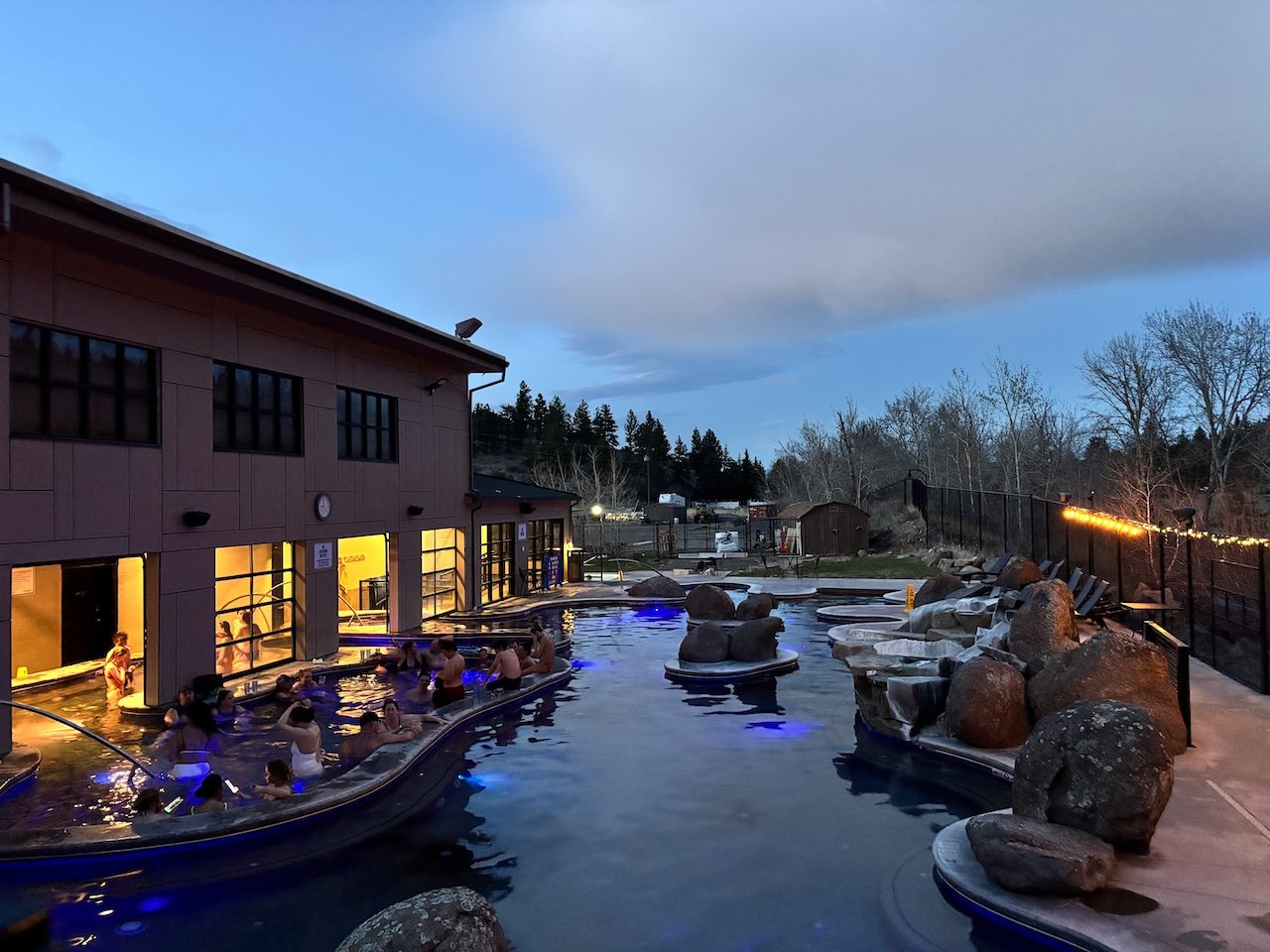
For a completely different hot springs vibe, enjoy an evening soak at the Broadwater Hot Springs. You’ll find more of a ‘party’ crowd that’s pool hopping with drinks in hand and music playing in the background. The property’s three hot springs soaking pools, two hot tubs, and two cold plunges keep a diverse crowd of locals happy, making it one of Montana’s most popular hot springs.