
It’s no secret that Colorado is home to some of the most spectacular fall seasons. With yellowing aspens that fill the hillsides, red and orange scrub oak that occupy low-lying valleys, and picturesque mountain peaks to fill in the background, it’s no wonder that so many search for where to see Colorado fall colors.
Below, I highlight a few of my favorite places to see fall colors in Colorado that range from popular fall hikes near Denver to not-so-obvious scenic fall drives that will leave you speechless. This is definitely the list you want to keep when planning your fall vacation to Colorado.
Where to see fall colors near Denver
Golden Gate Canyon State Park
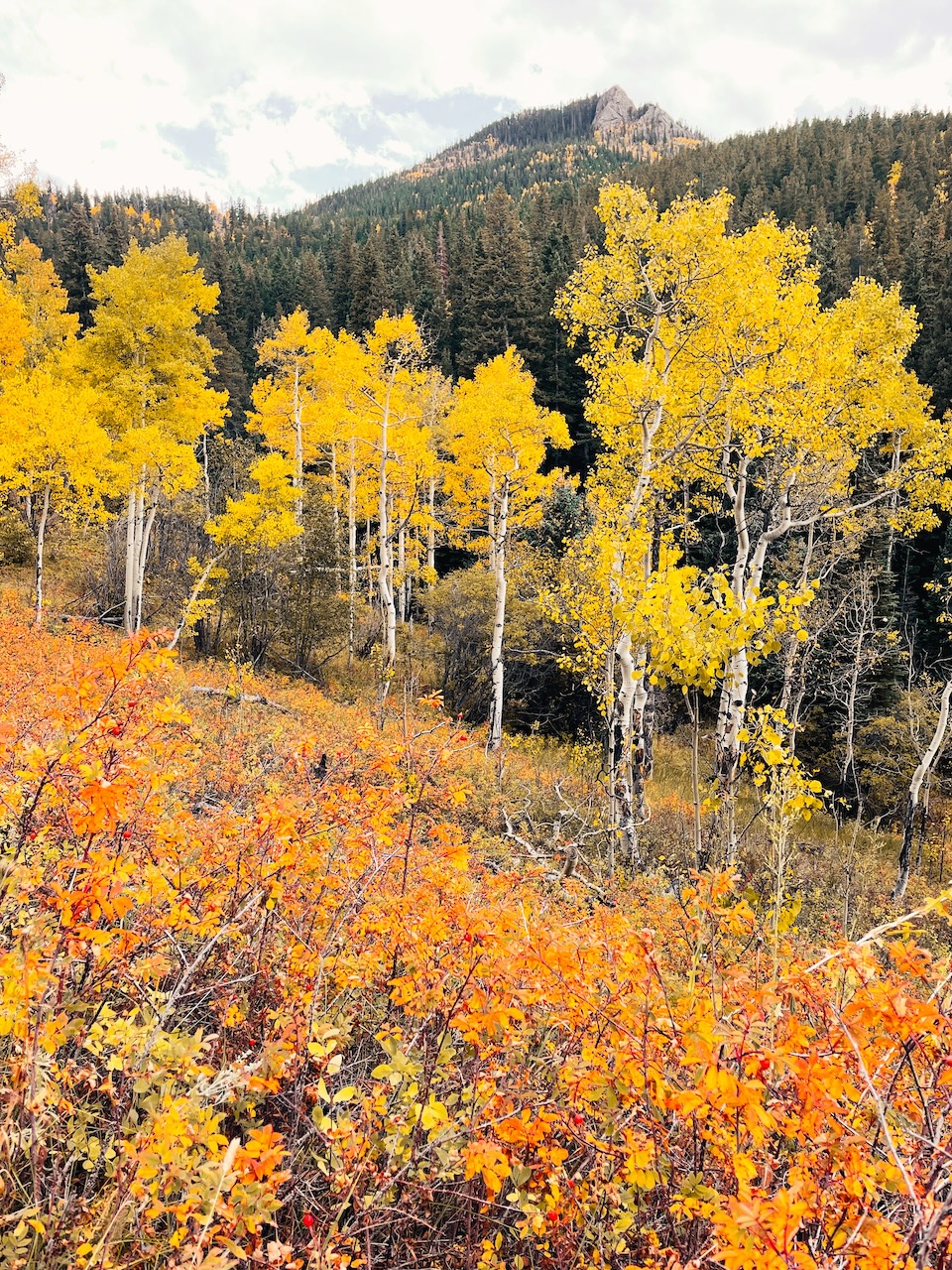
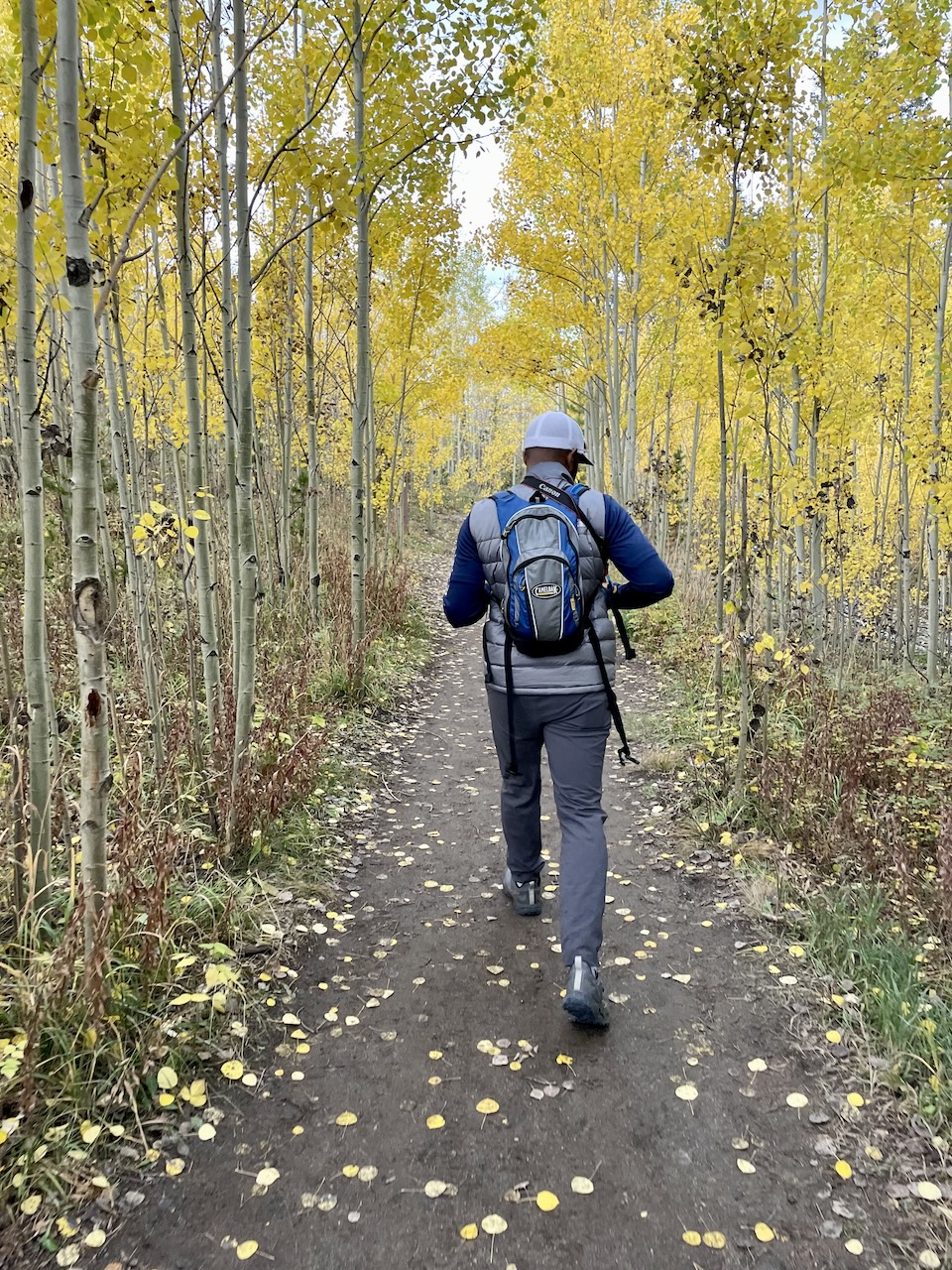
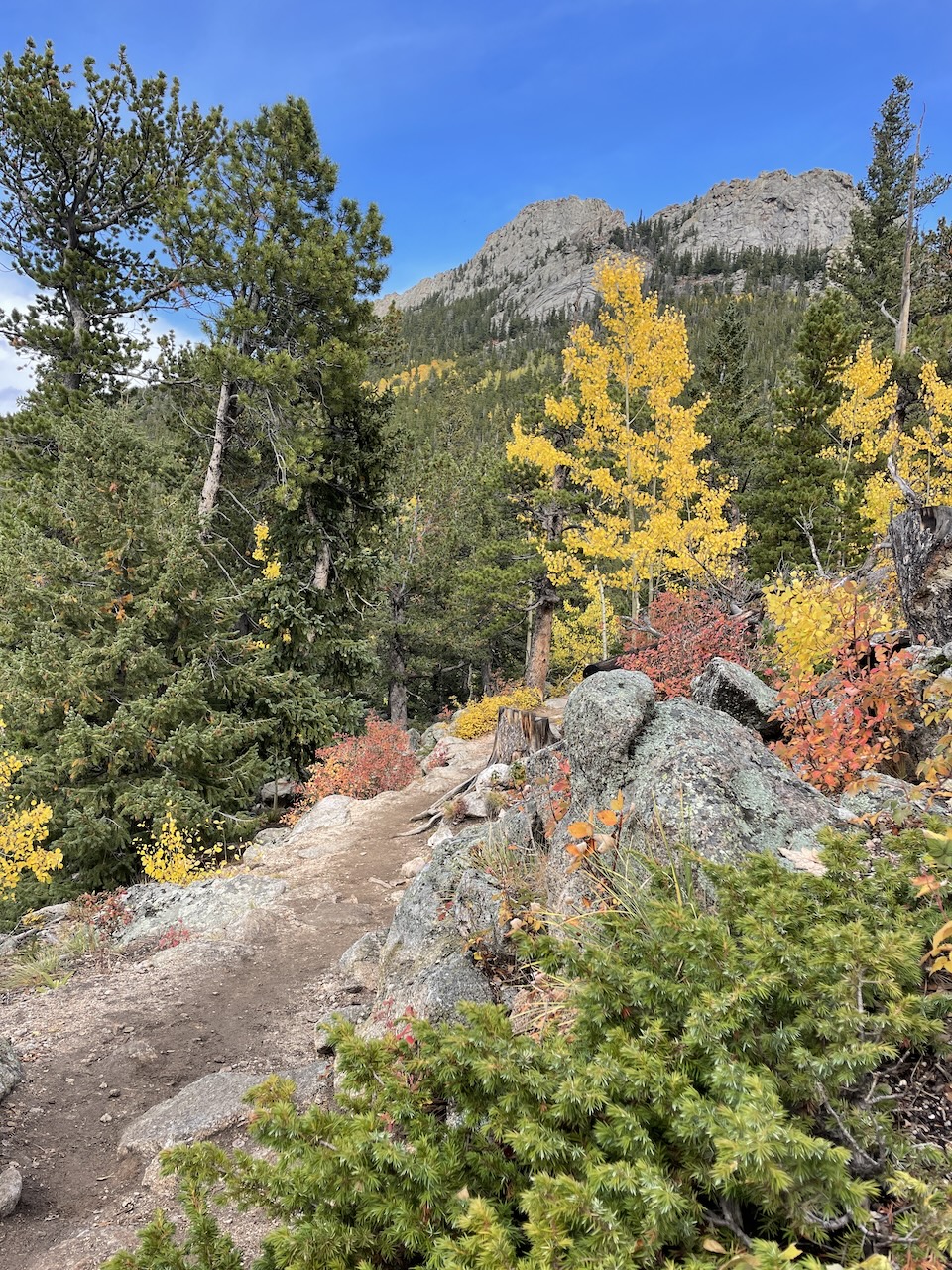
30 miles west of Denver lies Golden Gate Canyon State Park—one of the most popular places to see Colorado fall colors. Almost every corner you turn, trail you hike, and scenic viewpoint you come across, you’ll see yellowing aspens mixed with the area’s evergreens. You’ll enjoy quite the scenic site in front of you.
The 2.5-mile Raccoon Trail is my favorite go-to for fall colors and views. It’s great for families and anyone looking for a quick, easy day hike near Denver. Another favorite fall-color hike in Golden Gate Canyon State Park is the 4-mile Frazer Meadow trail via the Horseshoe loop. These are both popular trails, as is the park in the fall. Come early and be prepared to wait in line for parking. If you can swing it, I suggest heading up early in the morning and on a weekday.
Roxborough State Park
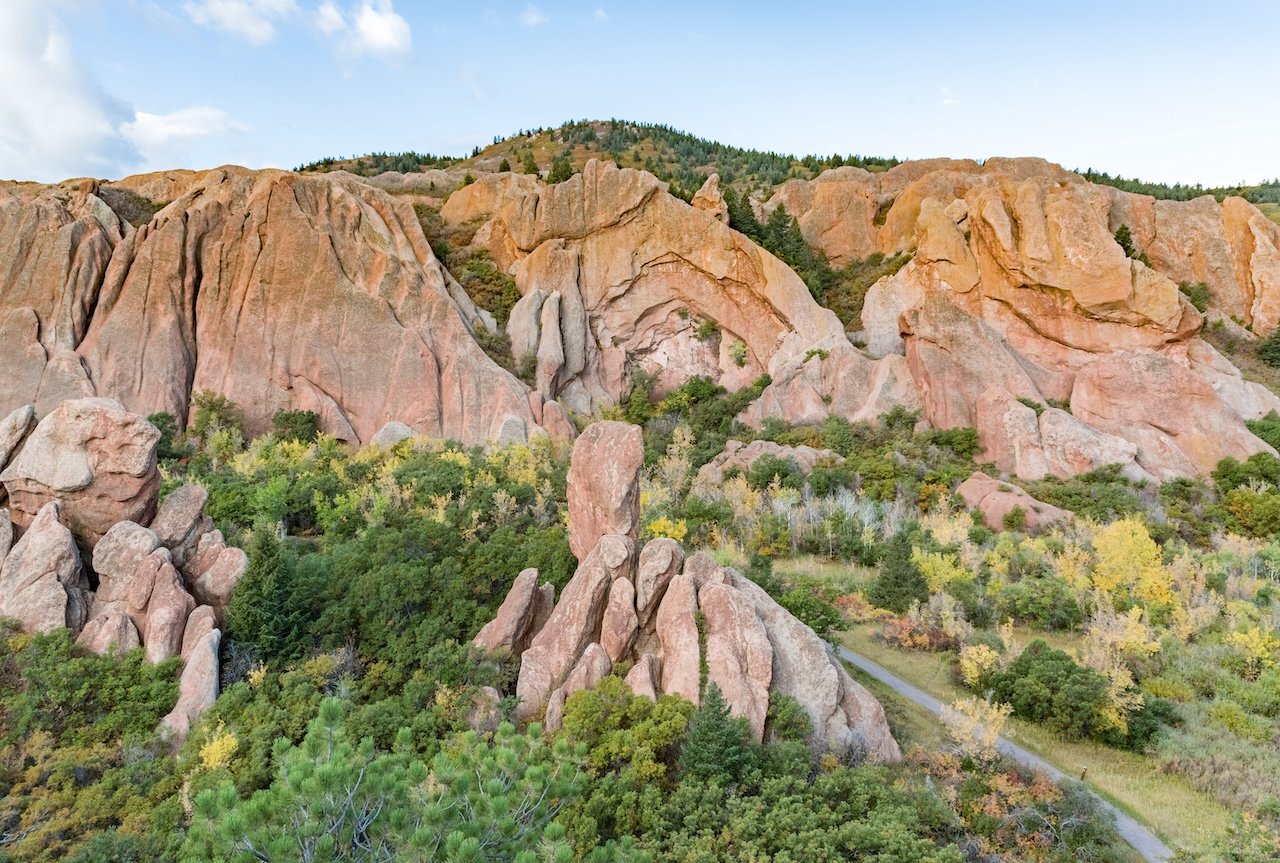
Roxborough State Park, another state park near Denver, is a great place to see Colorado’s fall colors. Formed from the same red rock that created Red Rocks Amphitheater, Roxborough offers similar beauty without the crowds. What feels like a diamond in the rough, the park is somewhat removed from the hustle and bustle of the Front Range, providing a quiet natural sanctuary nestled amongst towering red rocks.
While you won’t find massive aspen groves, you will enjoy a sprinkling of yellows, oranges, and reds during the fall season. Contrasting with the red rocks, it’s a beautiful place for a fall hike in Colorado.
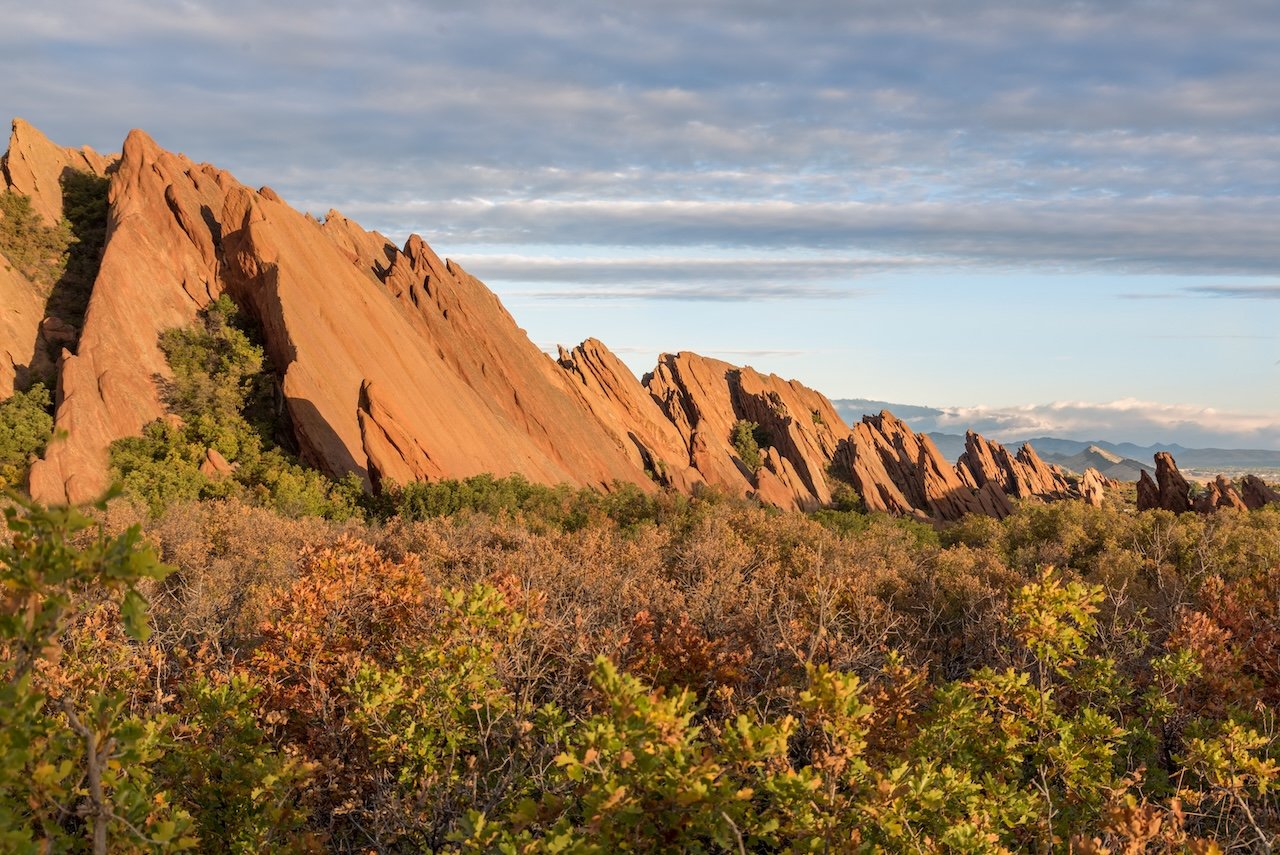
Several hikes lead you through the park to get an up-close look at these formations. The Fountain Valley Loop trail is a great place to start. Be sure to stop at the Fountain Valley and Lyons Overlook along this 2.6-mile loop for some of the best views of the park.
Tip: The small town of Roxborough is the nearest town with a nice selection of restaurants and breweries for post-hike dining.
Kenosha Pass
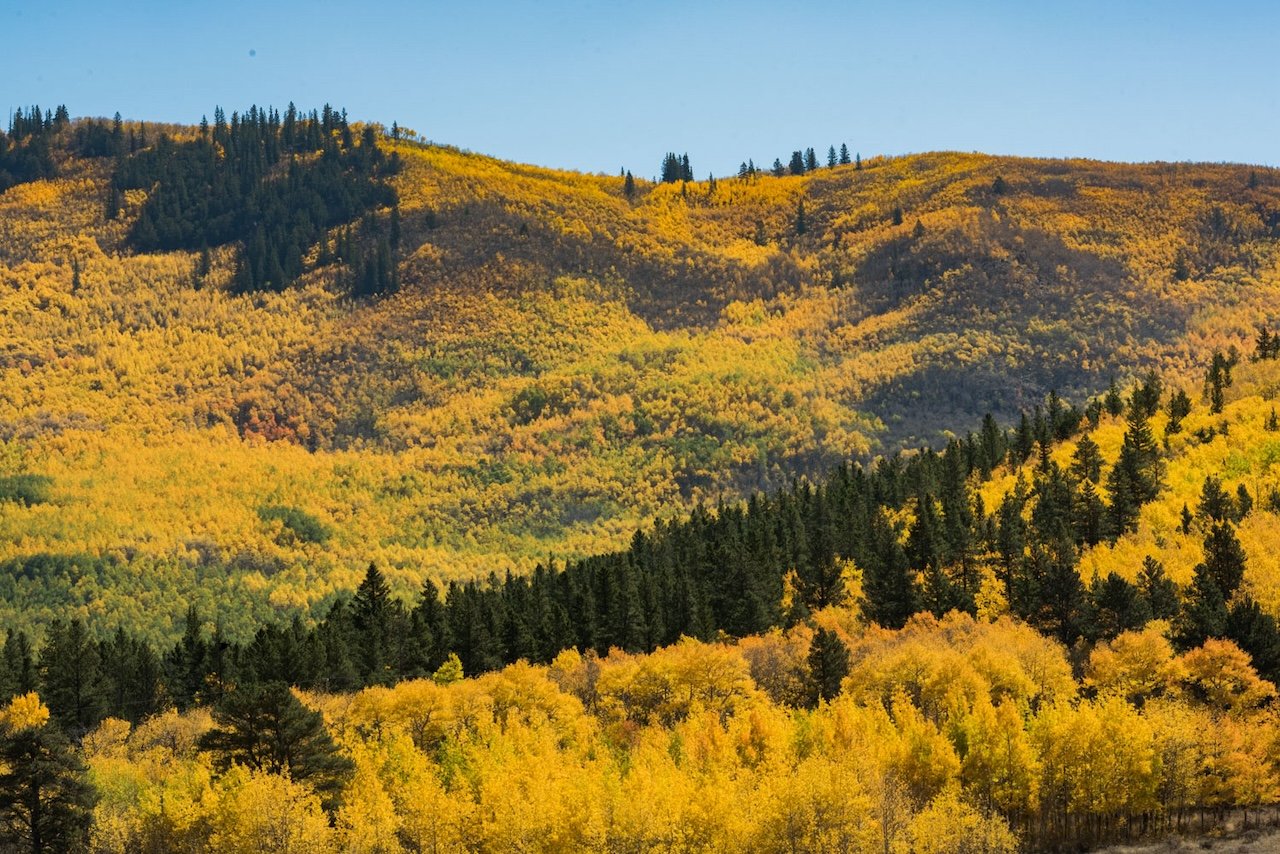
I mention Kenosha Pass in my blog about Easy Day Trips from Denver for Fall Foliage, but I would also put it on my list of top places to see Colorado fall colors. Located 65 miles southwest of Denver, Kenosha Pass reaches 9,997 feet in elevation along HWY 285, which connects the Front Range to Park County and other Colorado mountain town favorites like Salida and Buena Vista.
At the top of the pass, you’ll find the Kenosha Pass trailhead. This trailhead connects to the Colorado Trail—a 567-mile trail that links Denver to Durango. This segment of the Colorado Trail is known as Kenosha Pass North. While the 12-mile out-and-back trail will take you to Georgia Pass, near Jefferson, you don’t have to go that far to see the coloring aspens.
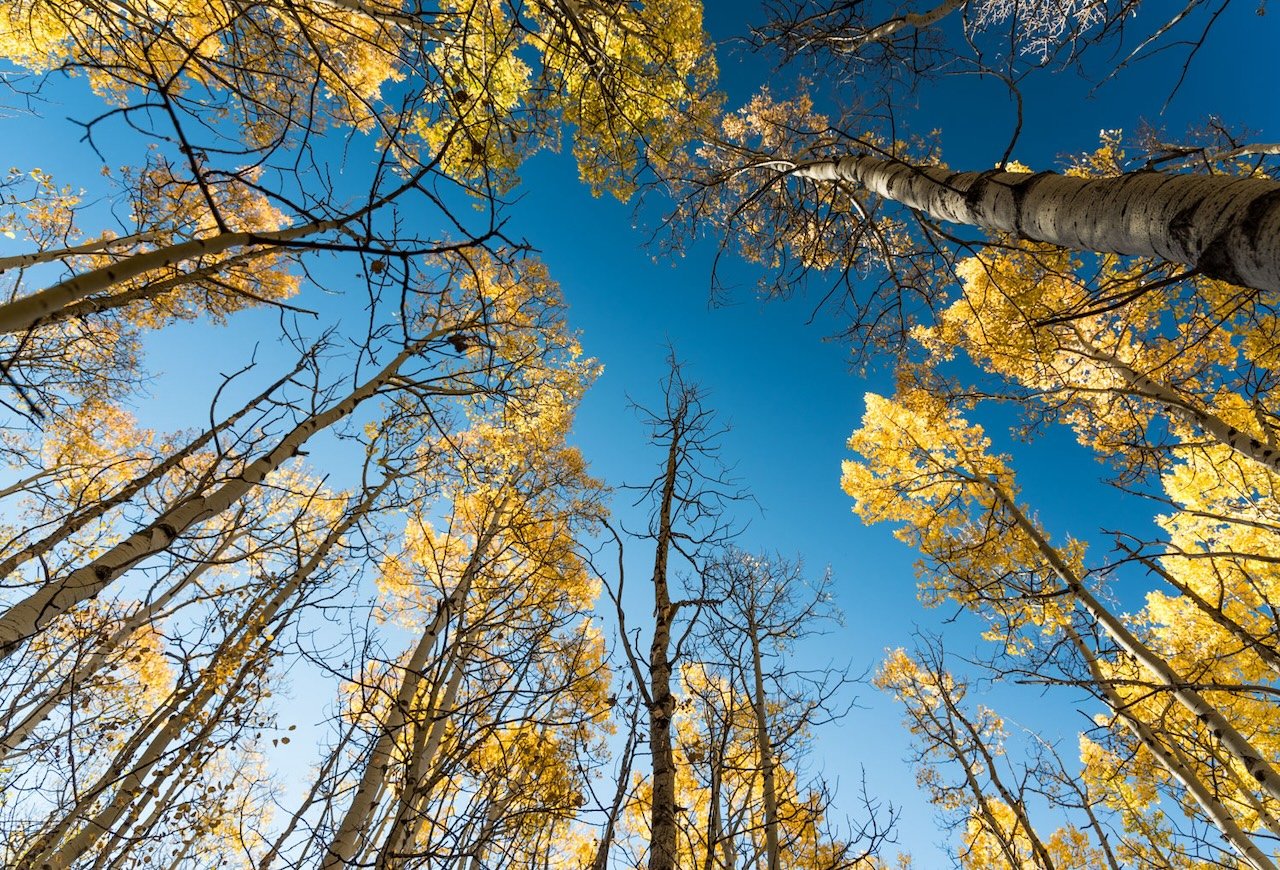
Choose your turnaround point, but I typically turn around after 2.5 miles as the elevation gain picks up quickly past six miles. You’ll see plenty of yellowing aspens and beautiful views of the valley floor below.
Be prepared, this area fills up fast, as this is one of the most popular fall hikes near Denver. There are two parking areas on either side of the road. There isn’t much parking, so I would plan to get there early to avoid parking along the road.
Tip: Craft Mountain Brewing in the nearby small town of Bailey is perfect for post-hike bites and brews.
Boreas Pass
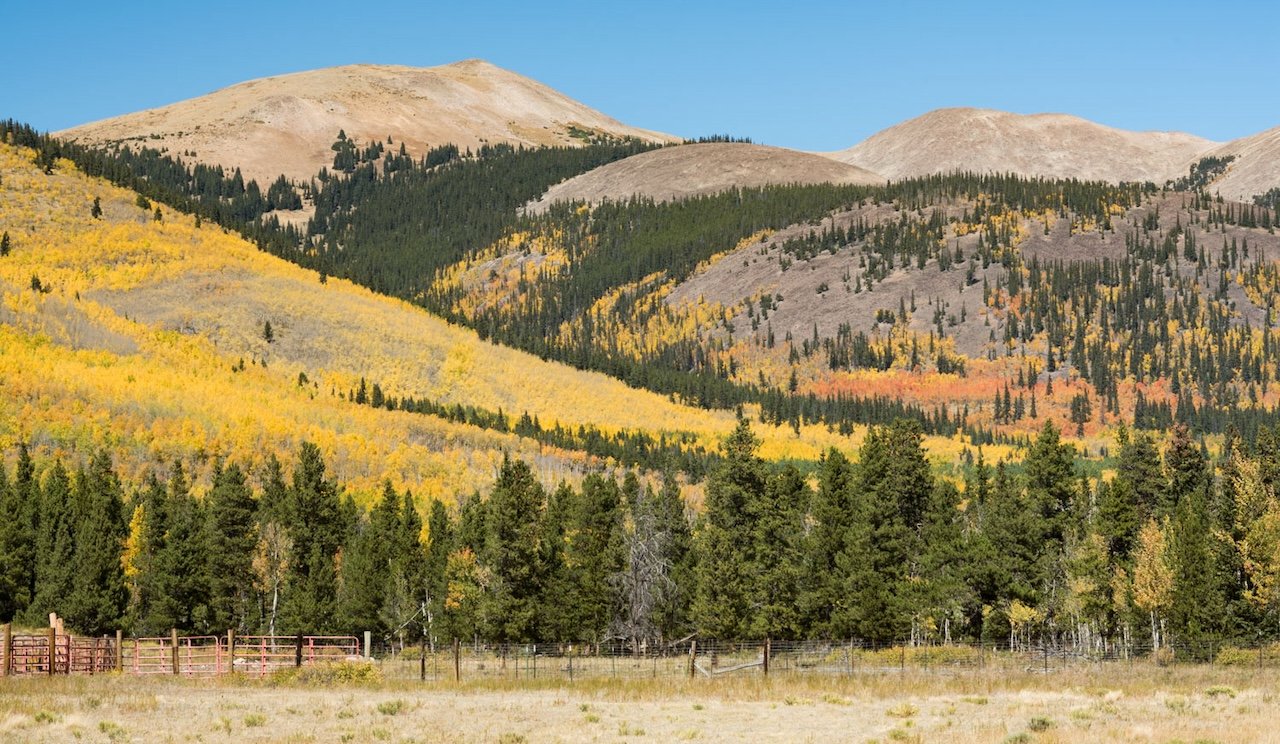
If you continue south along HWY 285, you’ll pass a sign for the small town of Como. The nearly-abandoned town boasts a few historic features, such as the Como Roundhouse and train depot.
After exploring the historic railroad town, head up the hill to Boreas Pass for even more Colorado fall colors. The 22-mile mountain road connects the small town of Como to Breckenridge. Originally part of the old Denver, South Park, and Pacific Railway, the road features historic cabins, the old section house, and a few other artifacts of when the railway operated in the late 1800s.
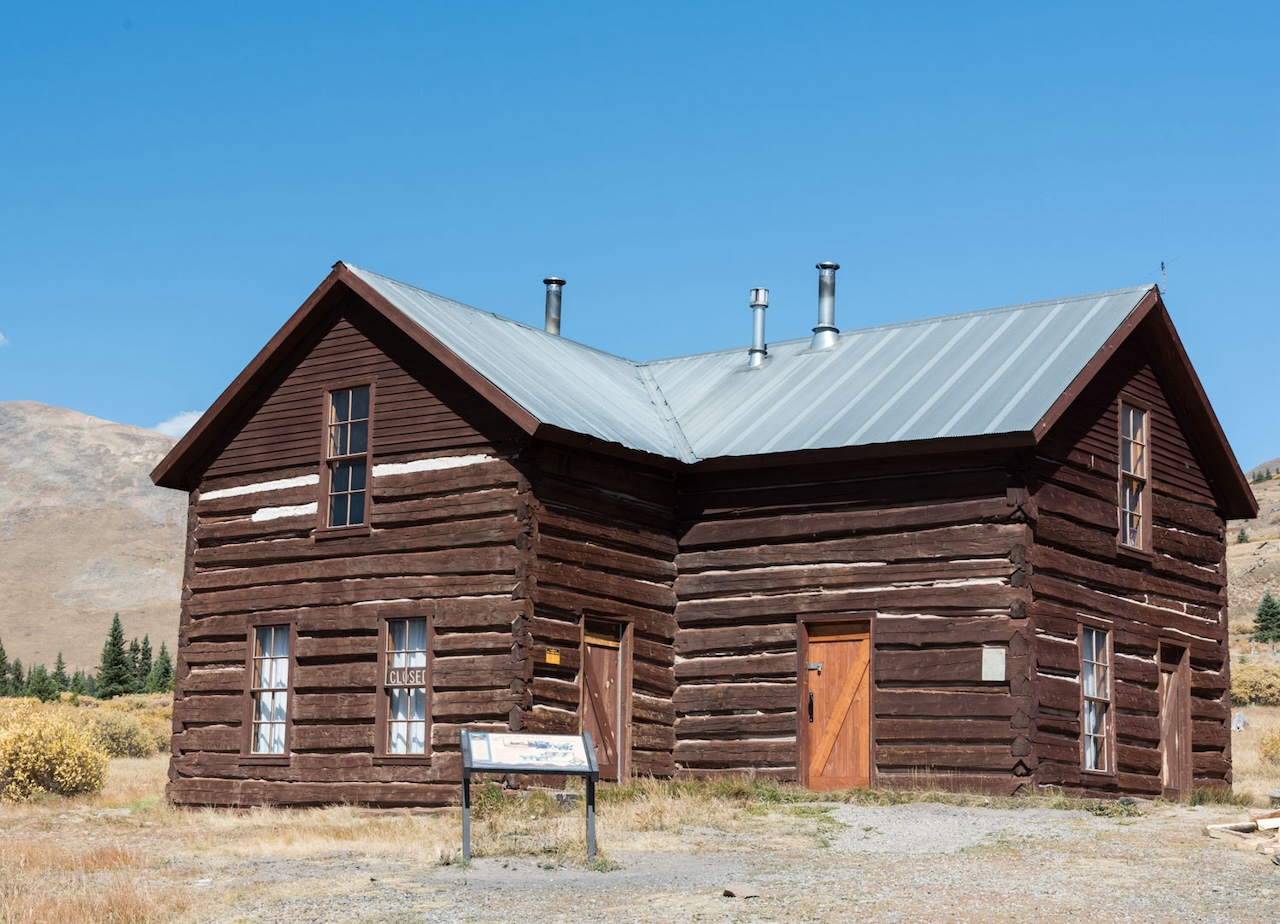
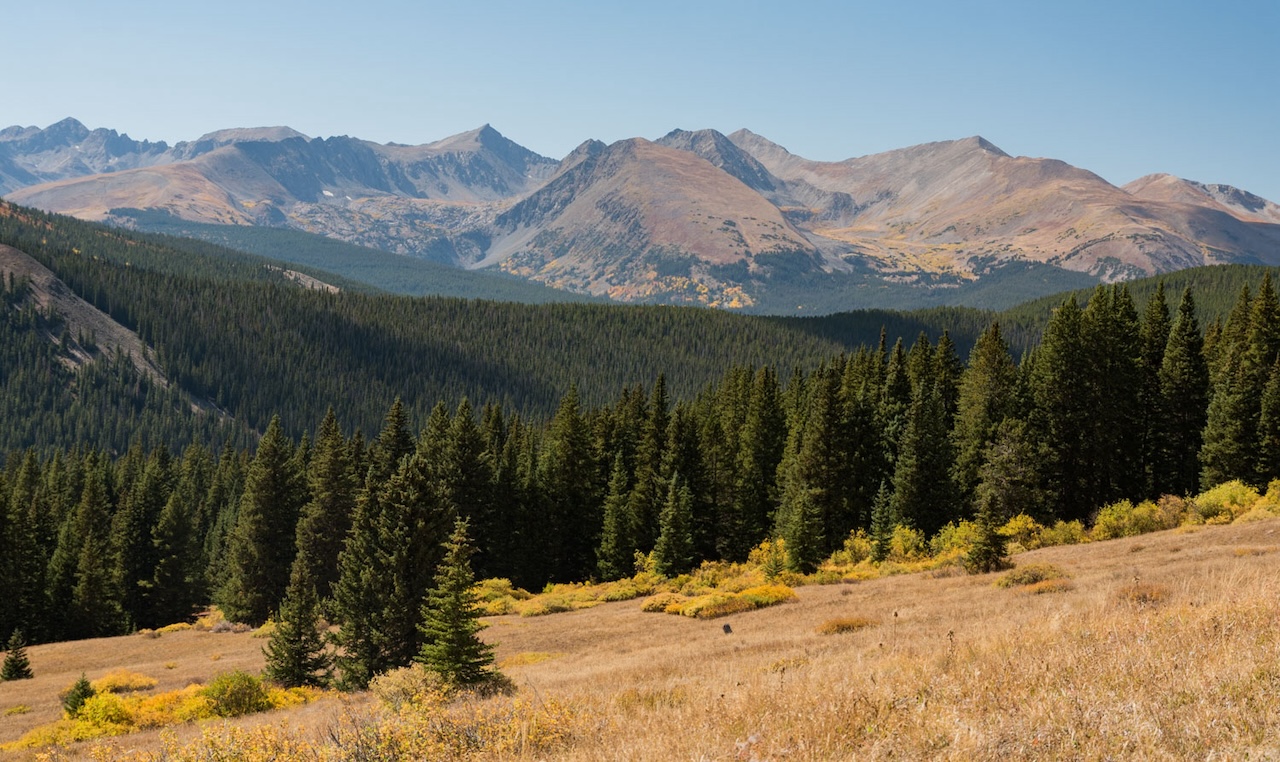
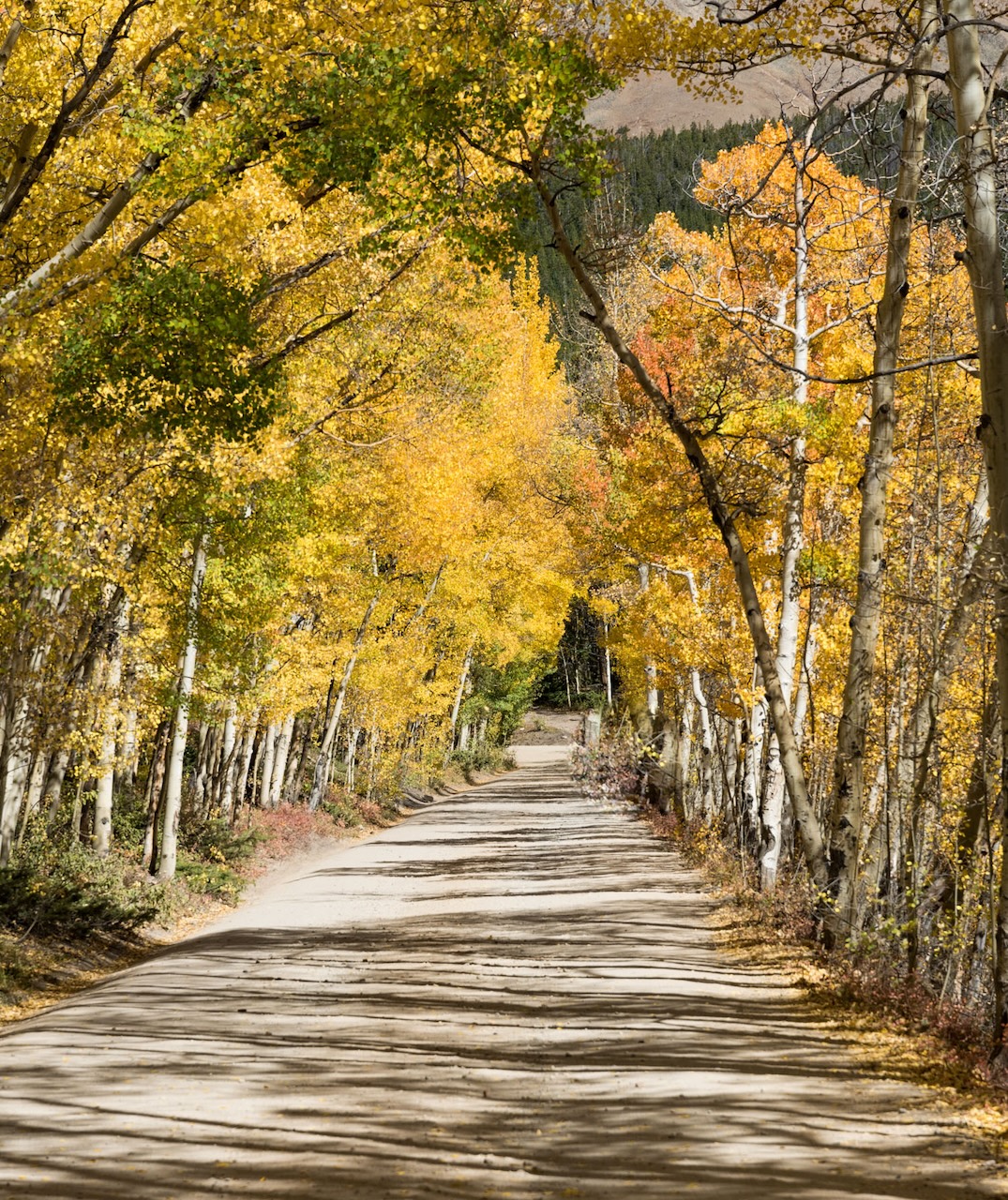
The road is a bit rough, but it doesn’t require a 4×4 vehicle. A car with decent clearance will be enough.
Tip: Make a day of it and explore the small mountain town of Breckenridge, which also boasts beautiful fall colors in Colorado. This is a great loop if you plan to start and end in Denver.
Red Feather Lakes
Because Small Town Stops is all about finding unexpected places to visit, I put Red Feather Lakes on the list of places to see Colorado fall colors. Located 110 miles north of Denver, Red Feather Lakes is a small community of outdoor enthusiasts and Colorado natives who like to keep things under the radar.
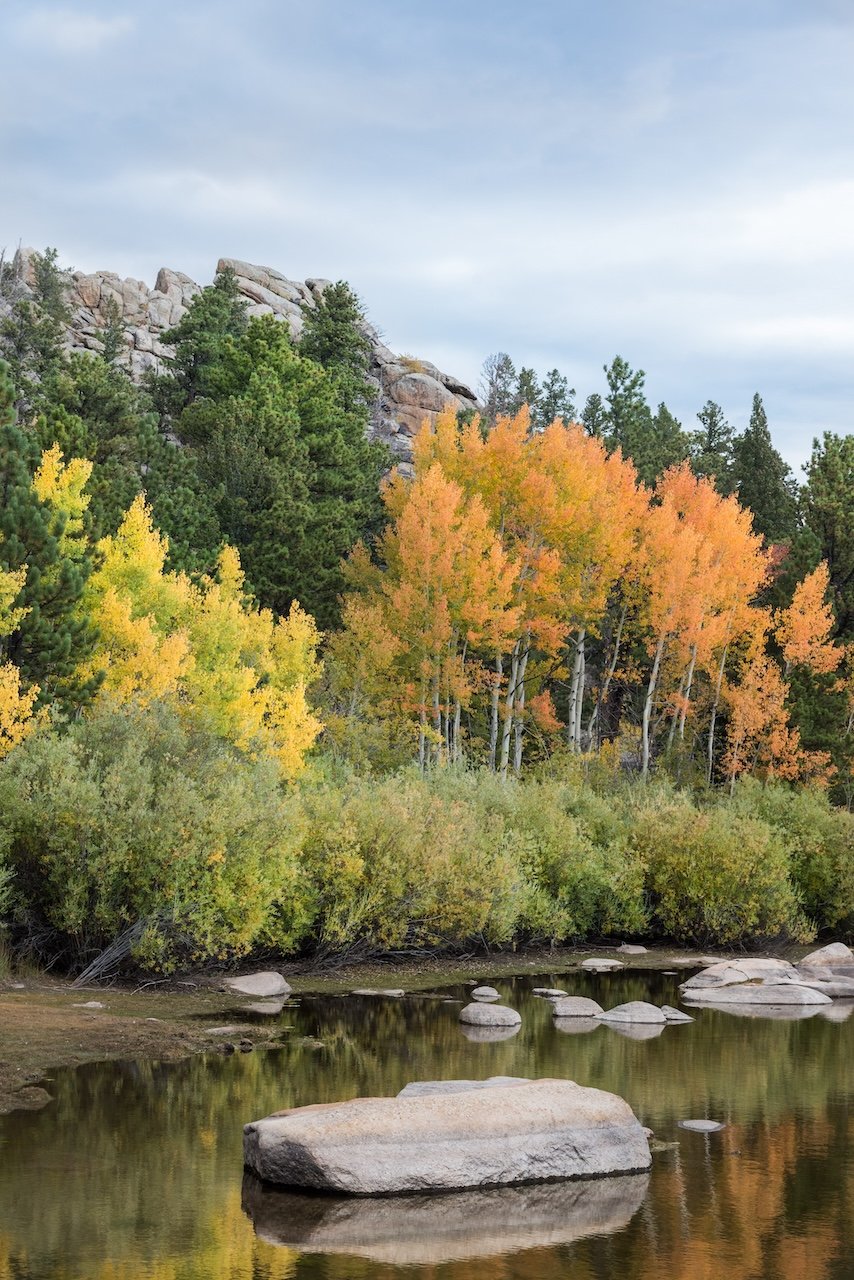
The small town of Red Feather Lakes Village is surrounded by the 612,000-acre Roosevelt National Forest and boasts a trading post, a tavern, and a handful of boutique shops and restaurants. Surrounding the quaint village are eight different lakes, four of which are open to the public for outdoor recreation.
I love this area of Colorado because it sees fewer crowds, and the on-water activities, such as fishing and kayaking, make for a great day outdoors. If you want to explore the lakeside, the Dowdy Lake loop trail is the perfect place to start. The easy 2.3-mile trail follows the lake’s perimeter and offers beautiful waterfront views, unique rock formations, and a sprinkling of fall colors to boot.
Another nice hike in Red Feather Lakes is the Lady Moon Trail. The gentle 6-mile hike is relatively flat, with golden aspens in the fall and climbs to provide views of Lady Moon Lake.
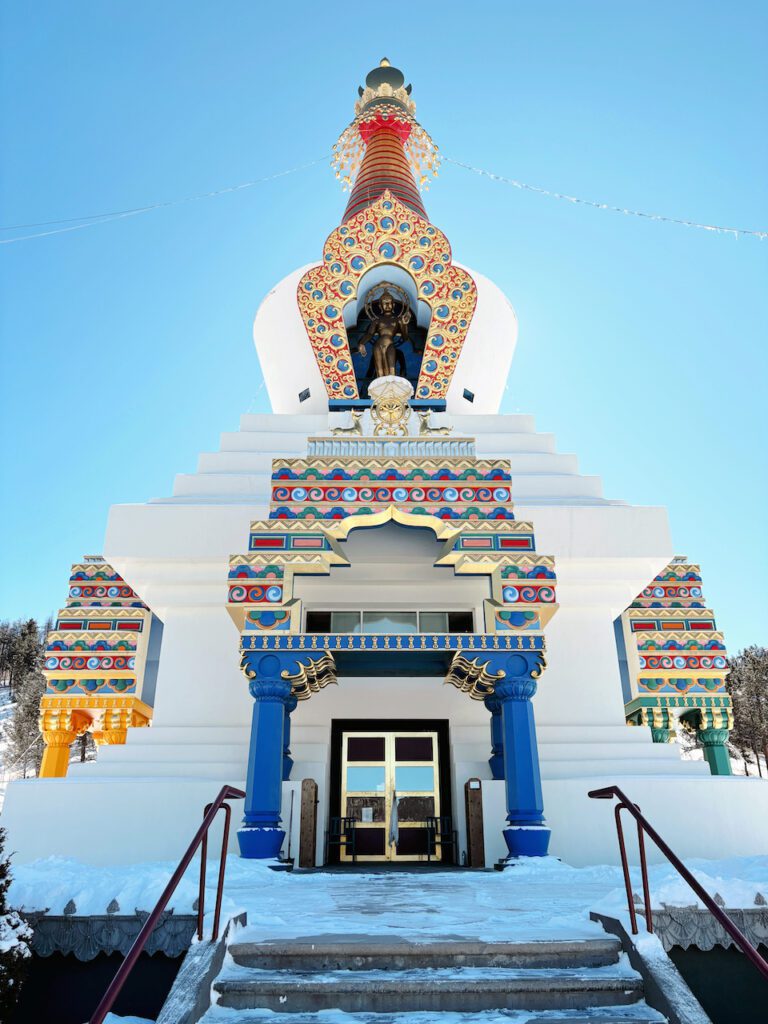
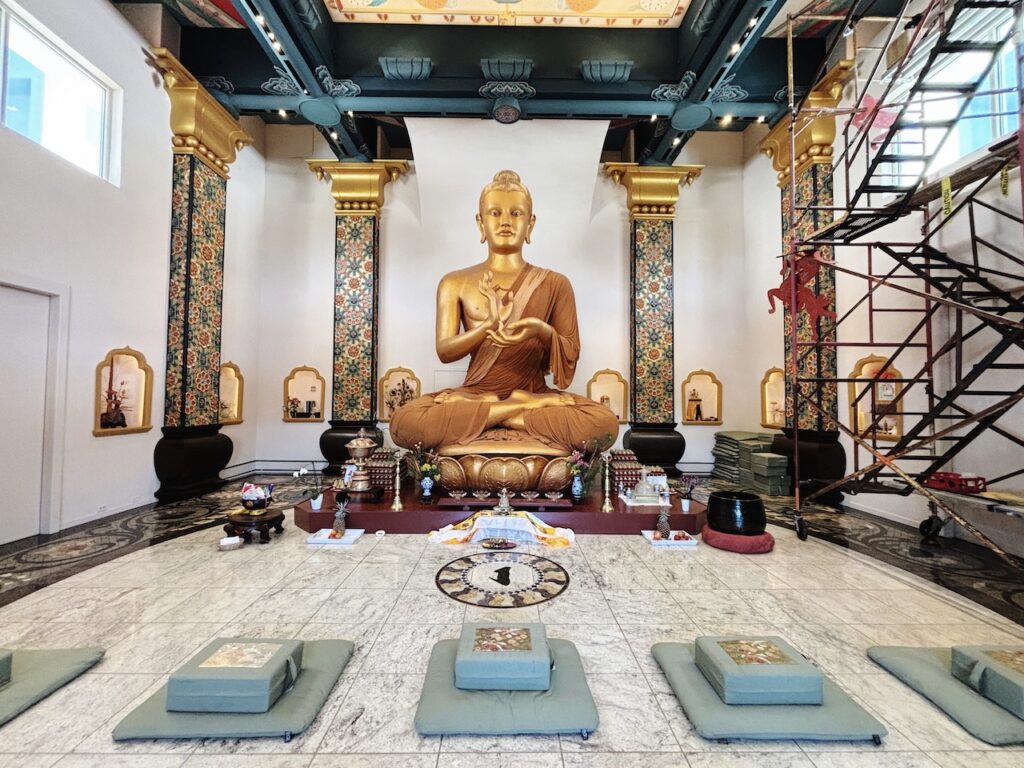
The area is also home to the Drala Mountain Center, one of only 100 Shambhala centers found in the world, and where you can see the Great Stupa of Dharmakaya. The retreat center is open to the public for exploring the hiking trails on the property. The most popular hike is the Shambhala Mountain Trail. The five-mile loop leads you around the property, with vantage points overlooking the Great Stupa and surrounding mountains. At its pinnacle stands a shrine to the poet Allen Ginsberg.
Tip: A quirky roadside stop to add to your travels is Gnome Road in Red Feather Lakes. A dirt road that winds through a forest of fairyland creatures, gnomes, and other trinkets. Be respectful and leave everything as it is, don’t take anything with you, and leave no trace.
Kebler Pass near Crested Butte
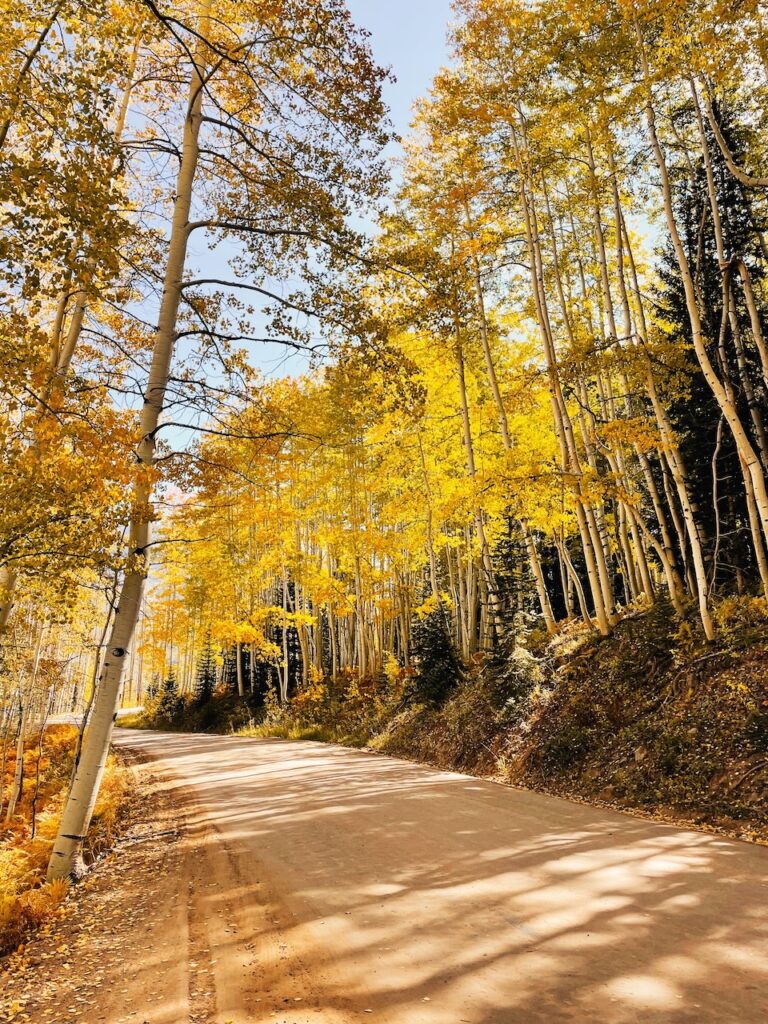
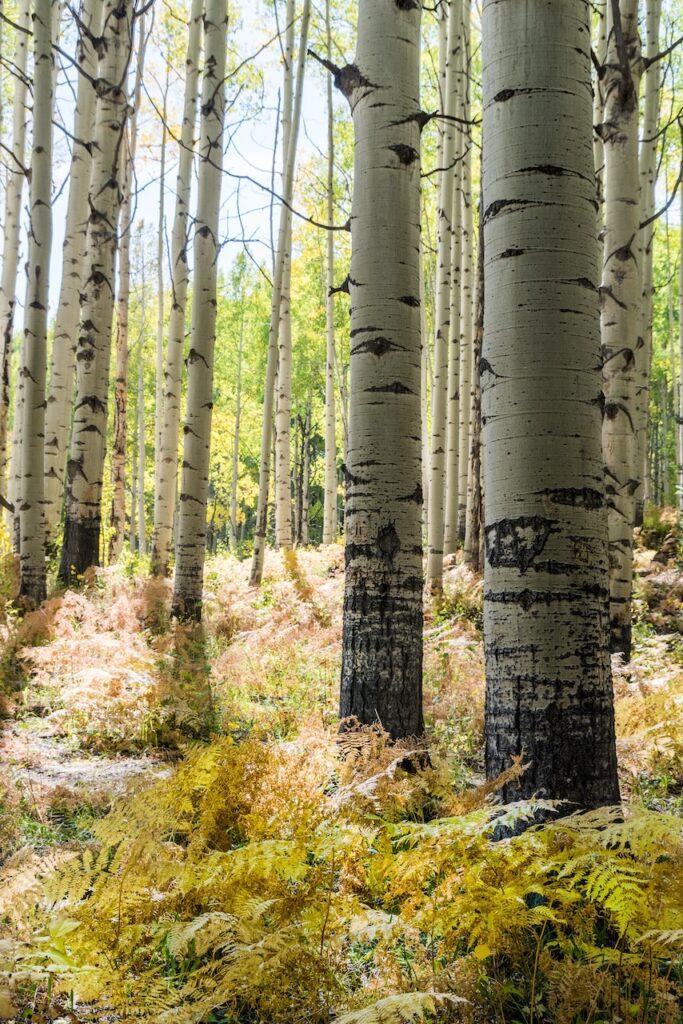
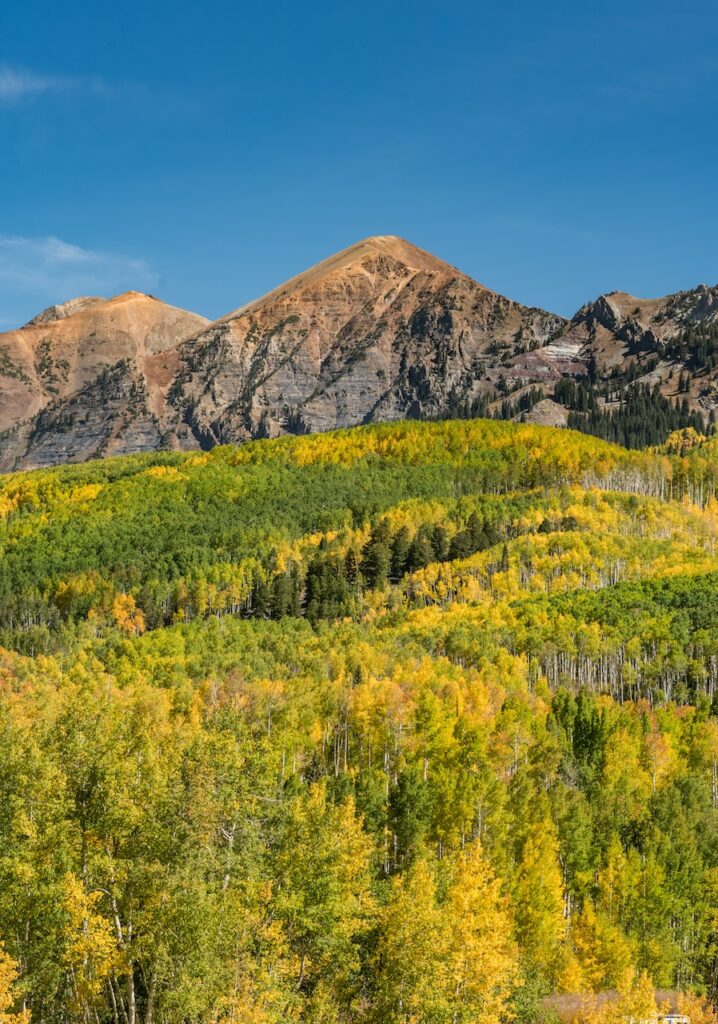
One of the most iconic places to see Colorado fall colors is Kebler Pass near Crested Butte. The massive aspen groves, stretching for nearly 30 miles along the pass, are so large in fact, that they have been a contender for the “world’s largest living organism.”
Aspen groves often grow from a singular root system. They grow new trunks from the underground roots, creating a singular root system that can span 100+ acres. An entire hillside can be covered by a single aspen tree. What does this mean for leaf peepers in Colorado? Because the root systems are interconnected, it means the trees will lose their leaves at the same, bloom in spring together, and yellow in unison for one heck of a fall foliage show.
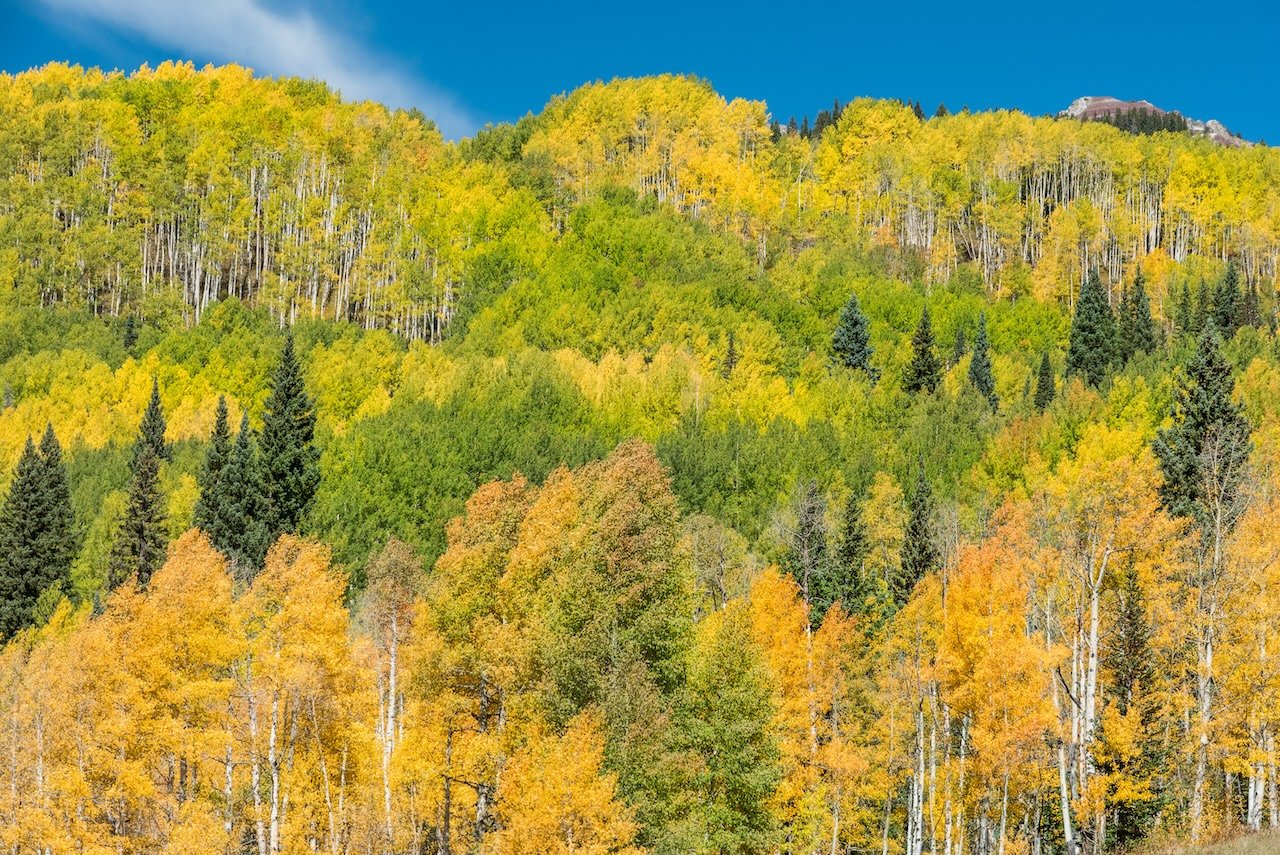
Kebler Pass lies between the towns of Crested Butte and Paonia along Highway 133. As part of the West Elk Loop Scenic Byway, it is one of Colorado’s best fall drives. The road is dirt and gravel, easily passable with any car before winter snow settles in.
There are several pull-out points for scenic views. A hike I enjoy when I’m over that way is the Three Lakes Loop—a 3.4-mile loop through aspen groves and scenic lake views. More hiking options can also be found along Ohio Creek Road.
Tip: If coming from Crested Butte, complete the drive along Kebler Pass and stop at the small town of Paonia for a glass of wine at one of the many wineries in town. Try Stone Cottage Cellars or Qutori Winery.
Million Dollar Highway
The stretch of Highway 550 from Silverton to Ouray, best known as the Million Dollar Highway, is one of the most popular scenic drives to see Colorado’s fall colors.
Starting in Silverton, hillsides are swathed in yellow aspens, while trails reveal an up-close look at the fall foliage. A popular hike near Silverton is the Ice Lakes Trail. While very popular in summer, I found I liked it even more during the early fall months.
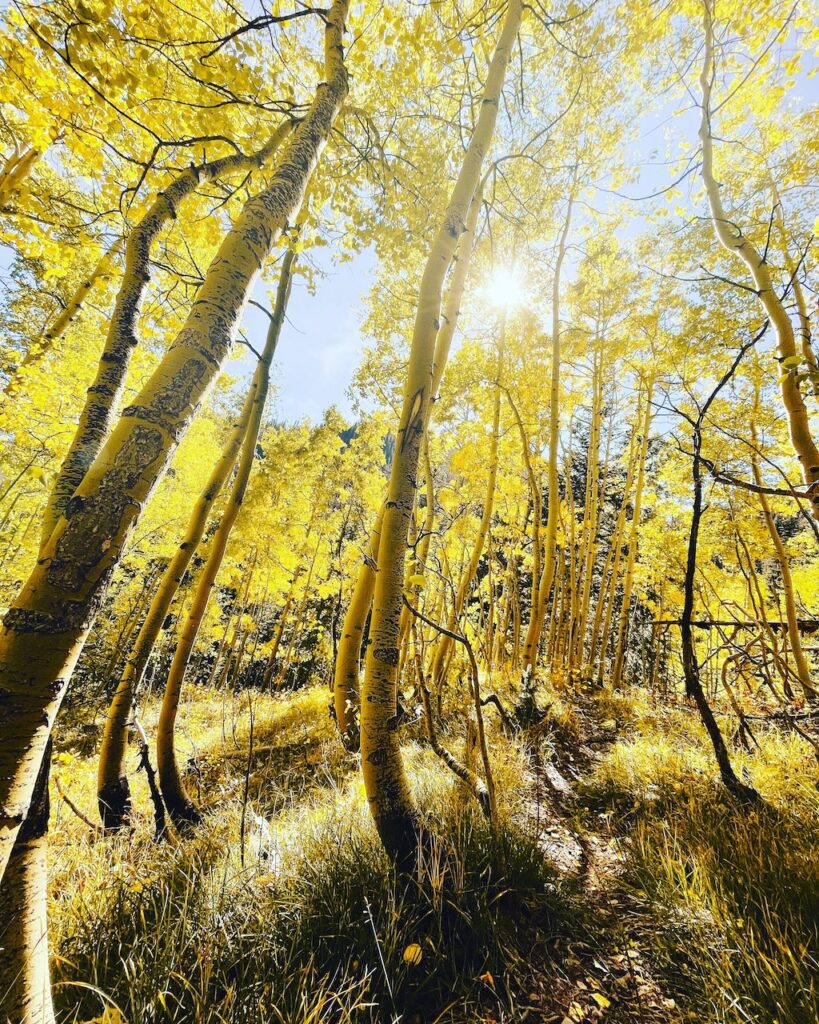
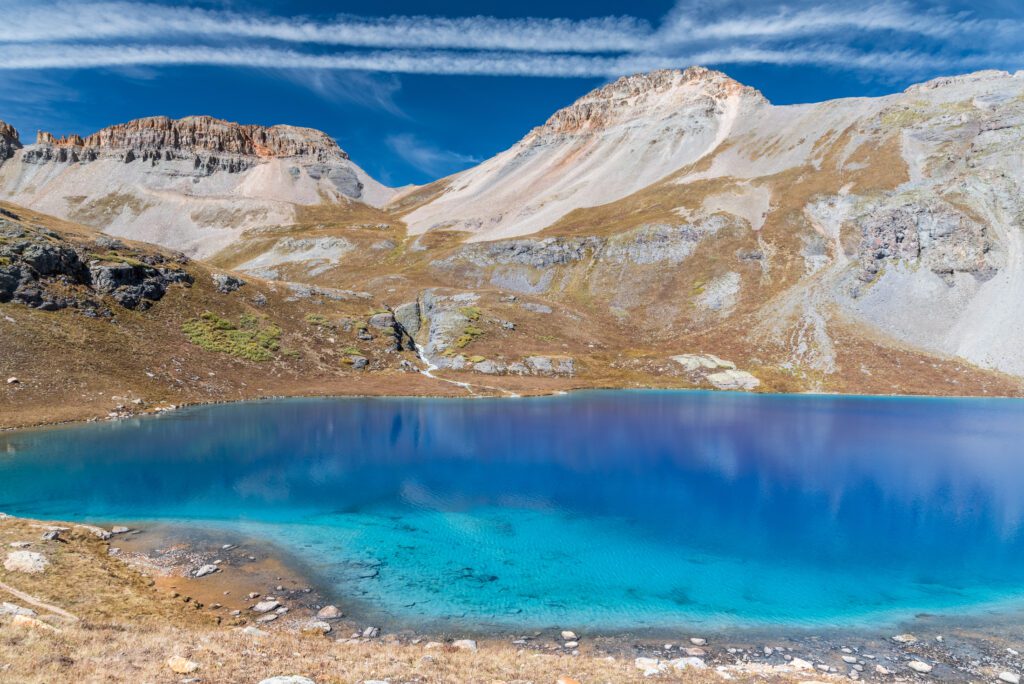
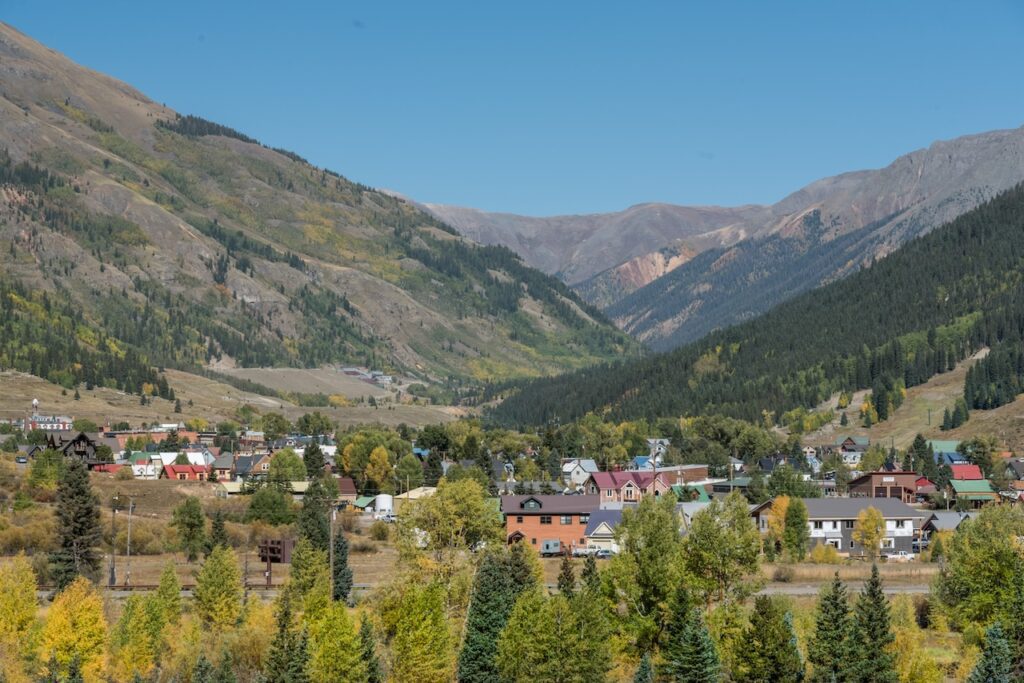
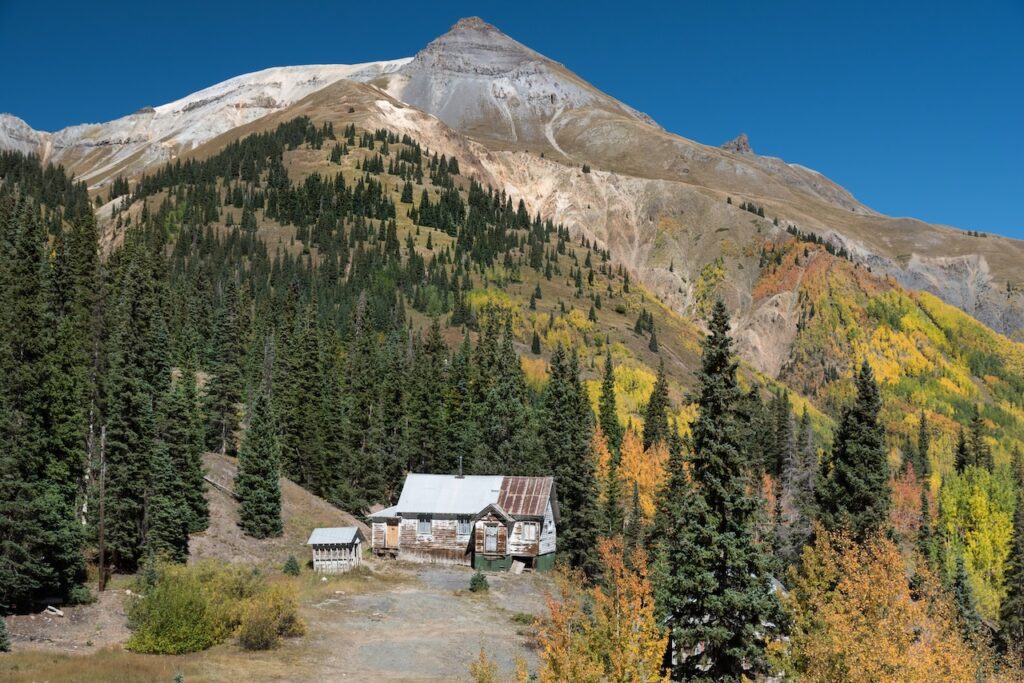
From Silverton, traveling north along the Million Dollar Highway, be sure to stop at Red Mountain Pass. Resting at 11,000 feet, Red Mountain Pass is a great place to spot and take some photos of the Colorado fall colors and see some of the area’s historic mining structures.
Of course, a detour to Telluride and Ouray is a must during the fall. A simple drive through the canyon into Telluride reveals a swatch of colors between the fall foliage and red rock canyon walls. The Dallas Divide Overlook is another great place to stop and admire the fall colors on your way to Telluride.
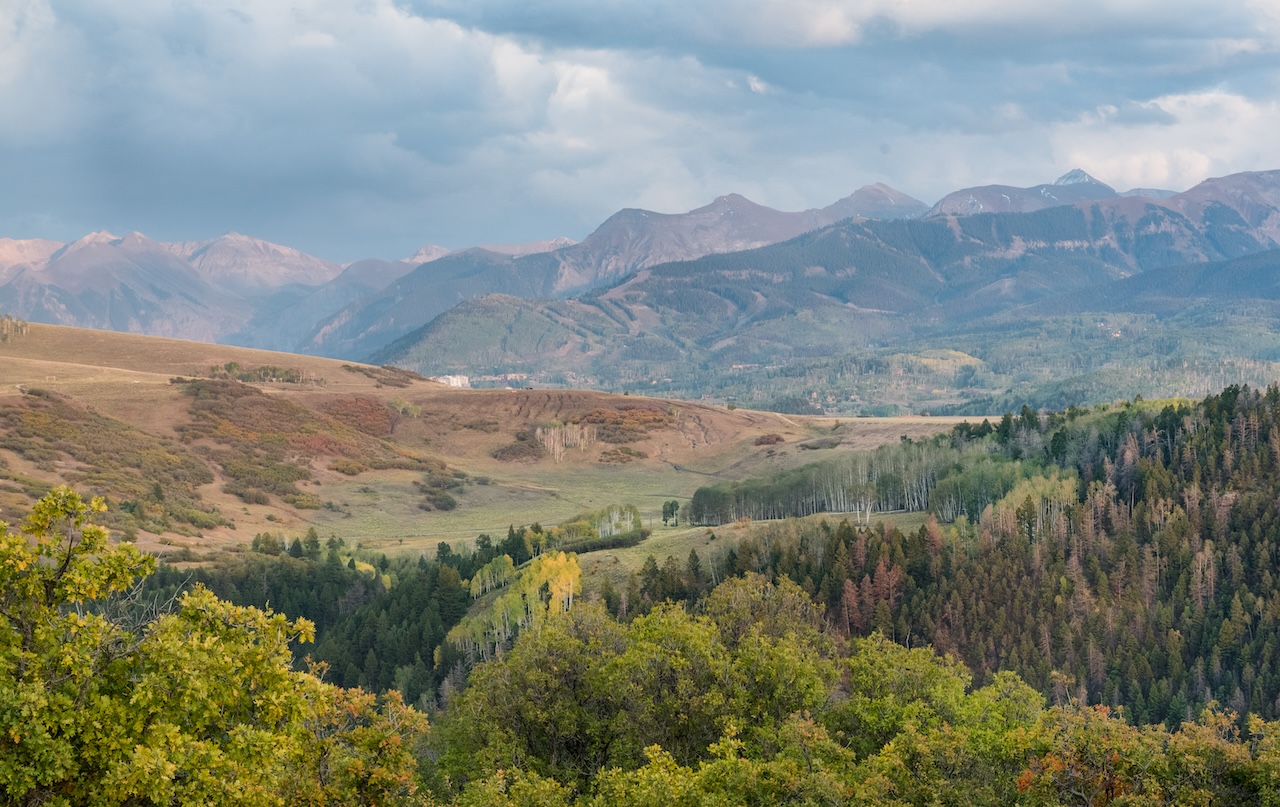
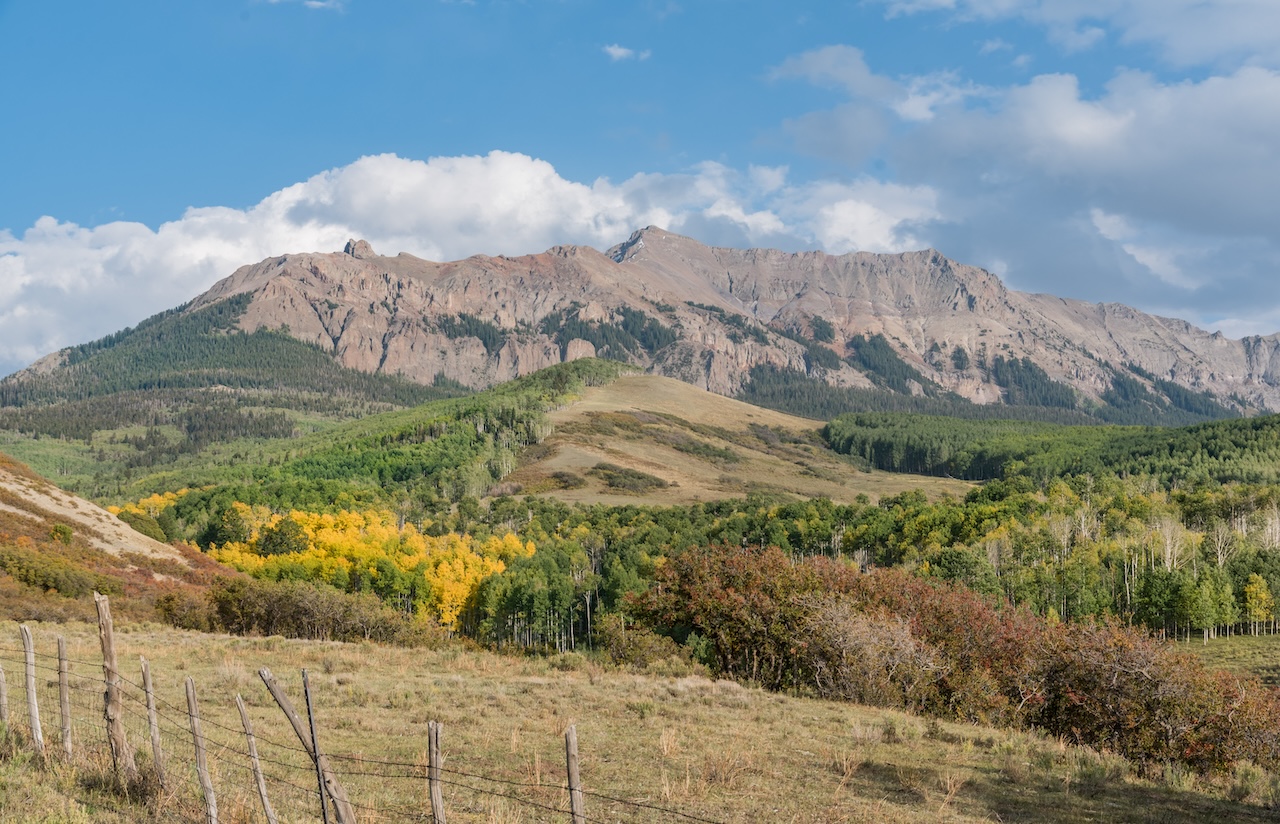
Tip: For even more spectacular autumn views, drive the scenic Last Dollar Road. A true hidden gem in Colorado, this historic road ascends from Telluride to Ridgway, offering a pleasant alternative route between the two towns. The 21-mile road is unpaved, so plan to spend roughly two to three hours driving. From Telluride, drive about five miles down HWY 145, and turn right onto Last Dollar Road.
Black Canyon of the Gunnison National Park
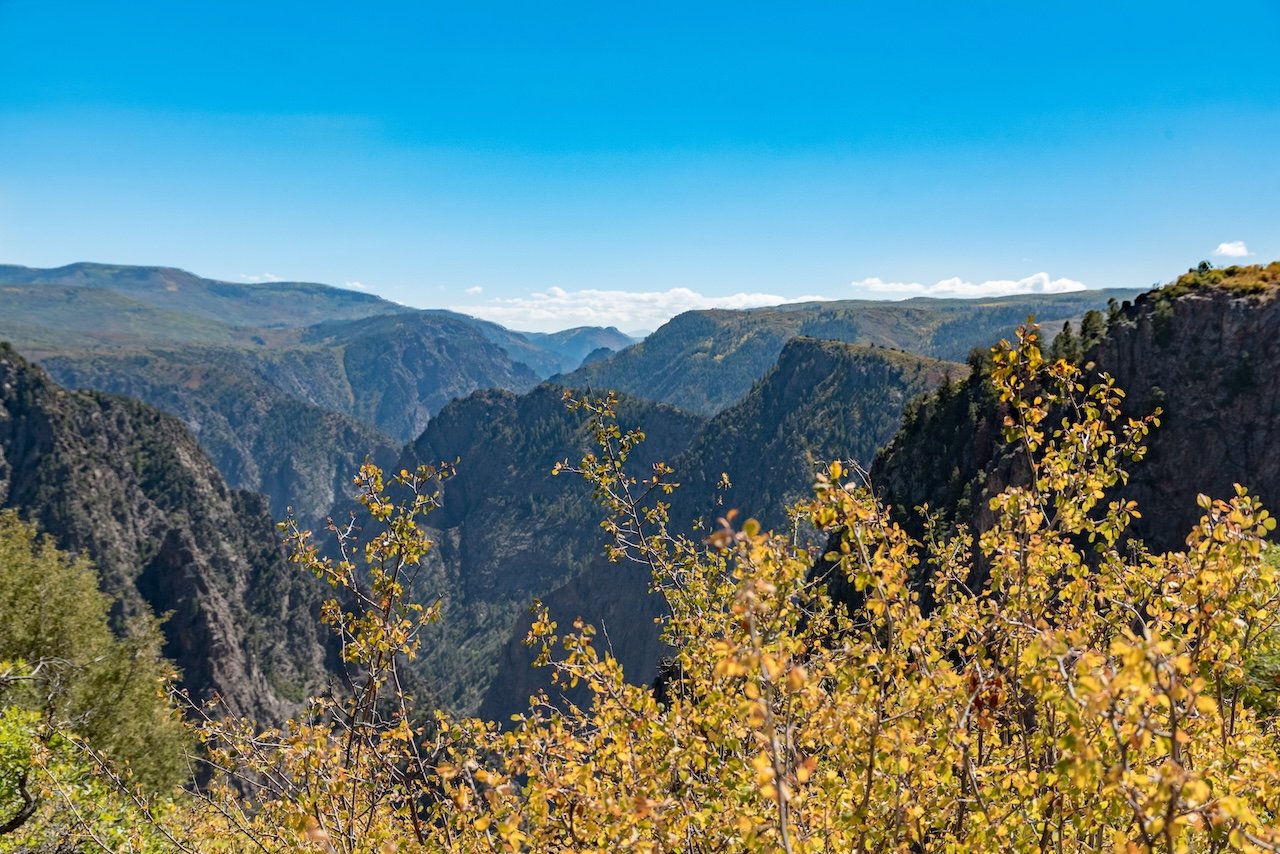
The Black Canyon of the Gunnison National Park may not be the first place you think of where to see Colorado fall colors, but it should definitely be on your list. While you won’t see large aspen groves of yellowing leaves, you will see trails and mesa tops filled with coloring scrub oak and views of the Black Canyon in the background.
There are two entrances, the South Rim and the North Rim. The South Rim entrance, near the small town of Montrose, is the most popular due to its amenities and accessibility. Popular day hikes at the South entrance include the Rim Rock Trail and Oak Flat Trail. Neither is very long, but they do gain a bit in elevation.
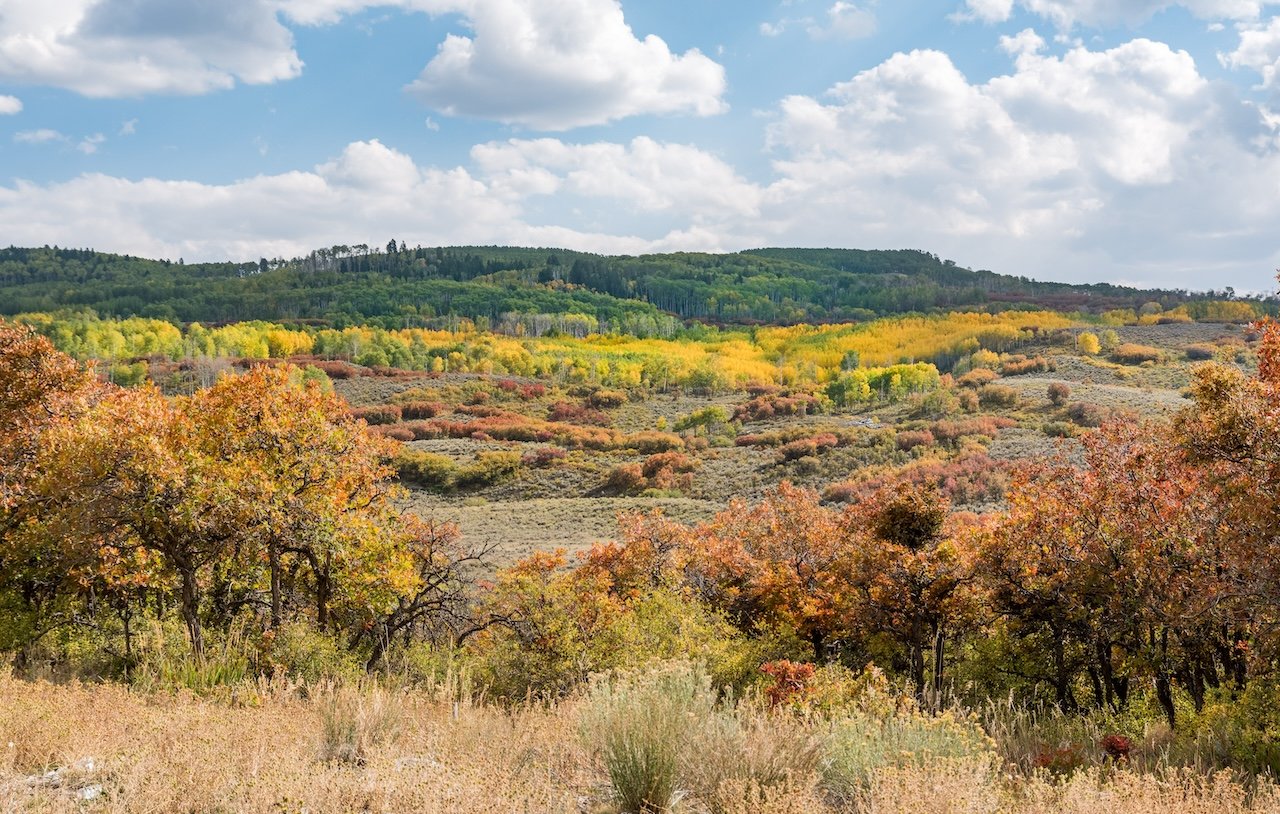
Tip: While we’re on the subject of scrub oak, a scenic drive along Highway 50 during the fall will reveal a palette of colors from the red and orange scrub oak to the yellowing aspens in the distance. Between the Blue Mesa Reservoir and Montrose, an array of fall colors is unique to this area. Note, HWY 50 is currently under construction, so be sure to check the road closures.
*All images taken by Jessica Hughes and are subject to copyright.