
Photographs and Words by:
The Franciscan monastery wasn’t on my itinerary. It wasn’t the reason I came to Cimiez. But it became the place I remember most.
My morning in Nice’s Cimiez neighborhood had a clear destination: the Matisse Museum. Housed in a stately 17th-century villa, it offered exactly what I had hoped for: an intimate look at Henri Matisse’s life and work on the French Riviera. After a leisurely visit, I stepped back outside with no particular agenda beyond enjoying the neighborhood on foot.
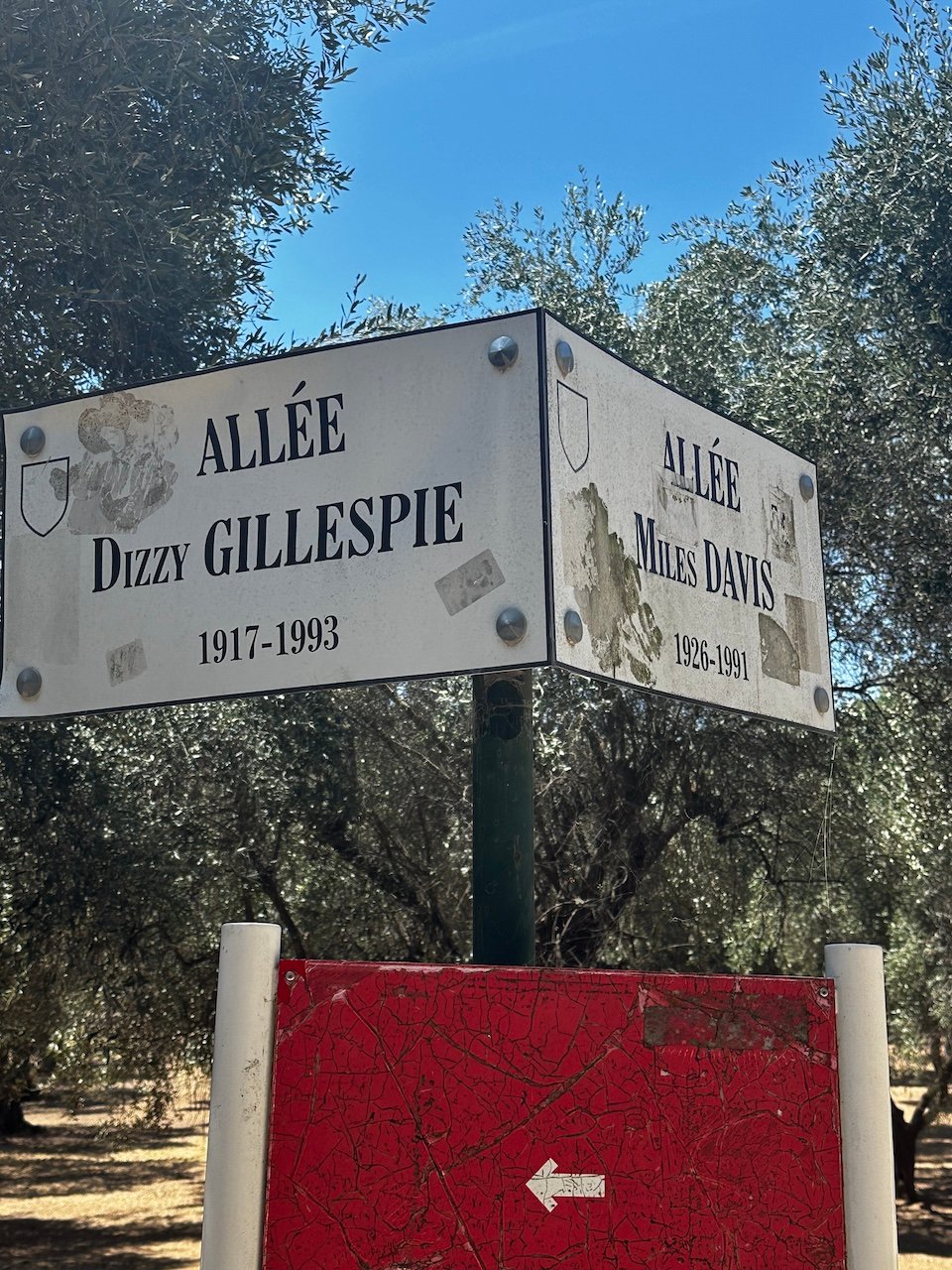
I wandered through the Parc des Arènes de Cimiez, following Allée Miles Davis beneath centuries-old olive trees. The park’s jazz-themed pathways (a nod to the years when the Nice Jazz Festival filled these grounds) led me almost by accident toward a short flight of stone steps. At the top stood the Monastère de Cimiez, one of the most memorable discoveries of my time in Nice.
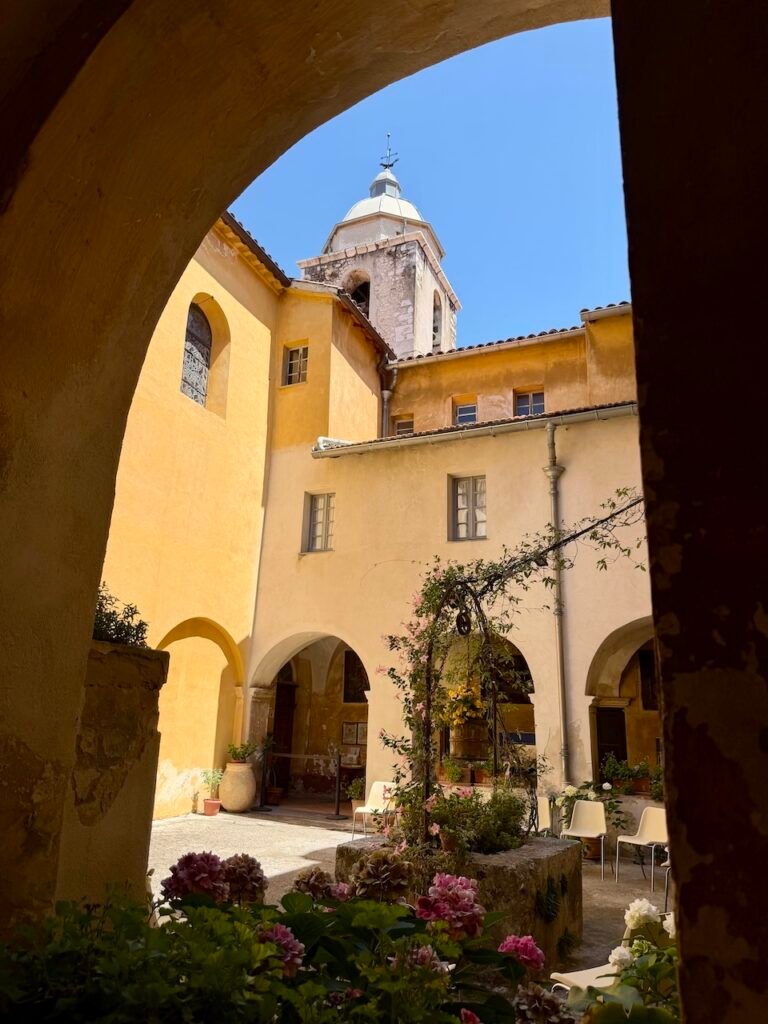
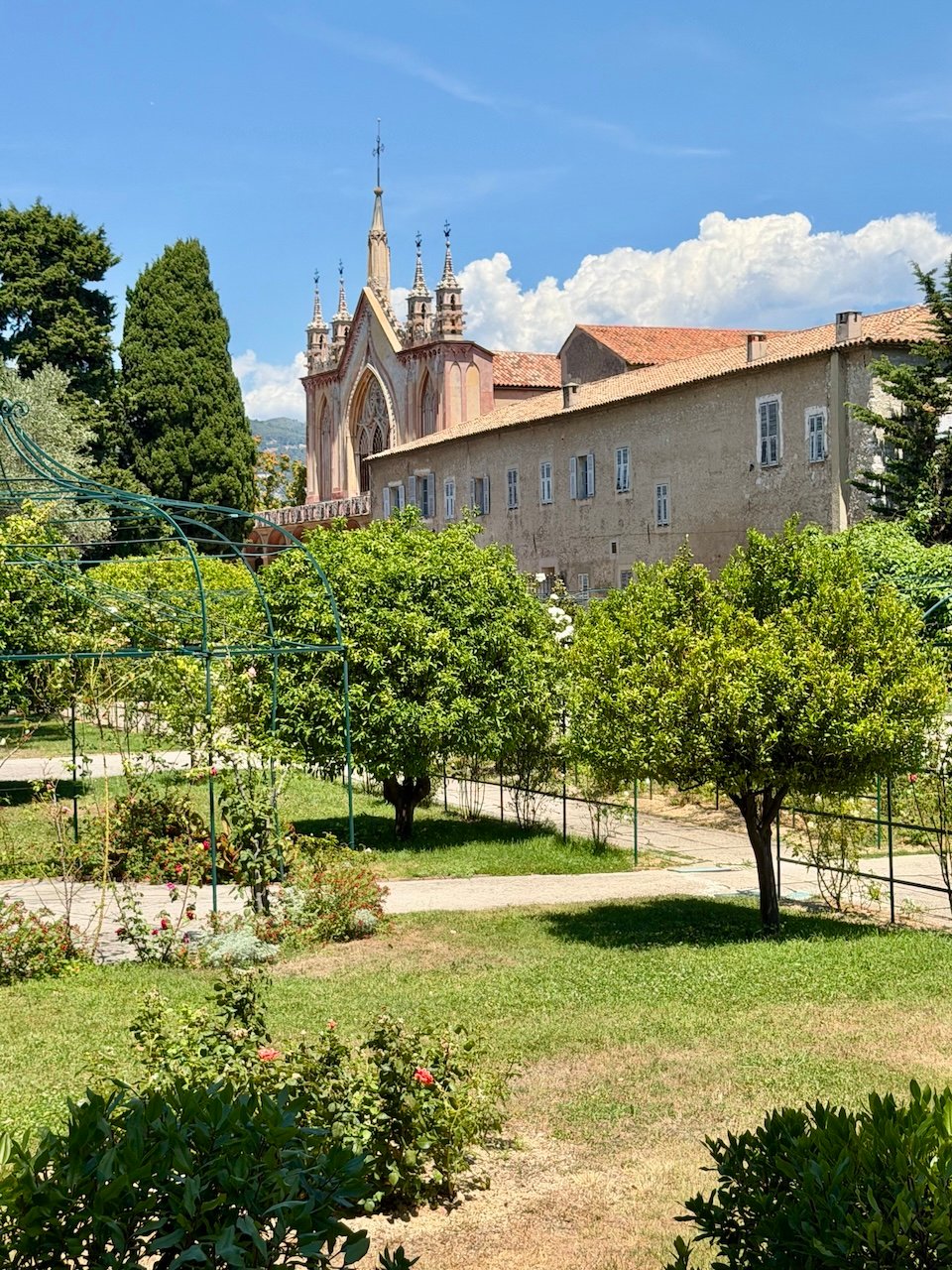
Part of a Franciscan monastery whose history stretches back centuries, the complex was wonderfully removed from the bustle of Nice’s waterfront, despite being only a few miles away. Weathered stone walls hinted at generations of monks who had called this hilltop home.
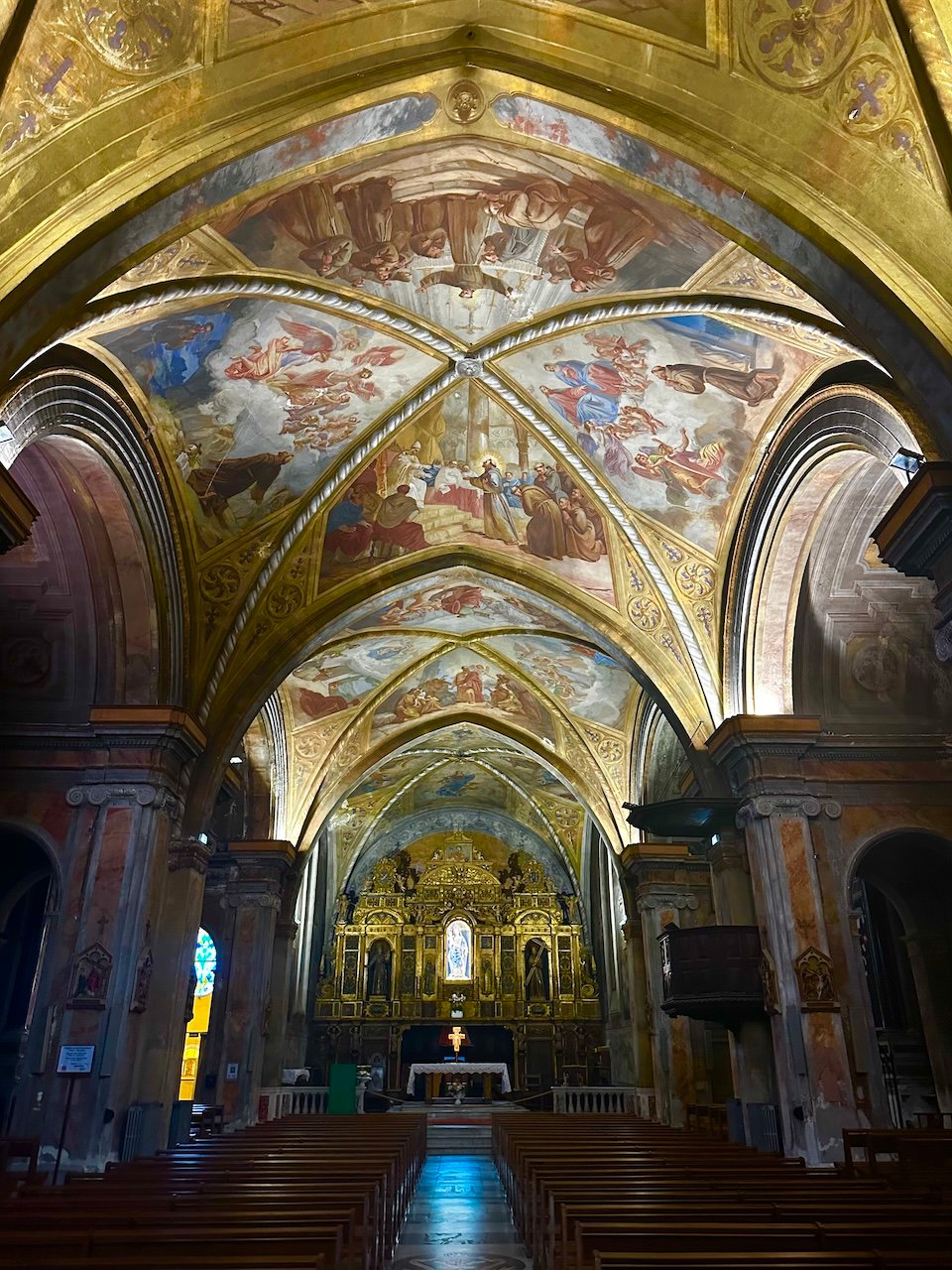
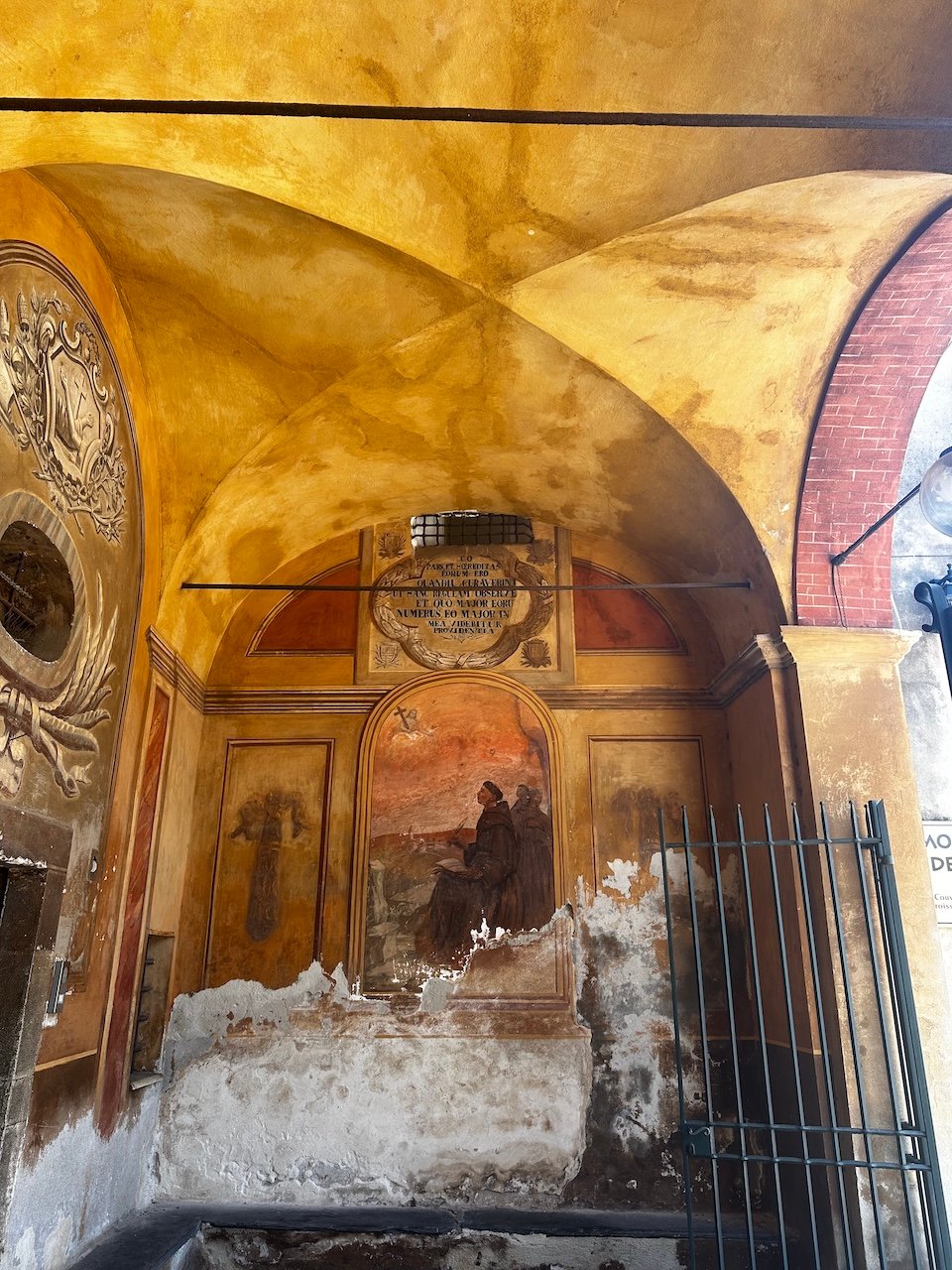
The church itself dates to the 15th century, although the site has even older religious roots. Its ornate gilded details contrast with the simplicity often associated with Franciscan traditions. The sanctuary contains several remarkable works of religious art. Three paintings by the 15th-century Italian artist Ludovico Brea adorn the walls, their rich colors remarkably well preserved. Before leaving, I wandered into the adjacent cloister courtyard, where QR codes link to informative displays about the Franciscan order, the monastery’s history, and the lives of the friars who have served here for centuries. It’s an intriguing blend of old and new: today’s technology helping preserve and share a tradition that has endured for generations.
Matisse himself is buried in the monastery cemetery, just beyond the church. His simple grave rests among cypress trees overlooking the city he loved and where he created many of his greatest works. Nearby lies fellow French painter Raoul Dufy, another artist whose career became closely connected with the Côte d’Azur. It seemed fitting that my visit to the museum had, quite unintentionally, ended where Matisse’s story concluded.
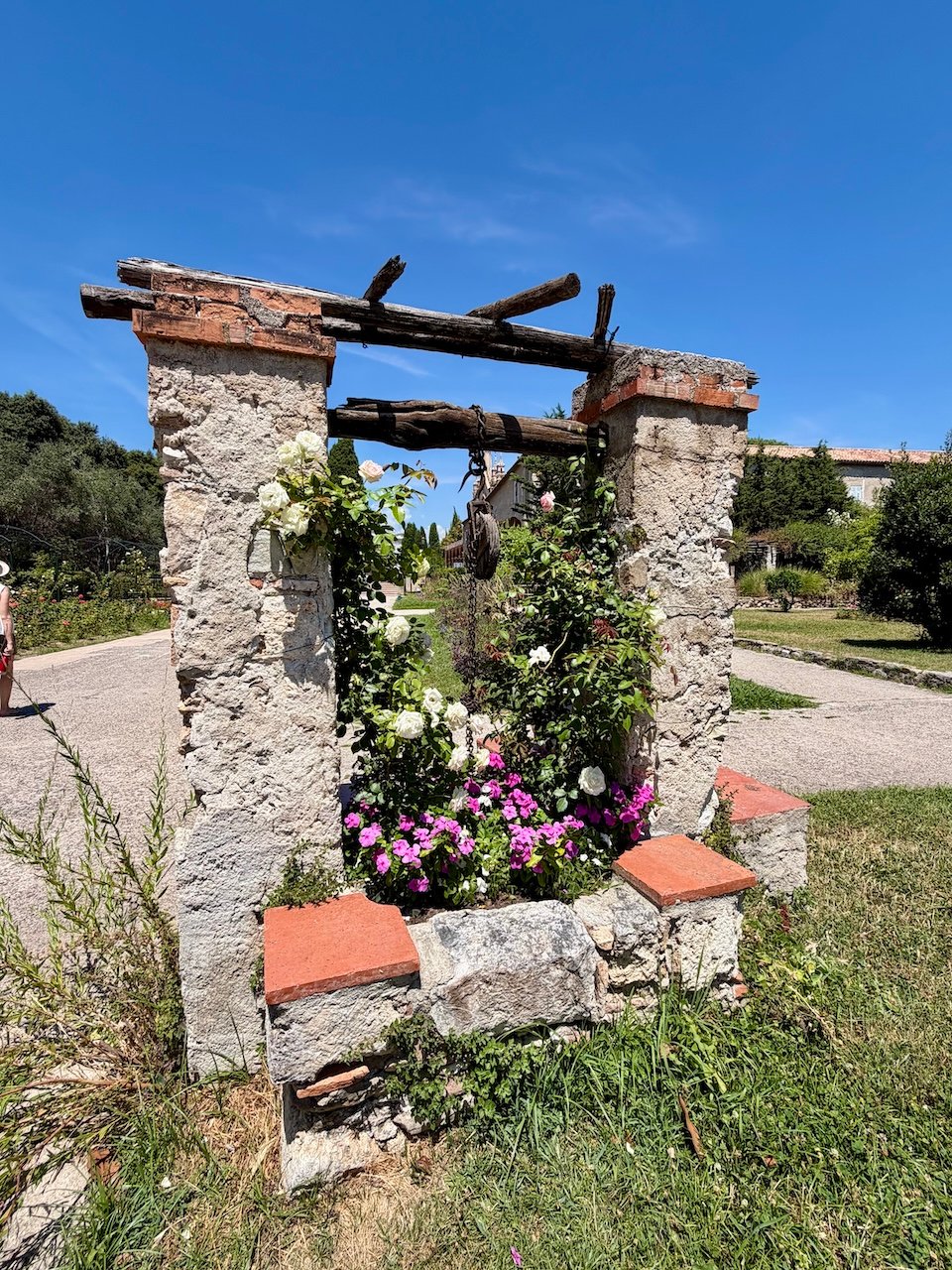
The monastery’s gardens were equally compelling. Laid out in neat geometric patterns, the terraced Franciscan landscape has supplied medicinal herbs, vegetables, fruit, and flowers for centuries. Stone pathways divide carefully tended planting beds, while pergolas and benches invite visitors to slow down and appreciate the setting. Olive trees cast welcome shade across portions of the grounds, and fragrant herbs perfumed the warm Mediterranean air.
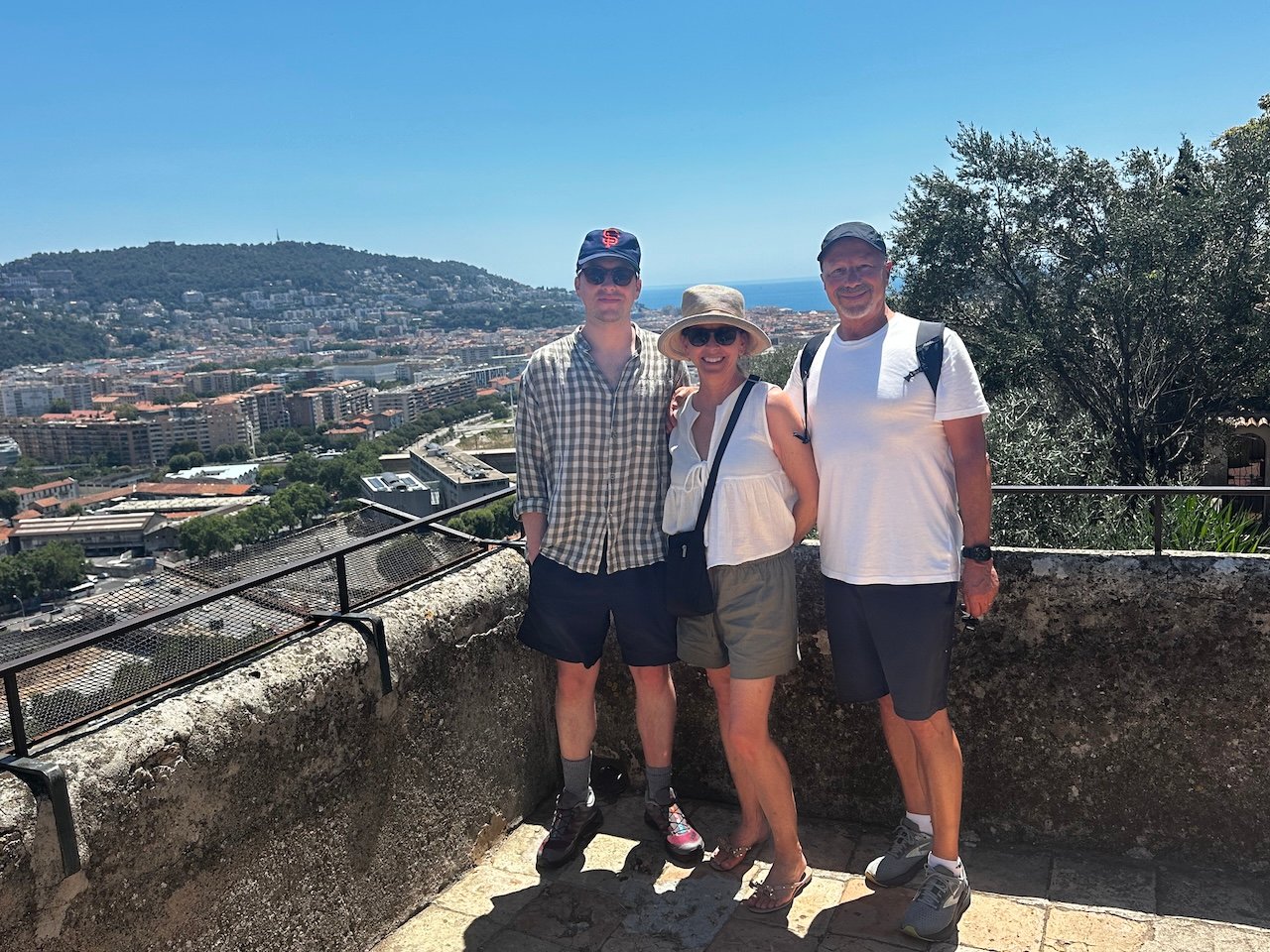
Then there was the view. Nice unfolds below in layers of terracotta rooftops, church towers, palms, and the deep blue sweep of the Mediterranean. From this elevated vantage point, the city’s famous coastline becomes just one element of a much larger landscape. It’s easy to understand why artists found inspiration here long before today’s visitors arrived with cameras in hand.
Travel often rewards careful planning. Reservations secure the right hotel room. Research uncovers outstanding restaurants. Advance tickets avoid long lines. Yet my favorite travel memories often come from unexpected turns. Had I exited in the opposite direction after leaving the Matisse Museum, I likely would have missed the monastery altogether. Instead, a few extra minutes and a bit of curiosity led me to one of the most memorable places I experienced in Nice.
It wasn’t until later that I fully appreciated what I had stumbled upon. During a visit to Nice’s Musée Masséna, I learned that the Monastère de Cimiez occupies one of the city’s most historically significant sites. The hill has been an important place since Roman times, when the ancient city of Cemenelum stood here. What had begun as an unplanned detour after the Matisse Museum suddenly felt connected to a much larger story stretching across nearly two thousand years.
The Franciscan monastery wasn’t on my itinerary. It wasn’t the reason I came to Cimiez. But it became the place I remember most. Sometimes the most rewarding discoveries aren’t the ones you circle on a map. They’re the ones you find simply because you decided to see where a path might lead.
My visit to the Matisse Museum was included with the French Riviera Pass, which provides admission to more than 60 museums, cultural attractions, and experiences throughout Nice and the Côte d’Azur. Admission to the Monastère de Cimiez is free.
Curiosity, more than any itinerary, is often the best guide.