
Perched atop Johnson Mesa near Raton, New Mexico, this historic church is a reminder of the state’s frontier homesteading days.
New Mexico State Road 72, east of Raton, NM
Photographs and Words by:
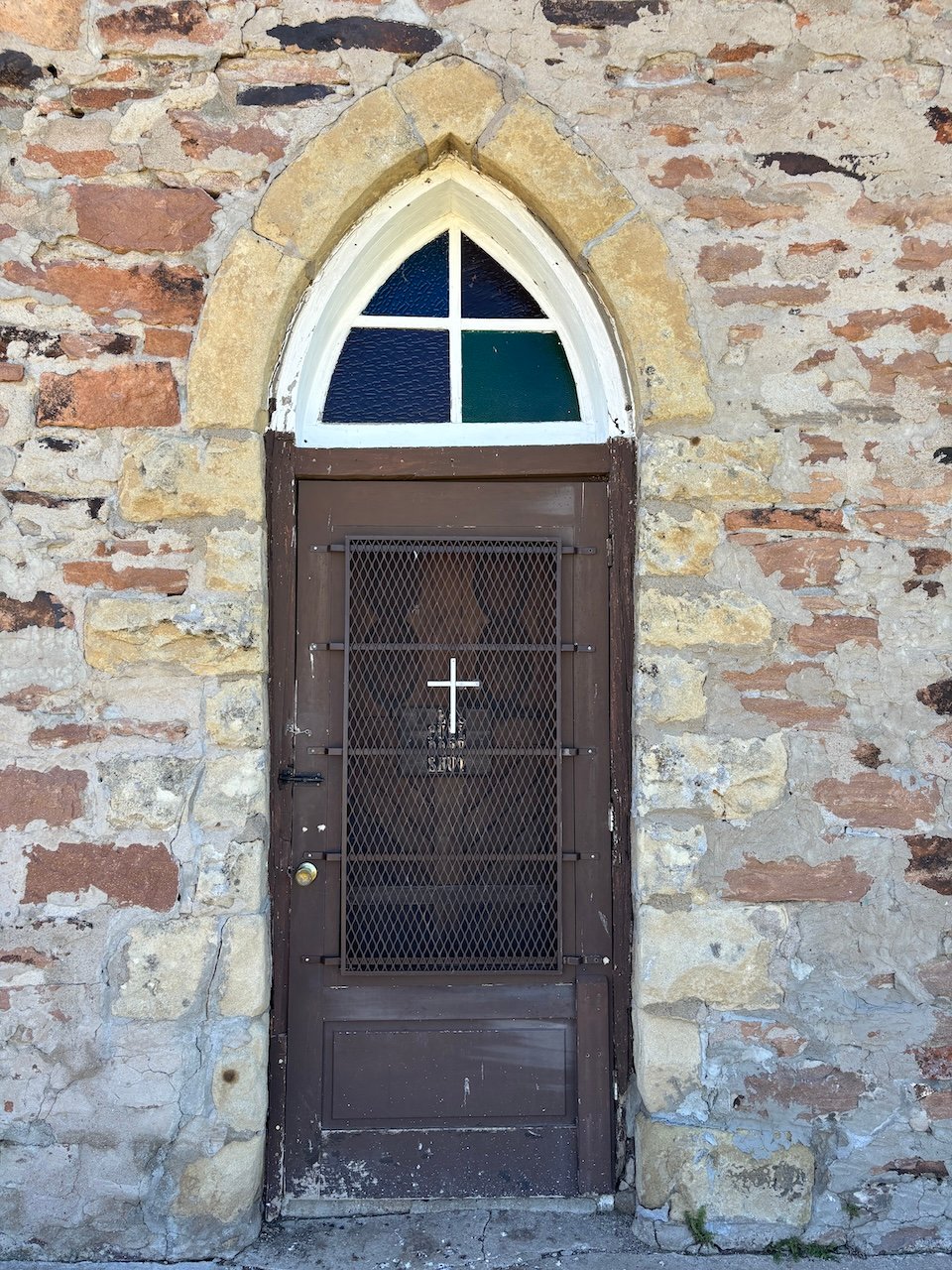
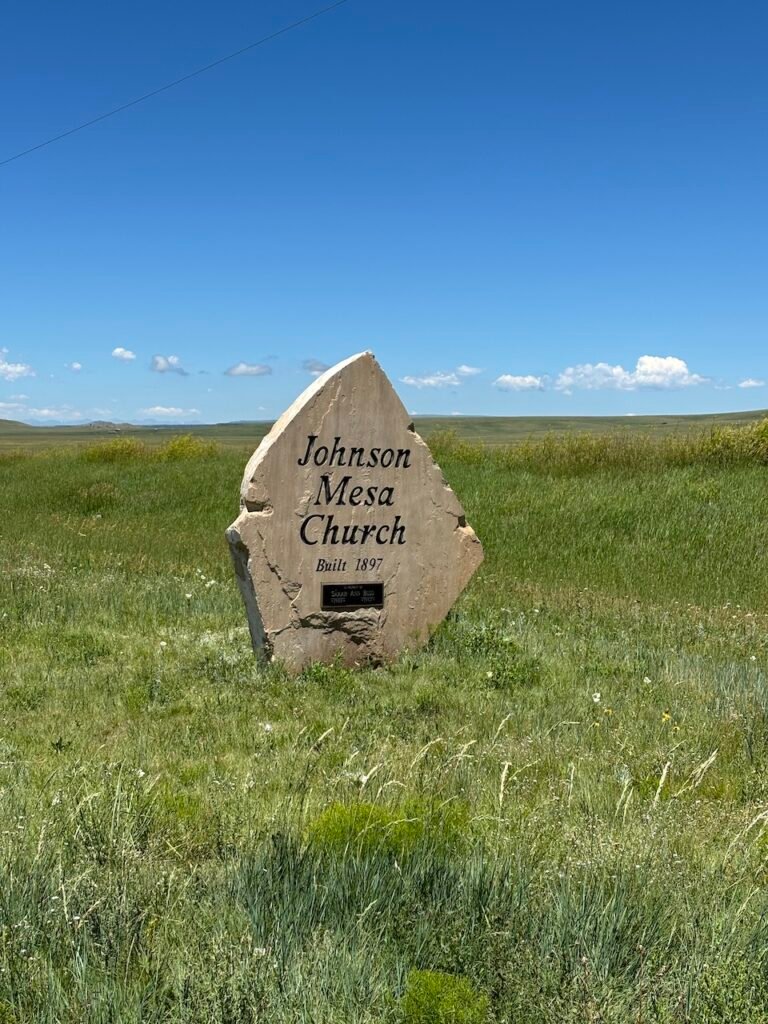
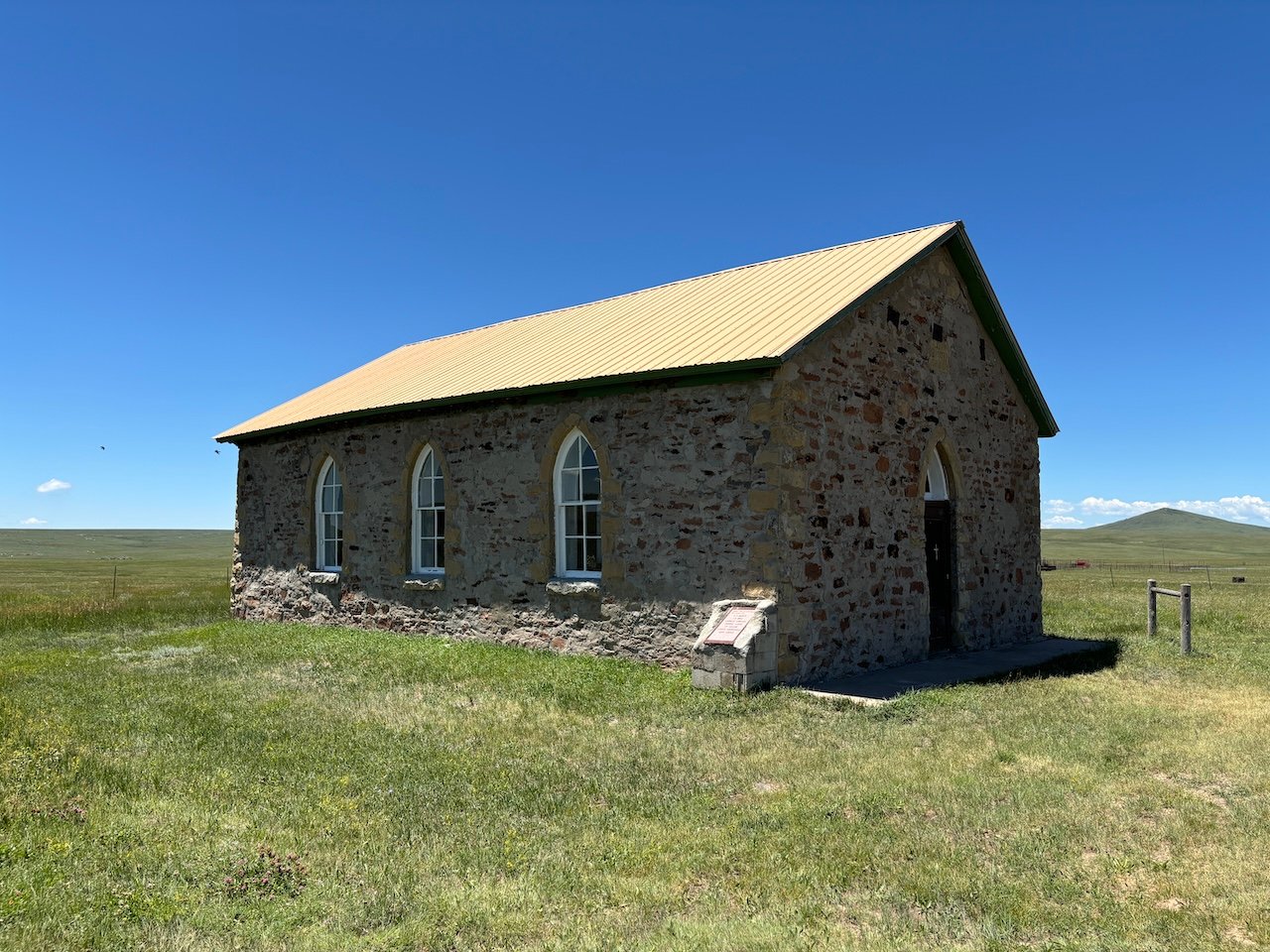
Seventeen miles east of Raton, New Mexico, a lonely stone church stands atop one of the state’s most overlooked landscapes. The windswept plateau of Johnson Mesa, near the Colorado border, isn’t home to much other than an expansive pastoral landscape dotted with cows and hay barrels. But perched atop the mesa sits the St. John’s Methodist Episcopal Church, or the Johnson Mesa Church, as a reminder of a once-thriving homesteading community that has largely vanished from the map. Built in 1897 by pioneer families who settled the mesa, the church served as the religious and social heart of a farming community at the turn of the twentieth century.
Constructed from locally quarried red sandstone, the modest church was built to withstand the mesa’s harsh winters, powerful winds, and isolation. While many of the surrounding homesteads disappeared as residents moved away during the twentieth century, St. John’s endured. Today it is one of the few surviving structures from the settlement era and is listed on the National Register of Historic Places.
The surrounding scenery makes it a special small-town stop, with open prairie, an abandoned cemetery, green pastures, and an immense sky that feels more like the Great Plains than the Southwest. The journey to reach St. John’s is part of its appeal. From downtown Raton, New Mexico Highway 72 climbs through Yankee Canyon before emerging onto the broad grasslands of Johnson Mesa.
Be sure to add the Johnson Mesa Church to your New Mexico road trip for an experience that goes beyond the guidebooks. St. John’s offers a rare glimpse into a forgotten chapter of New Mexico history—and a reason to take the road less traveled.