Photographs and Words by:
Even after the last bison disappeared into the corrals, the rumble lingered long after the dust settled.
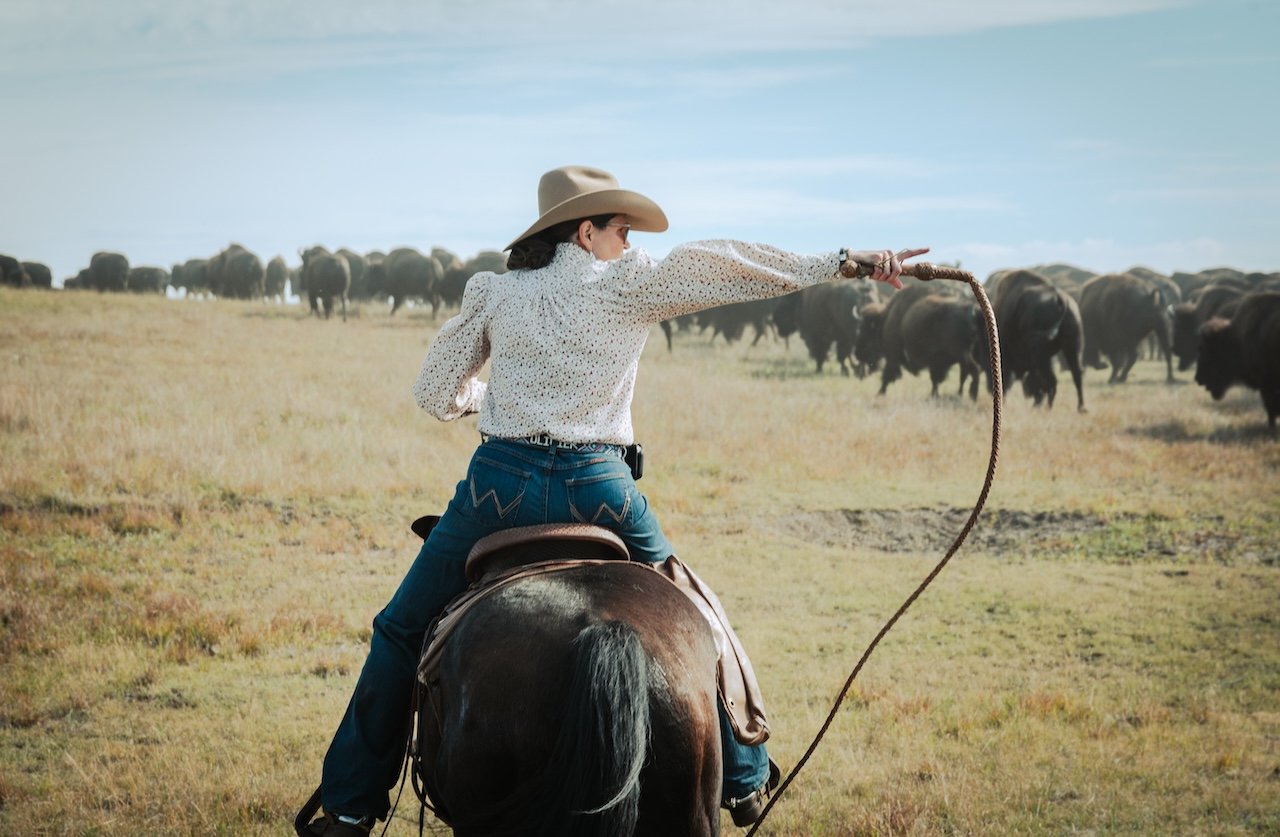
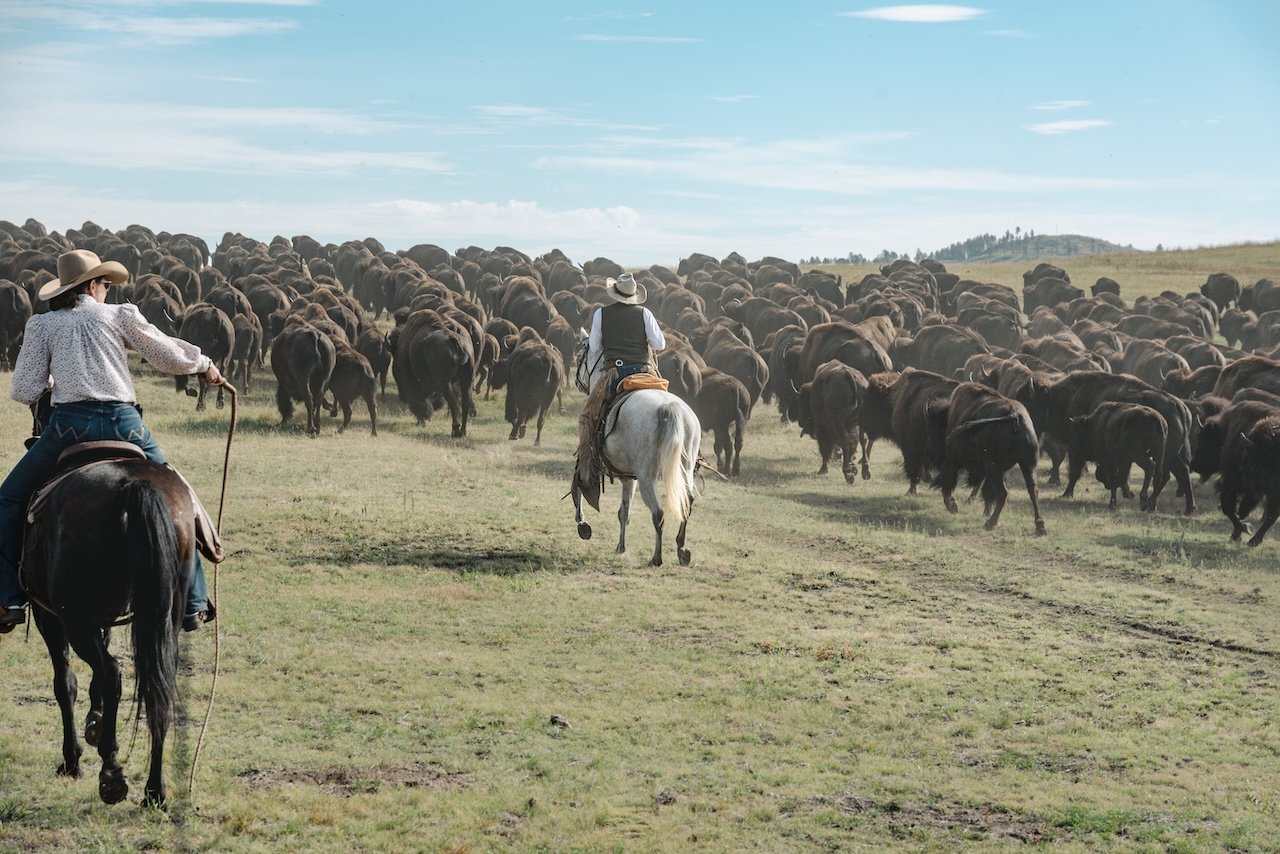
A 5:00 a.m. alarm got me up and out of bed, but it didn’t prepare me for what I’d experience that day. On a cool September morning in South Dakota’s Black Hills, the prairie was quiet, and the only sound I heared was my beating heart. Thousands of spectators sipped coffee from camp mugs, scanning the distant ridges of Custer State Park. Long leather whips cracked while the sound of horses’ hooves pawing at the ground added to the anticipation. Then a low rumble began somewhere beyond the horizon. The ground vibrated beneath my feet. Dust rose in the distance. Moments later, more than 1,500 bison came charging over the hills.
This is all part of the Custer State Park Buffalo Roundup, which takes place every year in South Dakota’s largest state park.
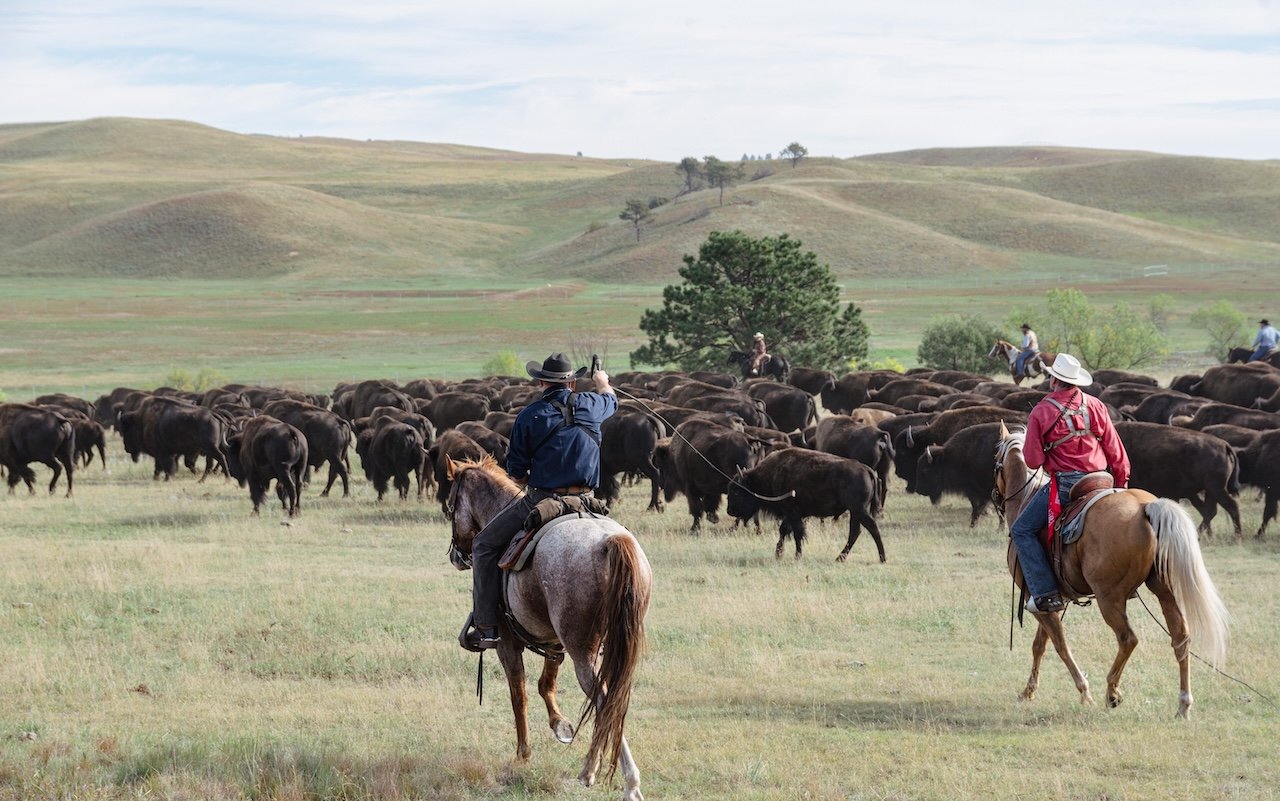
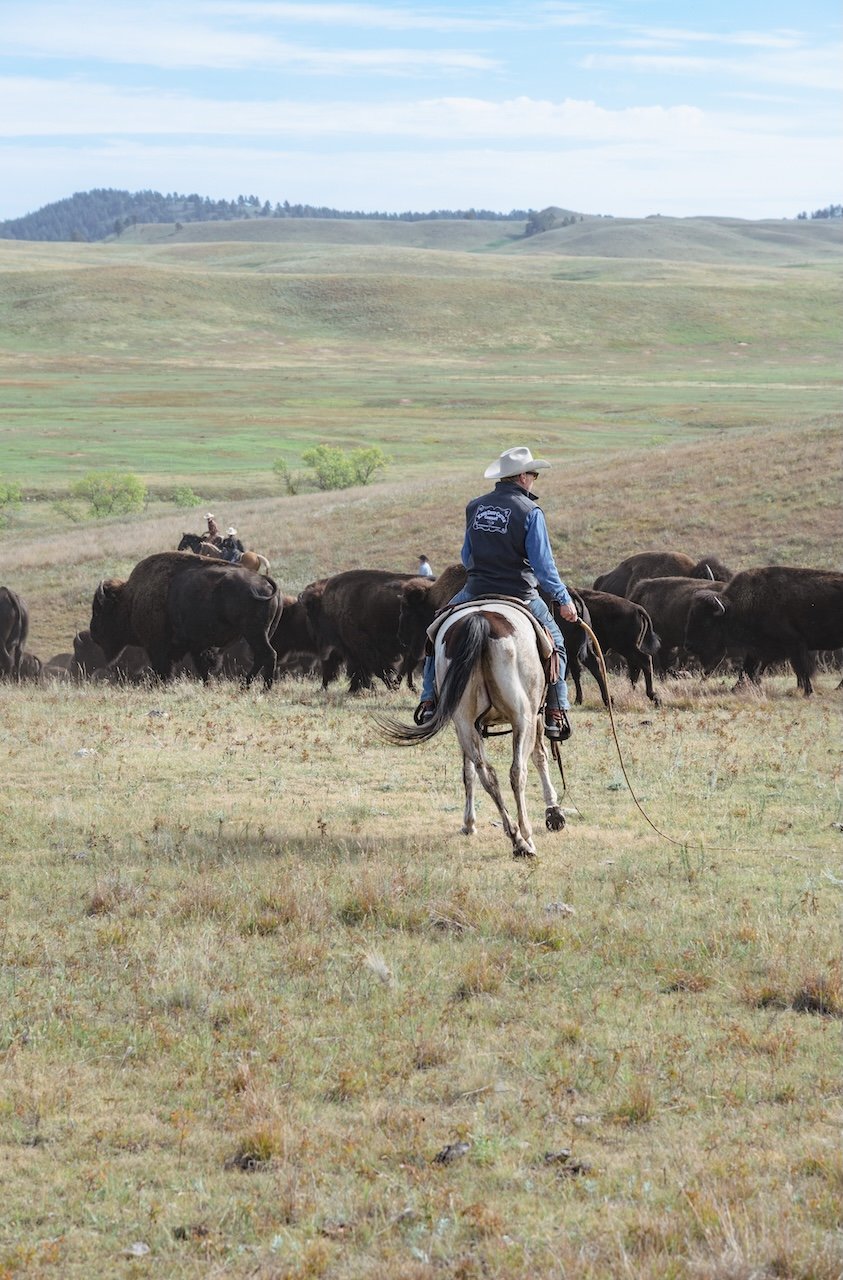
Custer State Park’s 71,000 acres are home to roughly 1,500 roaming bison (not buffalo, despite the event’s name). Each September, more than 60 riders on horseback—some chosen by a lottery drawing from hundreds of applicants and others selected by the governor’s office— help guide the park’s bison herd across the grasslands and into corrals, where the animals are sorted, vaccinated, branded, and monitored as part of the park’s long-running herd management program. The rest are then released back into the park to mate and calve. While the roundup is necessary work to maintain a herd this size, it has become an event people can watch and participate in.
But the roundup is more than a tourist attraction. Inside the Bison Center, you’ll learn that Custer State Park’s bison herd traces its roots to just 36 bison descendants from as far back as 1881, and was eventually introduced to the park in 1914. The roundups began years later to help maintain the herd, starting in 1965, with the first live bison auction the following year. Today, careful management helps maintain a healthy population while protecting the park’s grasslands and preserving one of North America’s most recognizable species.
Custer State Park Buffalo Roundup
Tens of thousands of spectators get up before the sun to wait in a long line of cars to enter the park for the best viewing vantage of the roundup. Visitors can watch from distant viewing areas atop rocky ridges, but a select few, such as media (like myself) and government officials, get an even closer look, riding in one of the many trucks that help gather the herd toward the awaited holding pens.
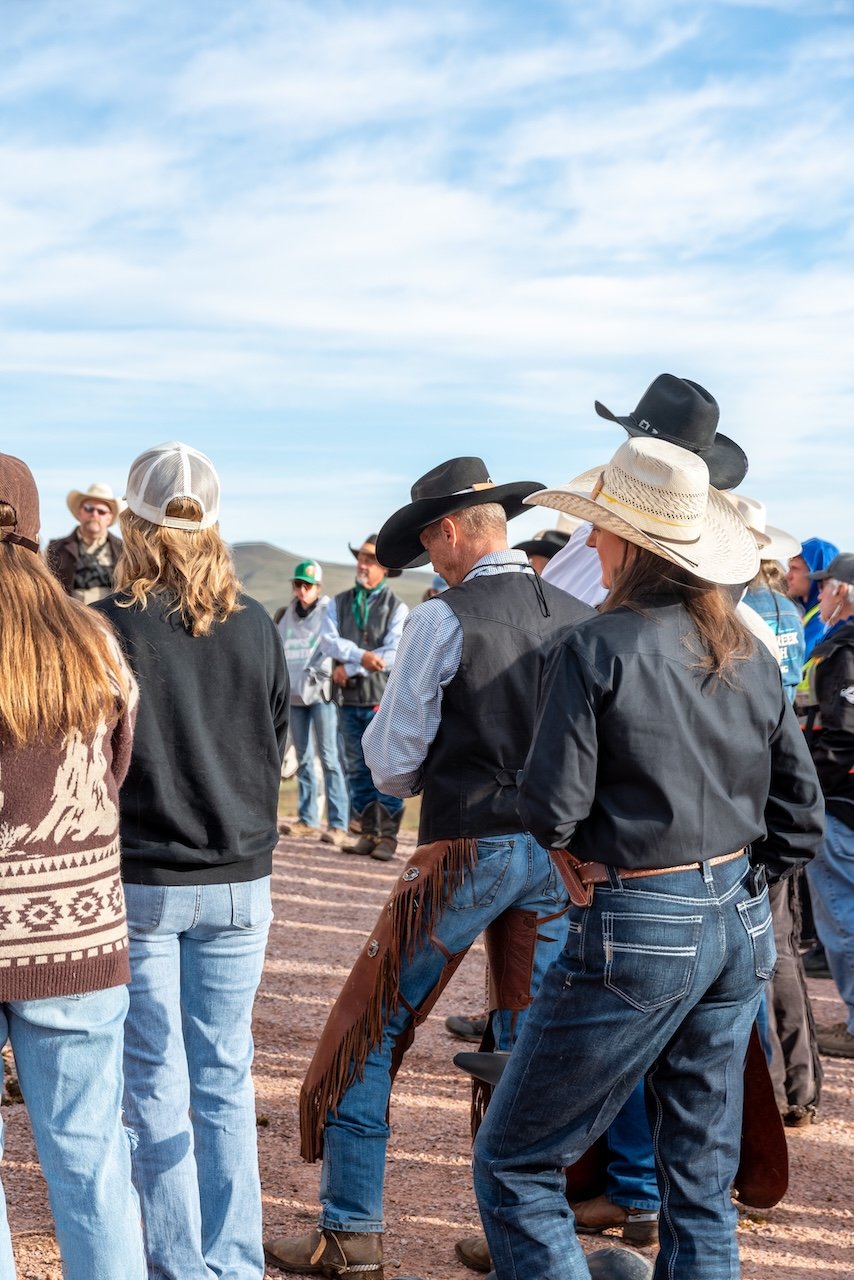
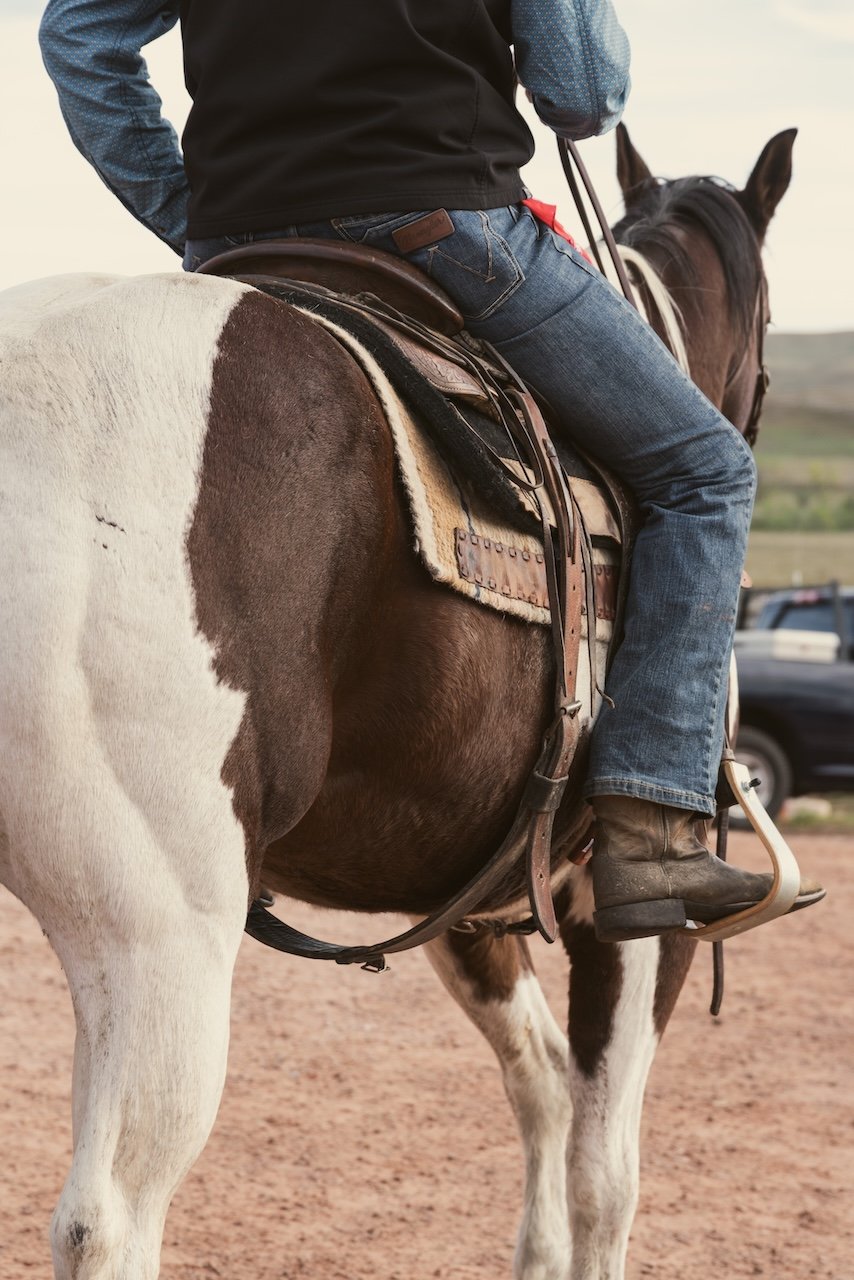
We arrived hours early with the other participants to watch them prep for the day ahead. The 60-some odd riders huddled together for last-minute instructions and reminders that this isn’t a gentle trail ride. Riders steer the herd from all areas of the park, across creeks, through tall prairie grass, Cottonwood trees, and over hills into the holding pens near the park’s Bison Center. I lingered in the back as if the instructions were for me as well. I listened and took notes as the riders saddled up, adjusted their chaps, secured their reins, and worked out any last-minute fidgets. They concluded by bowing their heads in prayer and letting out a hoot and holler, to tell everyone they were ready to go.
Before heading out, I stopped at the porta-potty, since we weren’t allowed bathroom breaks once we began. Our small group climbed into the back of the truck, where we stood clutching a single metal bar meant to keep us “safe” as we drove across the hills of Custer State Park. I secure my camera and Stetson hat as we get last-minute instructions and reminders that we are not here just to watch; we are part of a working crew responsible for herding the bison. I also say a silent prayer for myself and our crew that we won’t get flung from the truck.
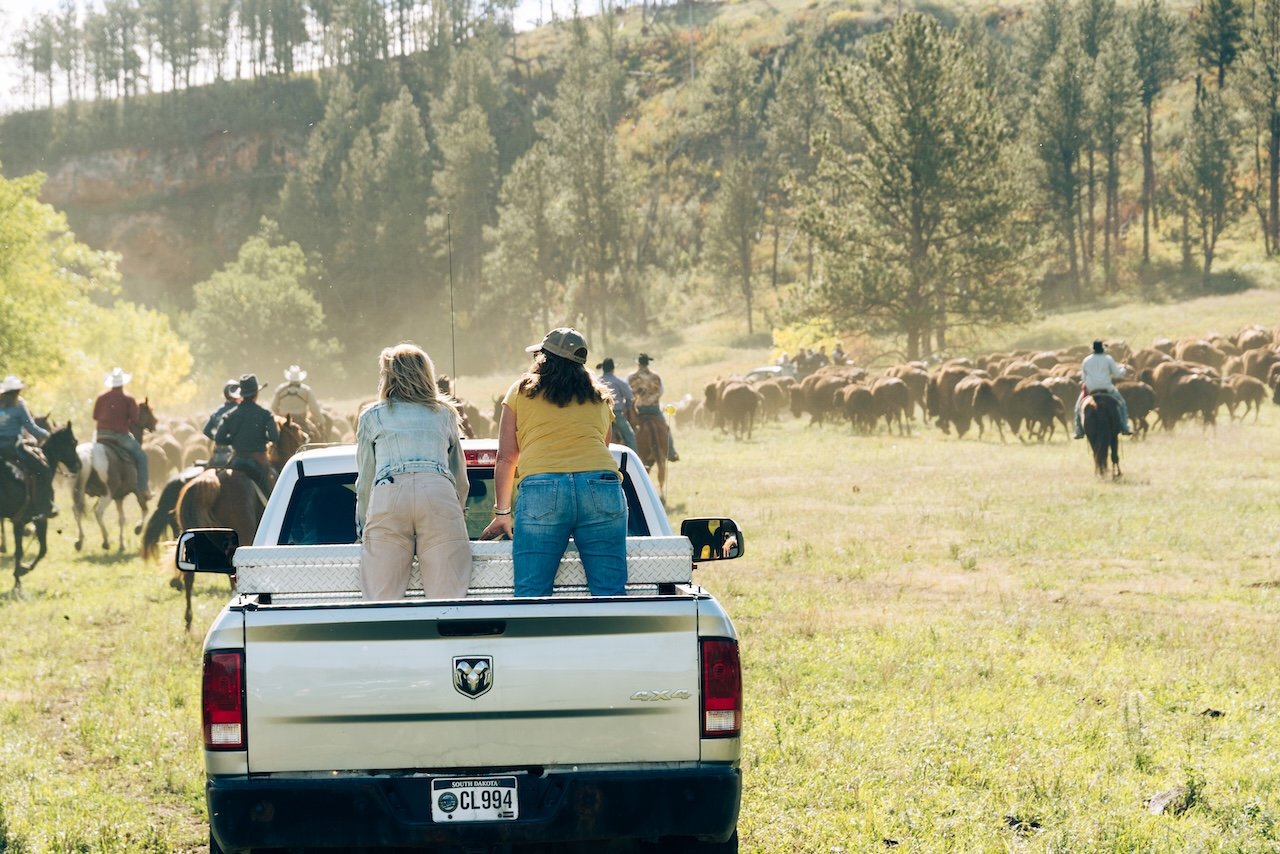
Soon enough, an ear-piercing whistle lets us know the roundup has begun. A caravan of vehicles and riders starts out slow at first, but soon enough I feel the first bump as I slam into the truck’s side bars. I readjust my footing just in time for the next jolt as we cross creeks and dodge prairie dogs. We paused briefly, and for a moment everything went quiet, just before the grassy hillside swarmed with 15 diversion vehicles and 20 or so riders, male and female, cracking their whips, strapped to their horses’ saddles, and holding on to their hats as they corralled 1,500 bison.
For roughly 90 minutes, all I heard was the thunder of thousands of bison and cowboy calls echoing across the valley as we traversed five or so miles to the corrals. As I watched bison snort and run up beside our truck, blacking out patches of grassland, I couldn’t help but think this was only a sliver of what it was like on the Great Plains of North America when an estimated 30 million bison roamed free.
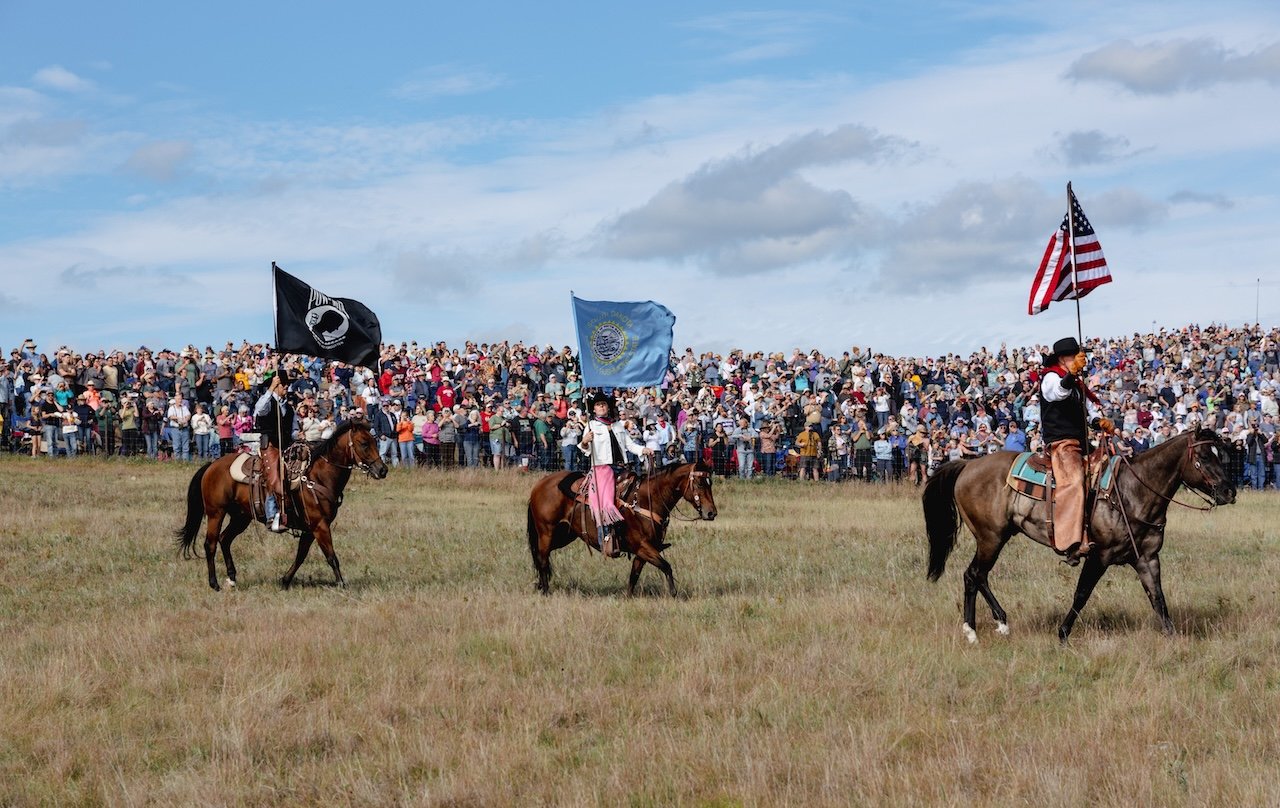
As the herd is funneled toward the holding pens, I see spectators gathered atop a rocky ridge, cheering as the riders guide the bison in. A few riders emerged carrying the U.S. and South Dakota state flags, and the bison slowed as they approached the pens; one by one, they entered the corral. Another successful Buffalo Roundup had been completed, and I was forever changed. And even after the last bison disappeared into the corrals, the rumble lingered long after the dust settled.
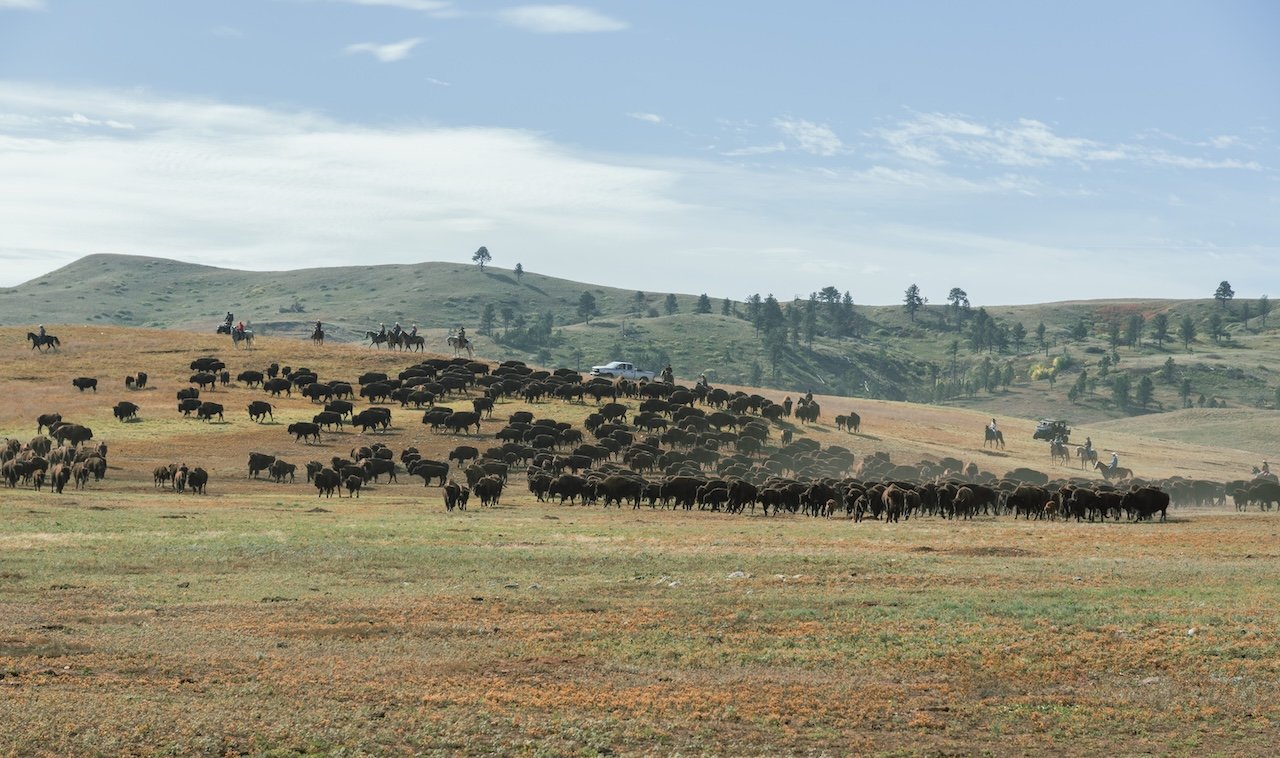
I couldn’t help but think this was only a sliver of what it was like on the Great Plains of North America when an estimated 30 million bison roamed free.