
Photographs and Words by:
I’ve developed a theory, only half in jest: if Plensa is there, it’s worth the trip.
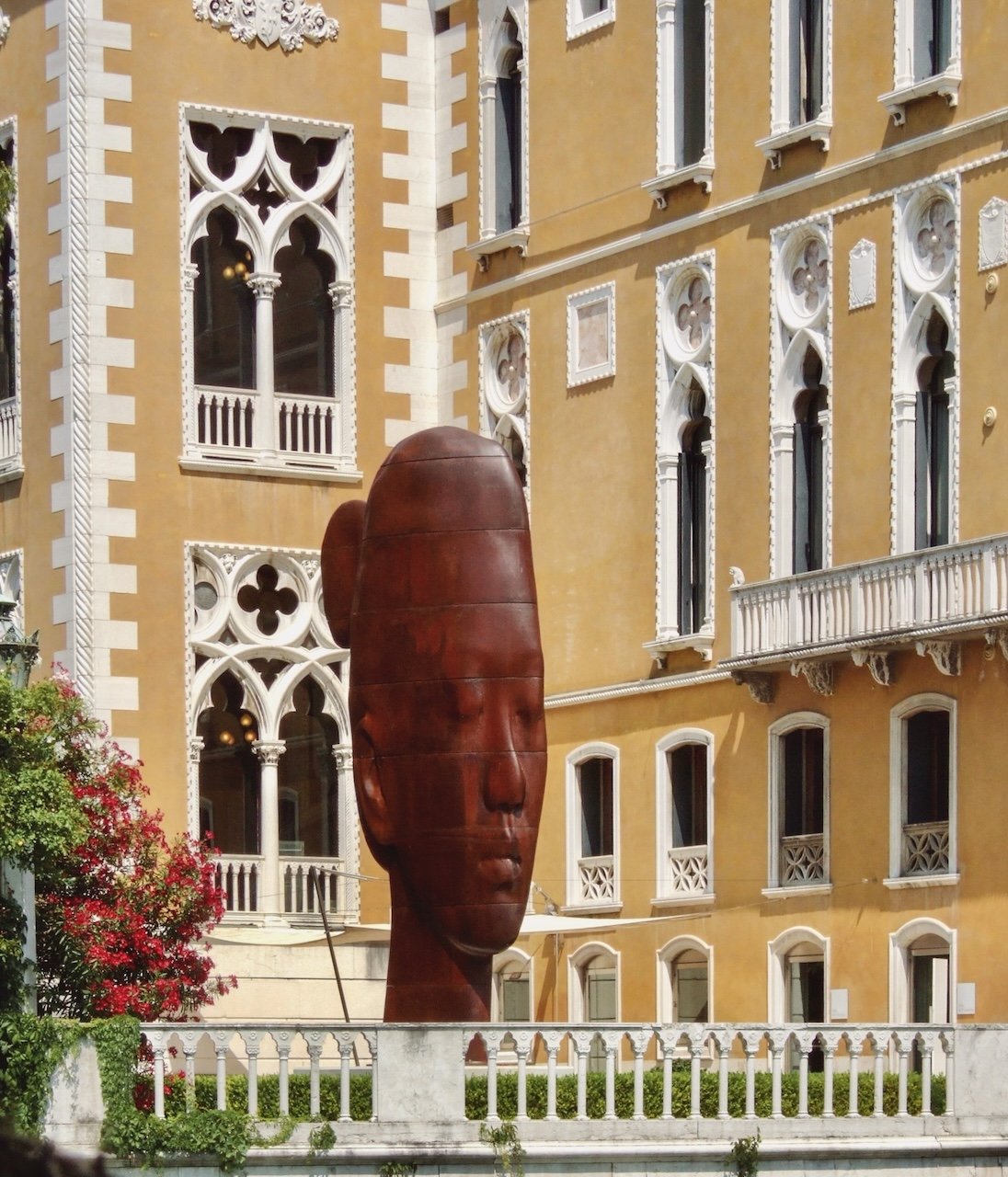
In 2013, my vaporetto eased along Venice’s Grand Canal near the Accademia crossing, and a large bronze head appeared at the water’s edge. It was seven meters tall, a piece called Rui Rui, part of that year’s Glasstress exhibition, a collateral event of the 55th Biennale. The artist’s name meant nothing to me at the time. Neither did the sculpture’s title, its backstory, or the fact that this particular face would turn out to be the first of dozens I’d encounter, unannounced, in the years since. What registered was the feeling: a kind of awe and surprise that a city already so saturated with masterpieces could still amaze.
These encounters happen often enough now that I’ve stopped calling them coincidence: recognizable pieces that turn up in a hotel garden in Hawaii, a plaza in Madrid, the woodland of a Provençal vineyard, a university museum entrance in Indiana. The septuagenarian Catalan sculptor Jaume Plensa has been seeding the globe with his work for three decades — monumental heads cast in alabaster and resin, faces with eyes closed as if mid-thought, alphabet-figures built from the characters of a dozen languages. He shows up in places that have nothing in common except, evidently, good taste. And once I started noticing, the noticing became its own kind of itinerary.
Plensa was born in Barcelona in 1955 and, by most accounts, still lives and works there, even as his sculptures have made their way to nearly every continent. He trained briefly at the city’s fine arts schools before abandoning formal study to teach himself. His origin story tracks with the restlessness of his later career: opera sets, acoustic installations, video projections, glasswork in Murano, drawing, printmaking, and the monumental public sculpture for which he’s now best known. Language runs through nearly all of it. Plensa speaks several languages himself, and his figures are frequently built from the literal characters of alphabets — Arabic, Cyrillic, Hindi, Japanese, Latin — fused into silhouettes that are entirely universal. He calls his recurring subjects, the elongated heads and seated letter-figures, vessels: stand-ins for a shared, borderless idea of humanity rather than likenesses of any one person.
I’ve developed a theory, only half in jest: if Plensa is there, it’s worth the trip. His sculptures function as a kind of correspondence between far-flung places, each nodding toward the others. I’ve spotted Sanna brooding over Bordeaux’s Place de la Comédie, Julia rising from Madrid’s Plaza de Colón, and the pole-mounted figures of Conversation à Nice silhouetted and glowing against the Côte d’Azur dusk. Eventually the sightings stopped feeling like surprises and started feeling like a thread I was following.
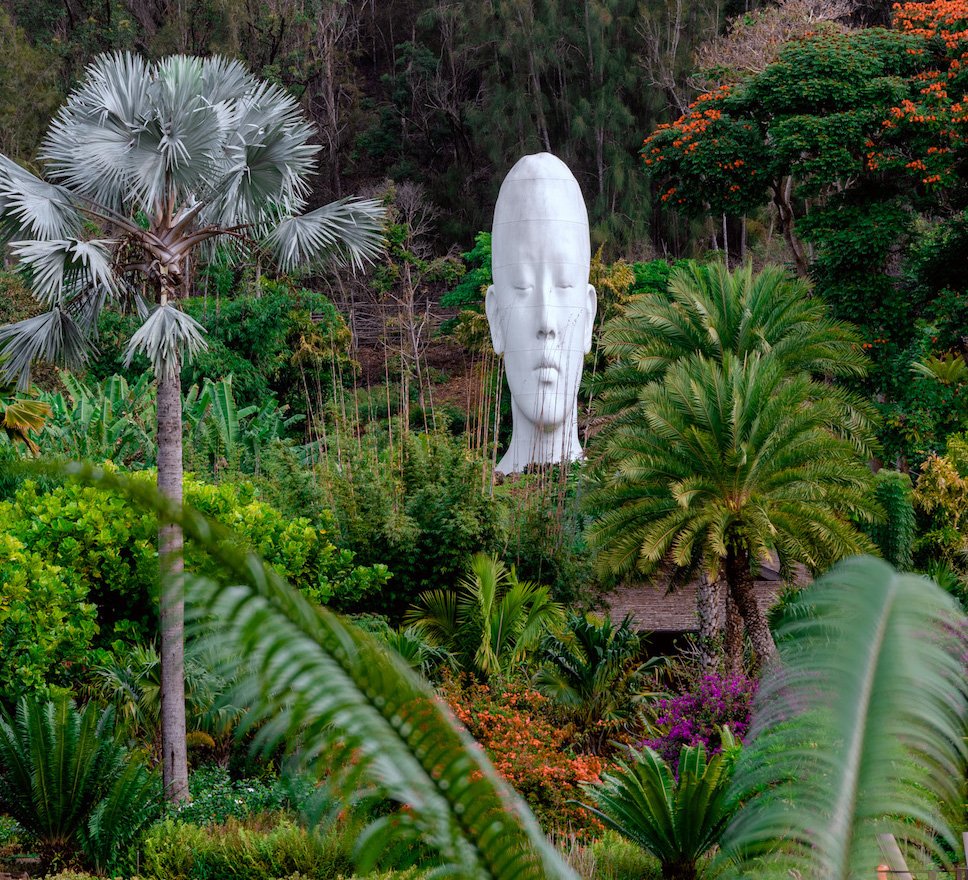
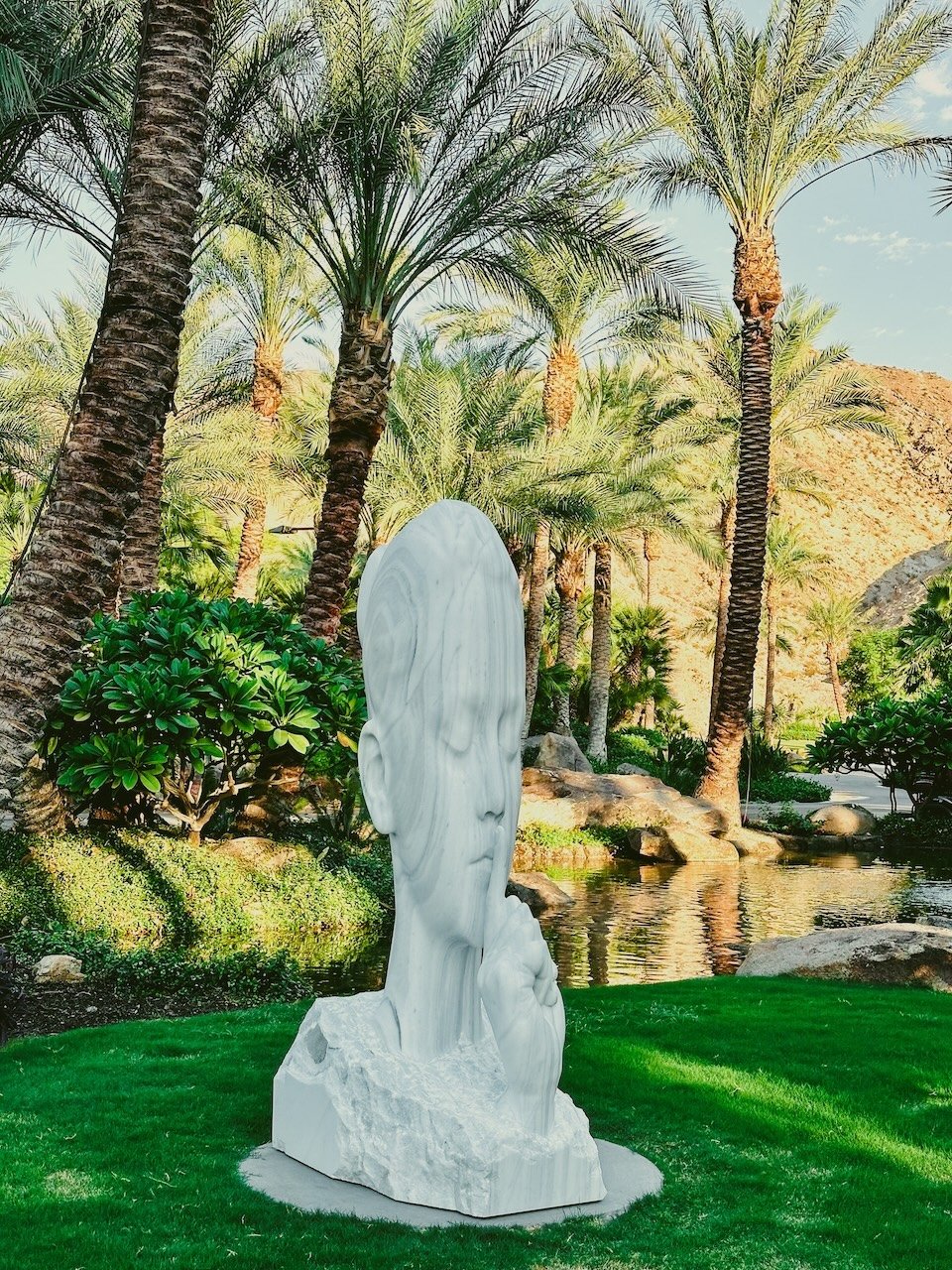
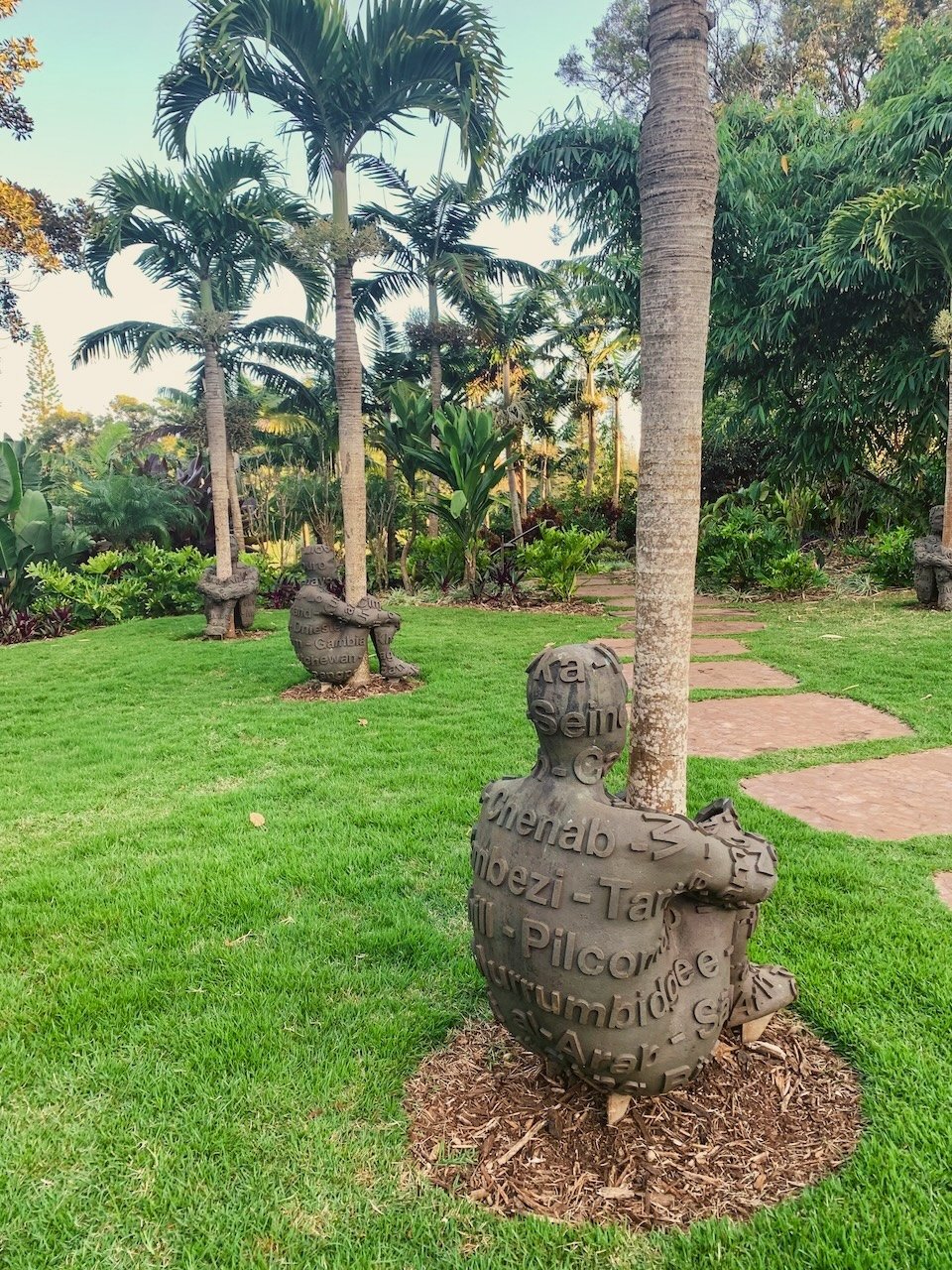
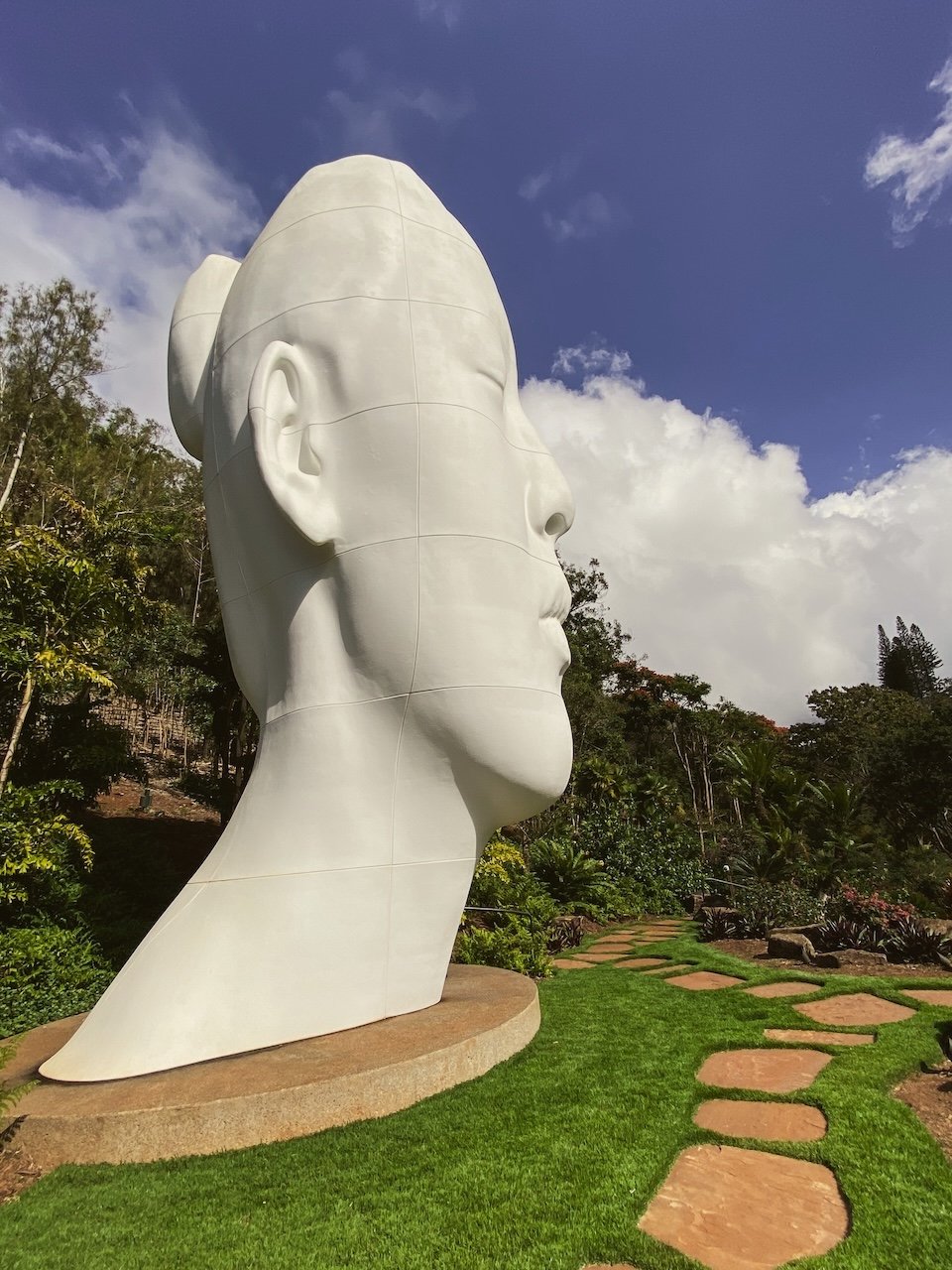
That thread runs through Sensei Lānaʻi, the Hawaiian wellness retreat Larry Ellison built on his island, where Talaia watches over the property from a hillside — the 45-foot face visible from the lobby door. Just a walk away, in a creekside palm grove, Heart of Rivers gathers seven self-portrait figures into a huddle, each one inscribed with the name of a river. Ellison’s desert cousin, Sensei Porcupine Creek in Rancho Mirage, greeted me with Julia Whispering at the entrance. At Domaine de Peyrassol, the centuries-old Provençal winery that collector Philippe Austruy turned into one of Europe’s great open-air sculpture parks, I found Tel Aviv II hanging from an old oak branch, a human silhouette built of letters, swaying slightly in the breeze. At The St. Regis Venice, I walked a lobby corridor presided over by the alabaster-hued Duna, crafted from “silk glass.”
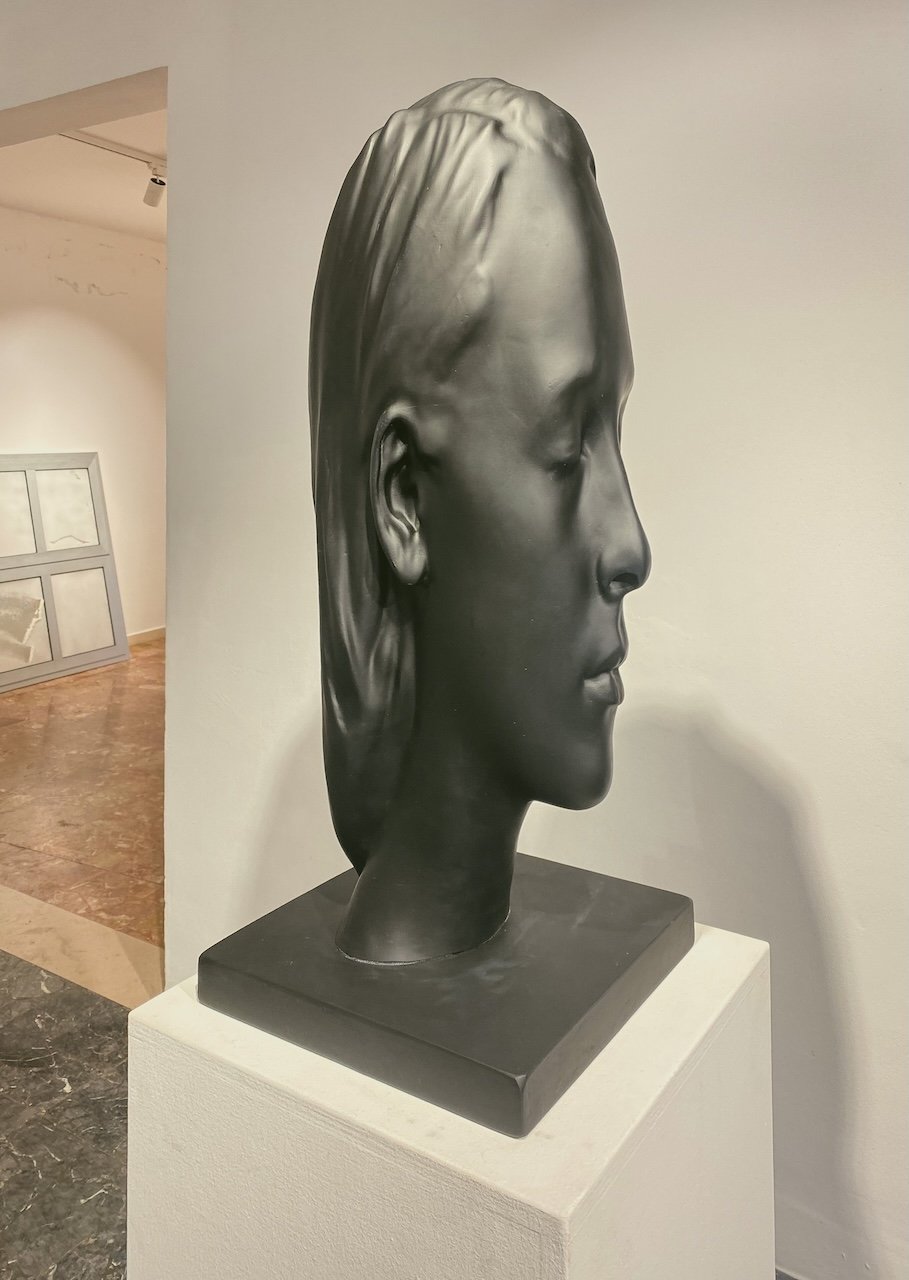
The civic versions read like punctuation marks within their cities. There’s Seattle’s Echo, eyes shut and luminous white against Puget Sound at the Olympic Sculpture Park. And the 36-foot tower of language called Endless, that once rose in front of the University of Notre Dame’s Raclin Murphy Museum, a single column the artist has called a portrait of humanity with no human figure in it. Water’s Soul, facing Manhattan from the Jersey City waterfront, made the skyline feel like a conversation partner. In Murano, the glassblowers of Berengo Studio translate Plensa’s faces into something more fragile: the Laura series, cast entirely in glass.
None of this is really about counting cities. It’s about what it does to a traveler. Meeting the same artist in completely unrelated corners of the world brings the pleasure of surprise. (Even my non-artsy husband recognized some of these pieces before I did.) To arrive somewhere new and spot the unmistakable elongated head, or the alphabet-woven figure, becomes another “find” in a global treasure hunt.
His sculptures function as a kind of correspondence between far-flung places, each nodding toward the others.