
As the hottest, lowest, and driest national park in the United States, it isn’t for the faint of heart.
Furnace Creek Visitor Center, Airport Rd, DEATH VALLEY, CA 92328
Photographs and Words by:
Death Valley National Park earned its name when a group of California Gold Rushers (or forty-niners) got lost here, and all but one of them narrowly escaped, uttering “goodbye Death Valley.” And the name stuck.
Located near the small town of Baker, California—home to the world’s tallest thermometer, which measures the area’s high temps—Death Valley is the lowest, hottest, and driest national park in the United States. The park can claim these bragging rights due to its elevation below sea level, little to no vegetation for shade, high mountain walls that trap heat, and a measly two inches of rain per year on average—a pattern known as a rain shadow.
Despite the intimidating name and harsh climate, the park’s unique and vast landscape left me repeatedly awestruck. Over 93% of the park is a designated wilderness area, making Death Valley the ideal place to cure your wanderlust, but be sure to bring a map and plenty of water.
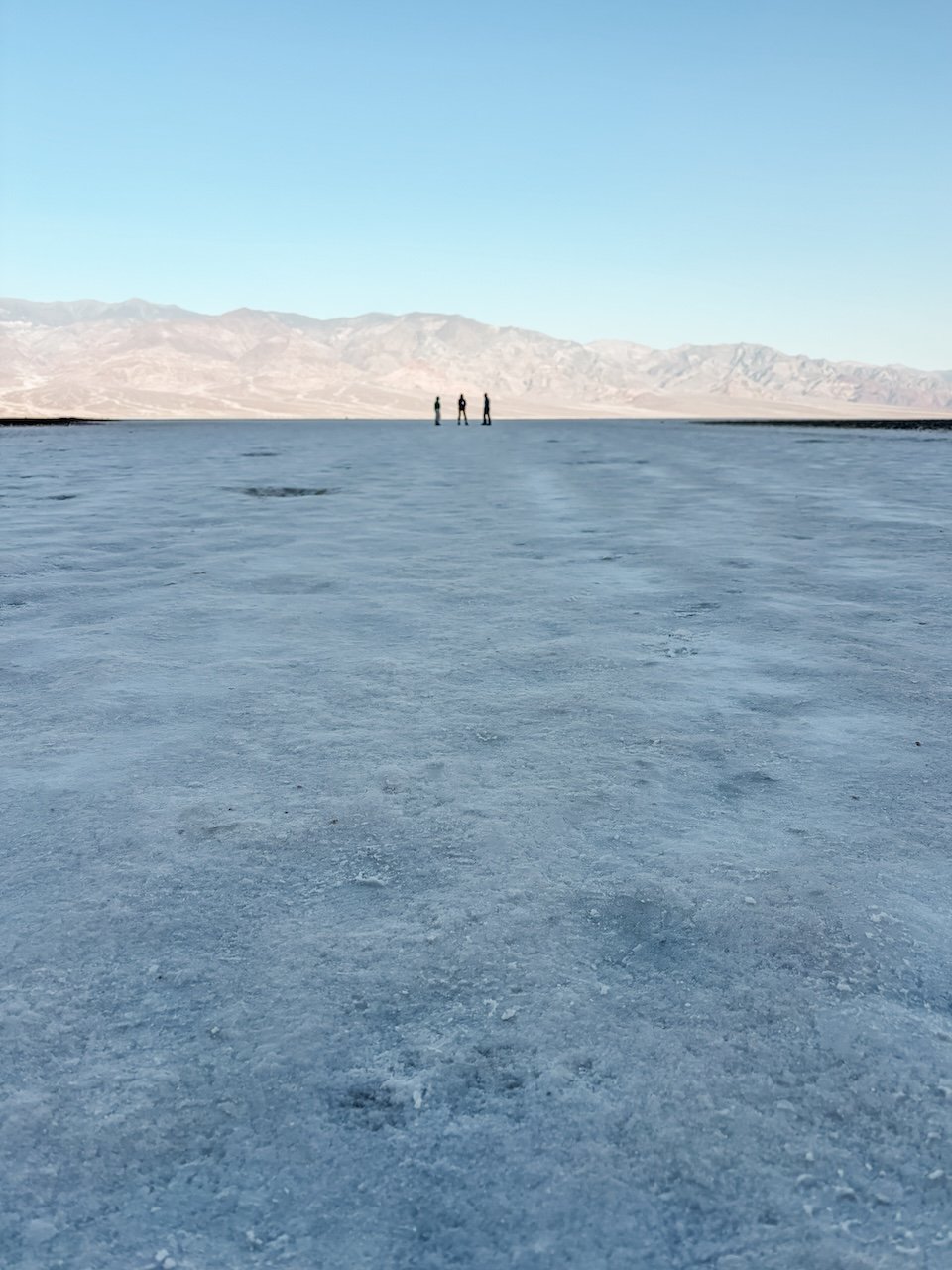
One of Death Valley’s most famous spots, and my first stop, is the “salt pan,” named Badwater Basin when a mule refused to drink from the now-evaporated water. Located in the heart of Death Valley, Badwater Basin sits at 282 feet below sea level, making it the lowest point in the United States. No longer filled with water, the 200-square-mile basin flattens into a seemingly never-ending ripple of salt mounds stretching into the distance, meeting at the horizon with Telescope Peak, the highest peak in the park at 11,043 feet.
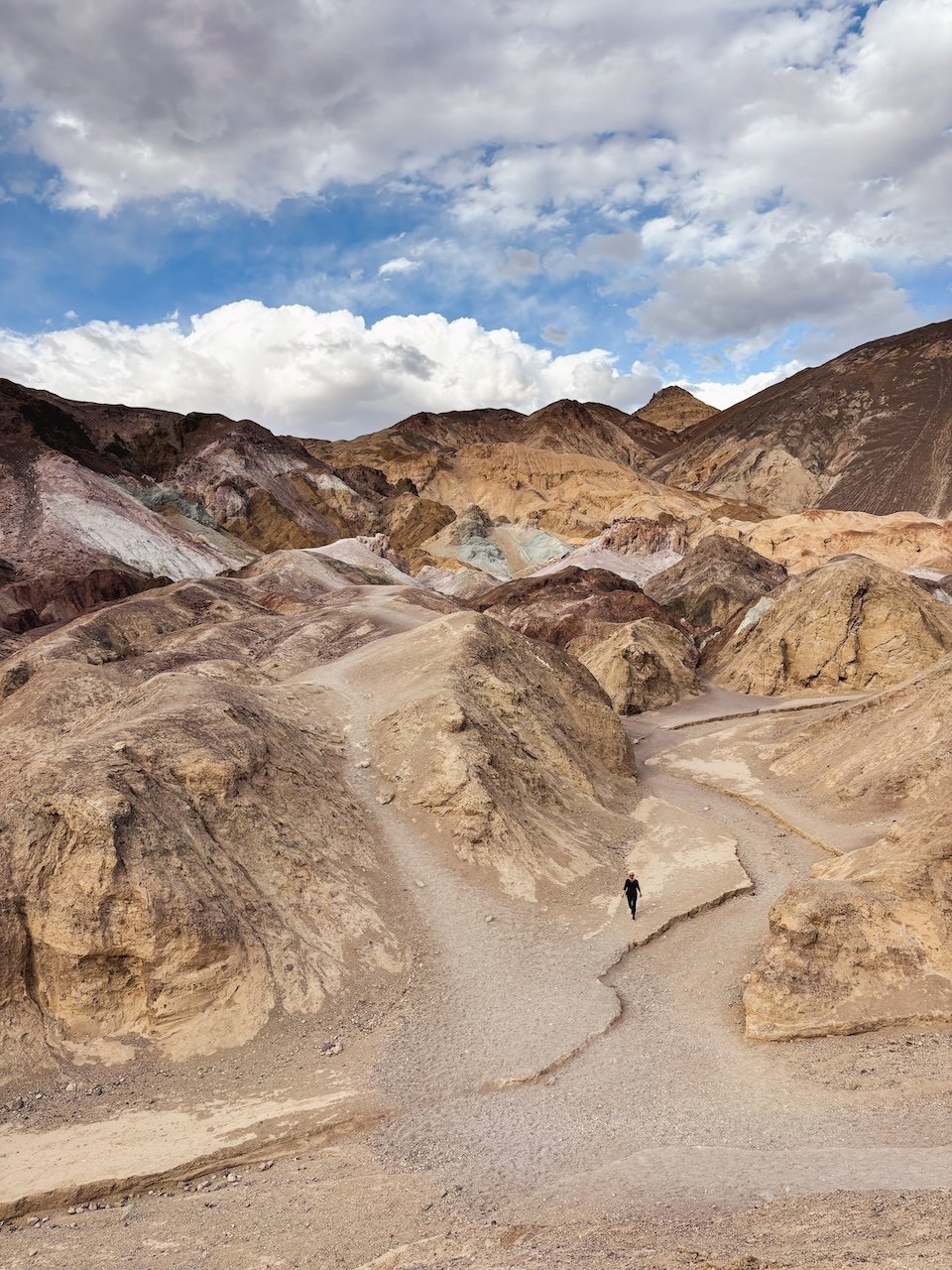
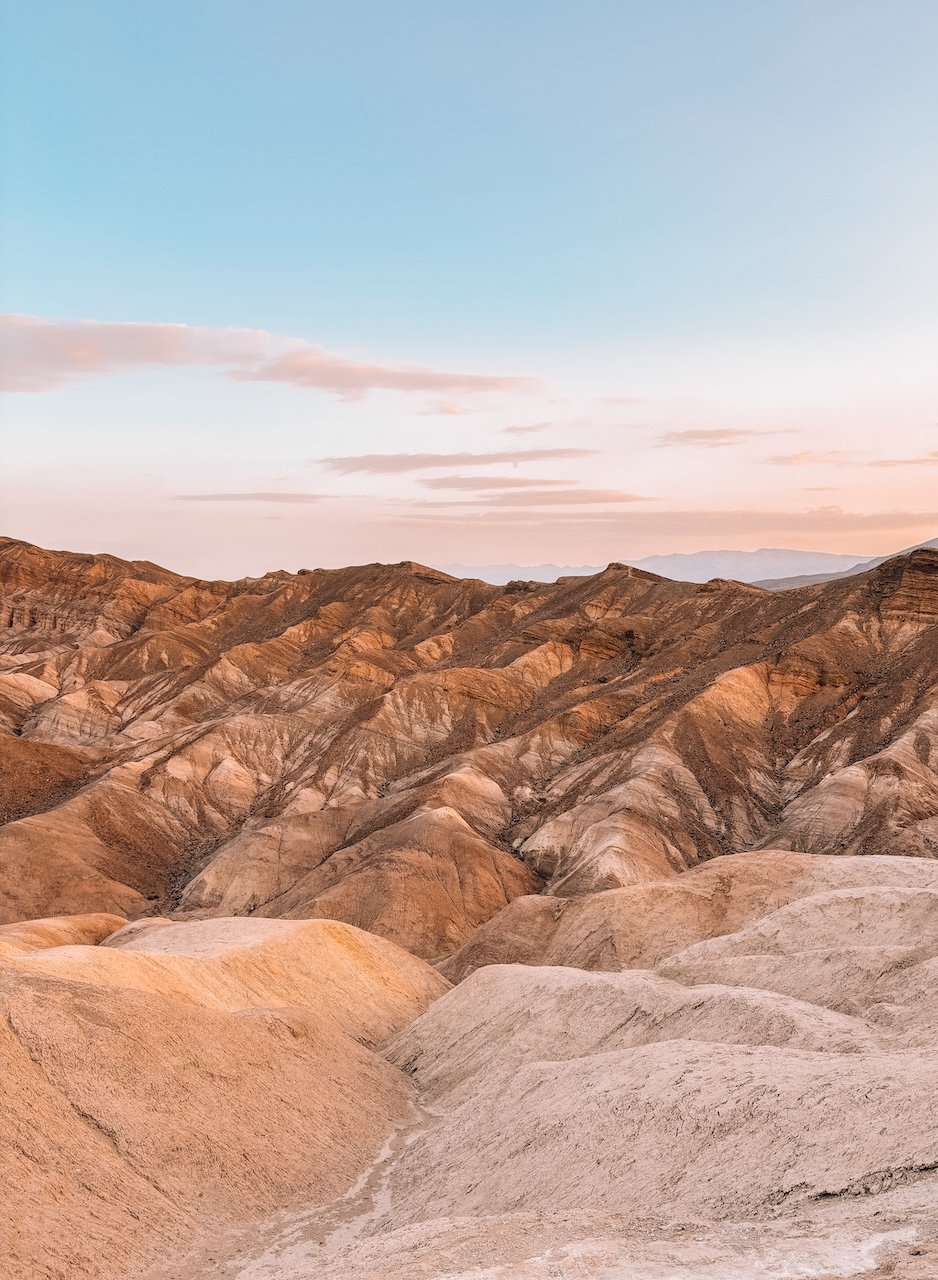
A colorful contrast to Badwater Basin can be found nearby with sunrise at Zabriskie Point and a sunset drive along the nine-mile Artist’s Drive Scenic Loop. Here, I stumbled upon Artist’s Palette, a colorful canyon with hills of pink, blue, yellow, red, and orange—a result of oxidized compounds from ancient volcanic activity. Viewing the expansive badlands as the sun moved across the sky created an ever-changing dance of colors that kept me there for hours.
As the largest national park in the contiguous U.S., Death Valley National Park spans 3.4 million acres and would be impossible to explore in one visit, so I plan to visit again. If you’re lucky enough to make it out this way, be sure to snag our Southern California Desert Destination Guide.