
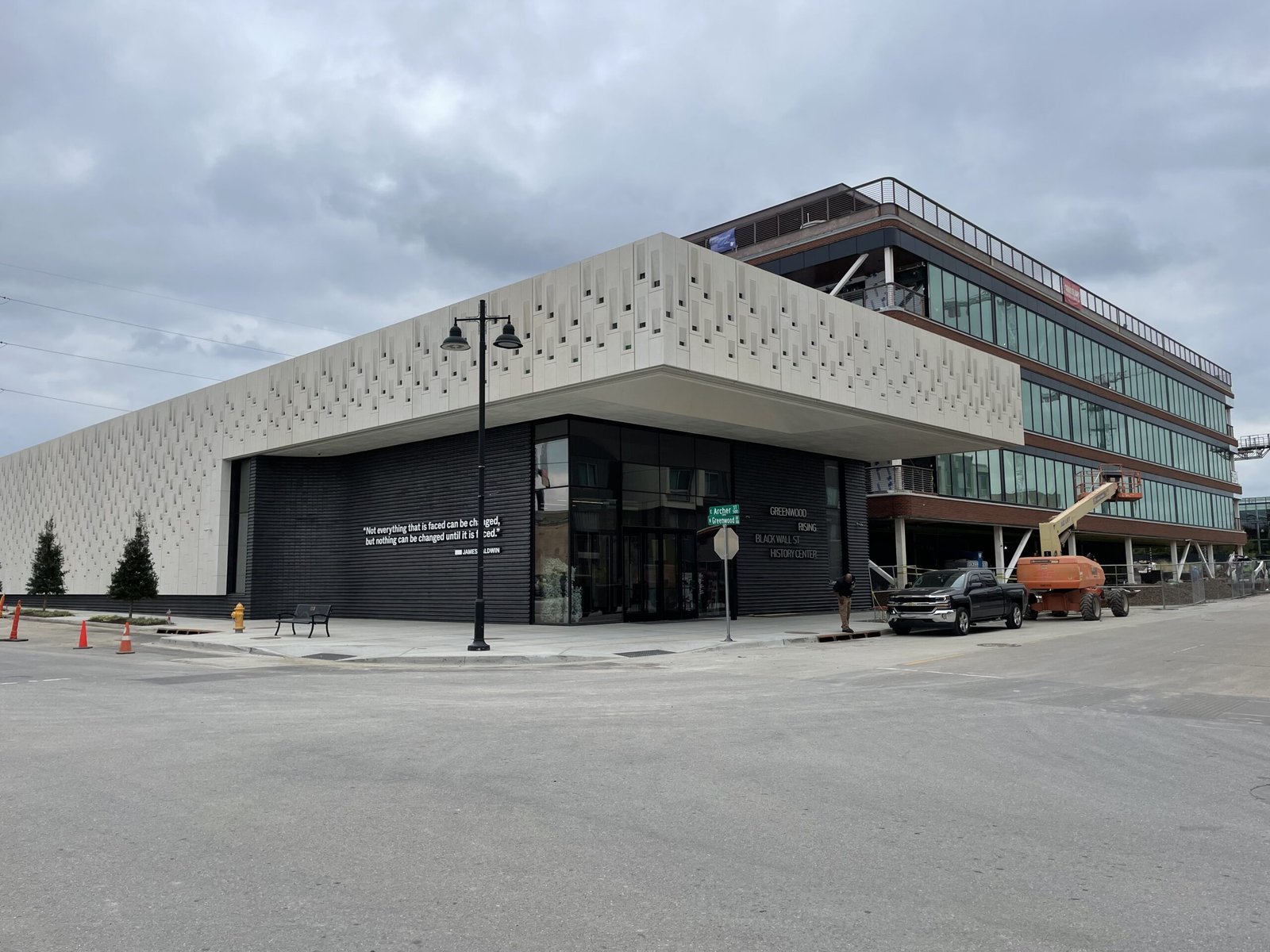
Of all the places to visit in Tulsa, Oklahoma, the Greenwood Rising Museum is the most impressive and impactful. Opening in August of 2021, the museum honors the legacy of Black Wall Street before the 1921 Tulsa Race Massacre.
Until the show Watchmen debuted in 2019 with its opening scene depicting the Tulsa horror, few people knew about this gruesome part of American history. This came on the heels of the massacre’s 100th anniversary, putting these events at the center stage for all to see.
A brief history
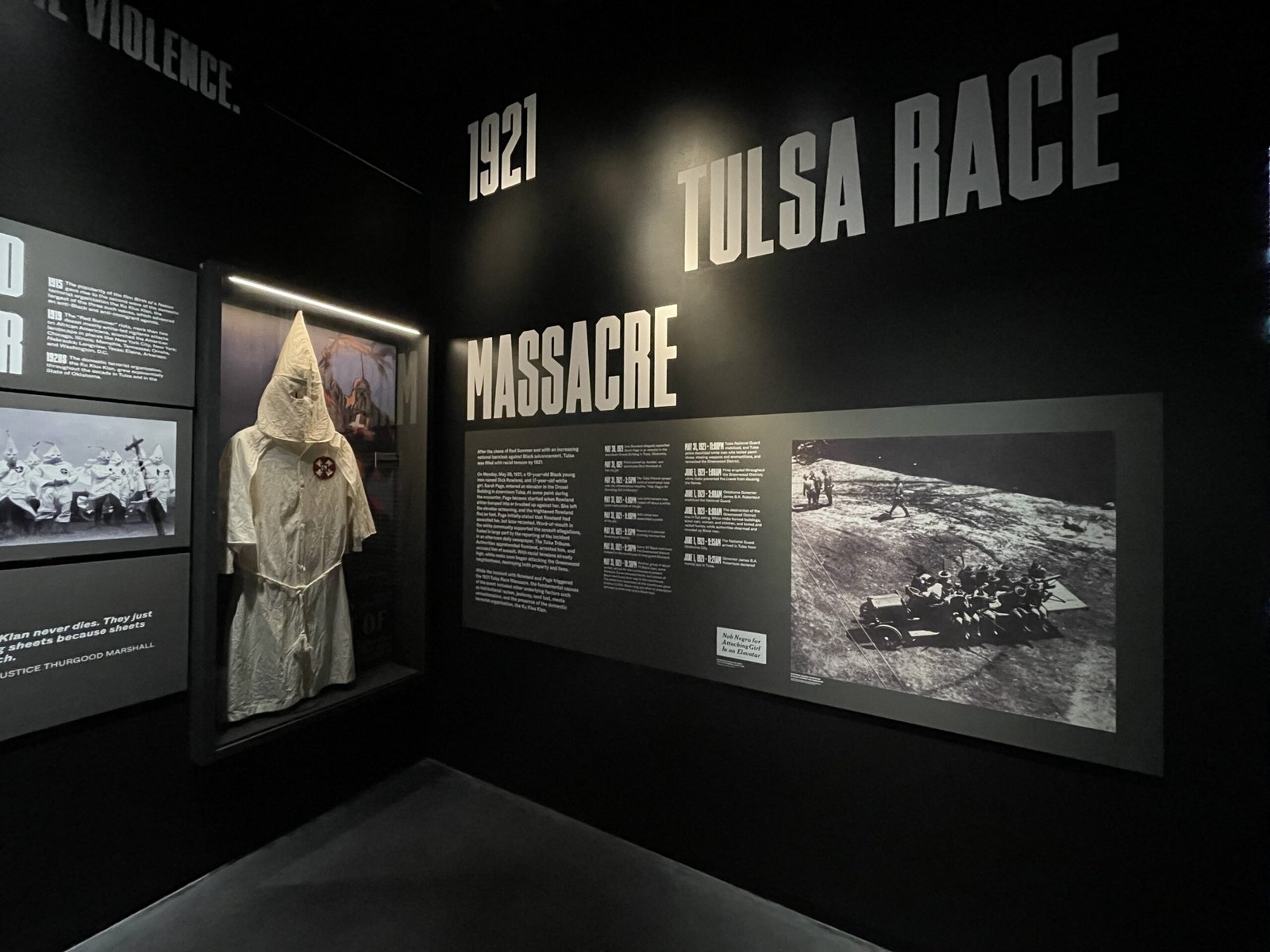
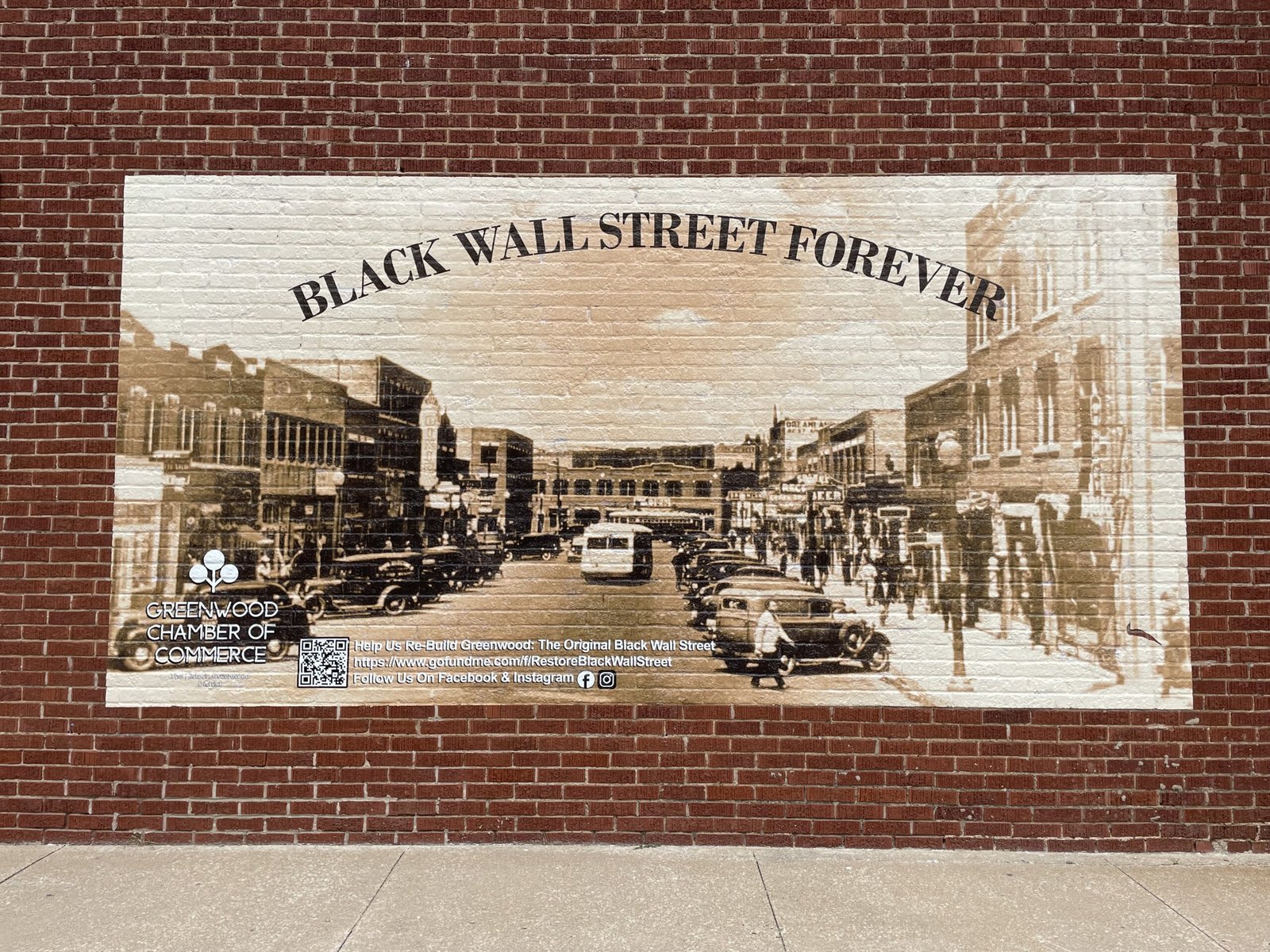
Before 1921, the Greenwood District was an affluent African-American neighborhood. Most commonly referred to as the “Black Wall Street.” The thriving community was home to an abundance of successful black-owned businesses and happy families. On May 31, 1921, the afternoon edition of the Tulsa Tribune reads “Nab Negro for Attacking Girl in an Elevator.”
Named as an assault between a young black male and a white female, a stream of racial violence quickly ensued between both black and white people. Over the next few days, white rioters burned down and looted black businesses and homes, while coinciding airstrikes and on-the-ground rioters killed an estimated 300 people and injured over 800.
The Greenwood Rising Museum not only shares the horrific story of the Tulsa Race Massacre but also highlights the history of the Greenwood District as the Black business mecca that was destroyed by racial injustices. It goes beyond that to show how the events of 1921 were quickly made to be forgotten and not spoken about.
Visiting the Greenwood Rising Museum
Located on the southeast corner of Greenwood and Archer in downtown Tulsa, the Greenwood Rising Museum is now a central focus of the neighborhood and the gateway to Tulsa’s Historic Greenwood District.
The museum does a great job of guiding you room by room, beginning with the history of not just the Greenwood neighborhood but also the oppression of black people in America. It continues to the present day, and efforts are underway toward restorative justice and racial reconciliation.
A walk through time
Upon entering, you are instantly greeted with historic photographs of the Greenwood neighborhood and a video with a voice-over of Maya Angelou reciting the poem, “and still I rise.”
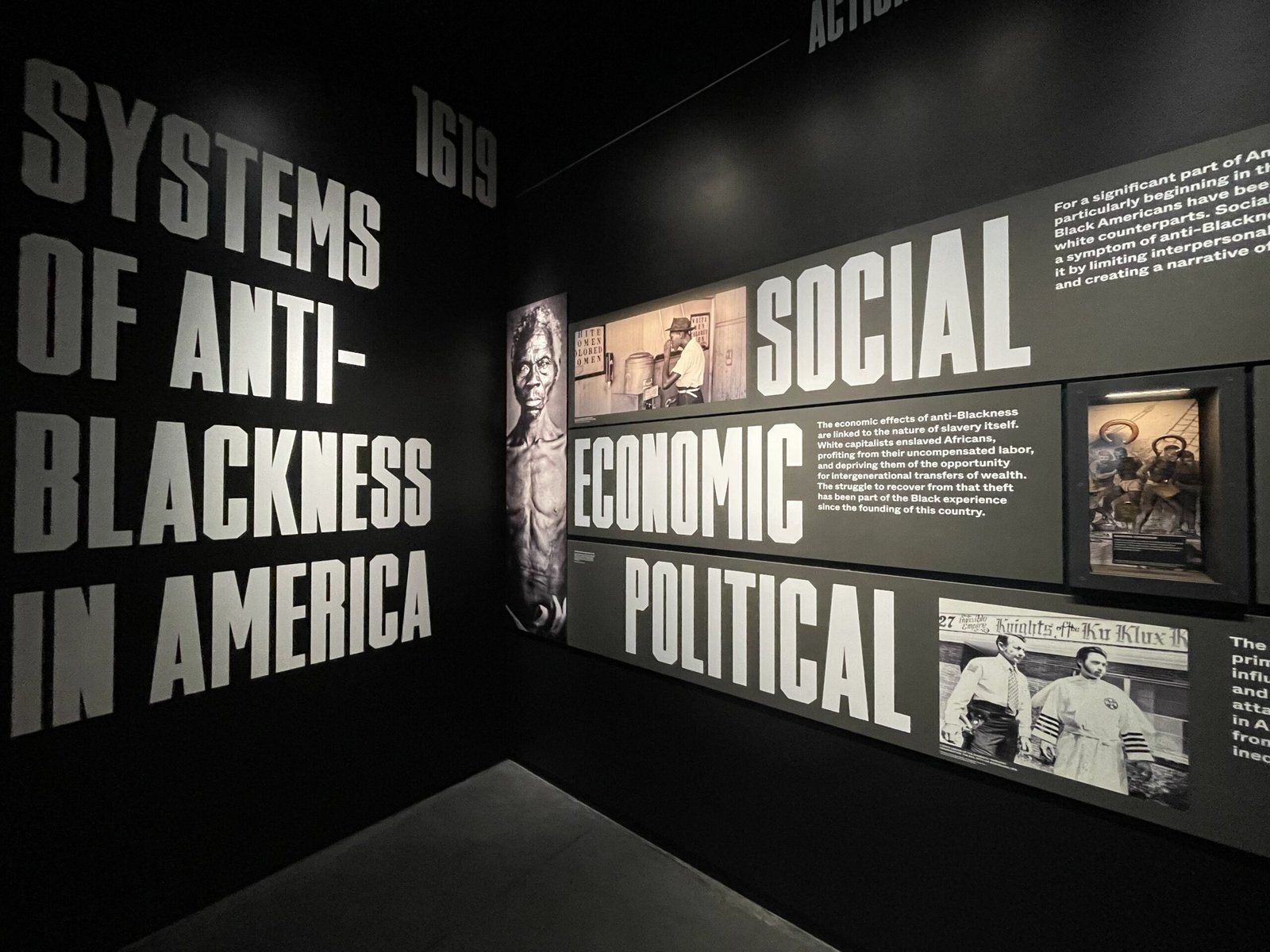
The next room displays the historical timeline of the oppression and suffering of the black people since their enslavement and transportation from Africa to the Americas. They even acknowledge that they were not the first people here in America and that the Native Americans were. Recognizing their struggle and the oppression of their people as well.
Life in Greenwood
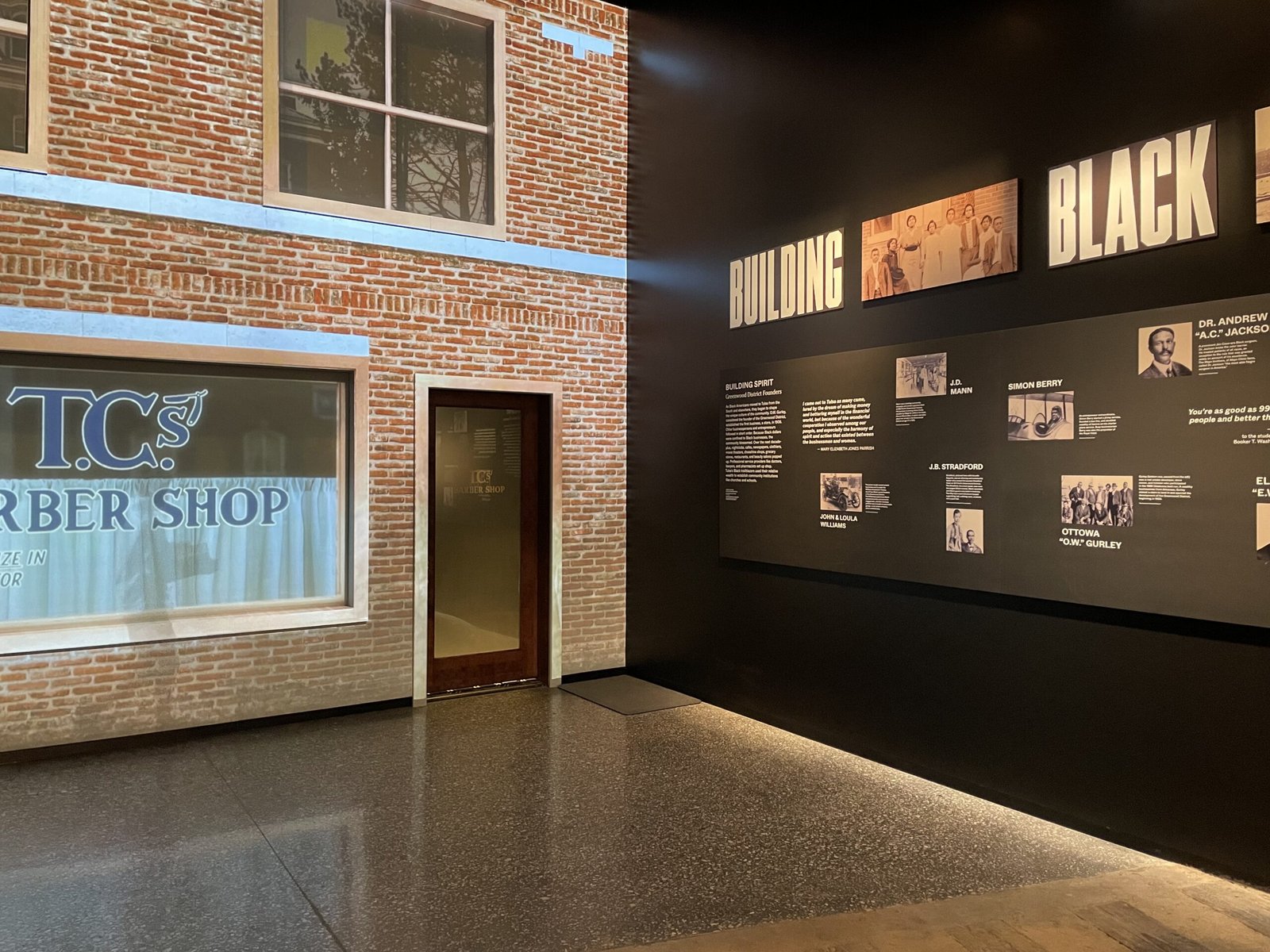
Then you cross the “train tracks” to meet the neighborhood’s founders and learn about Greenwood’s early placemaking and economic rise. A projection-mapped film shows the building of Greenwood brick by brick. Stories of the people behind the neighborhood’s early success are shared through personal stories of entrepreneurship and bringing historic Greenwood to life.
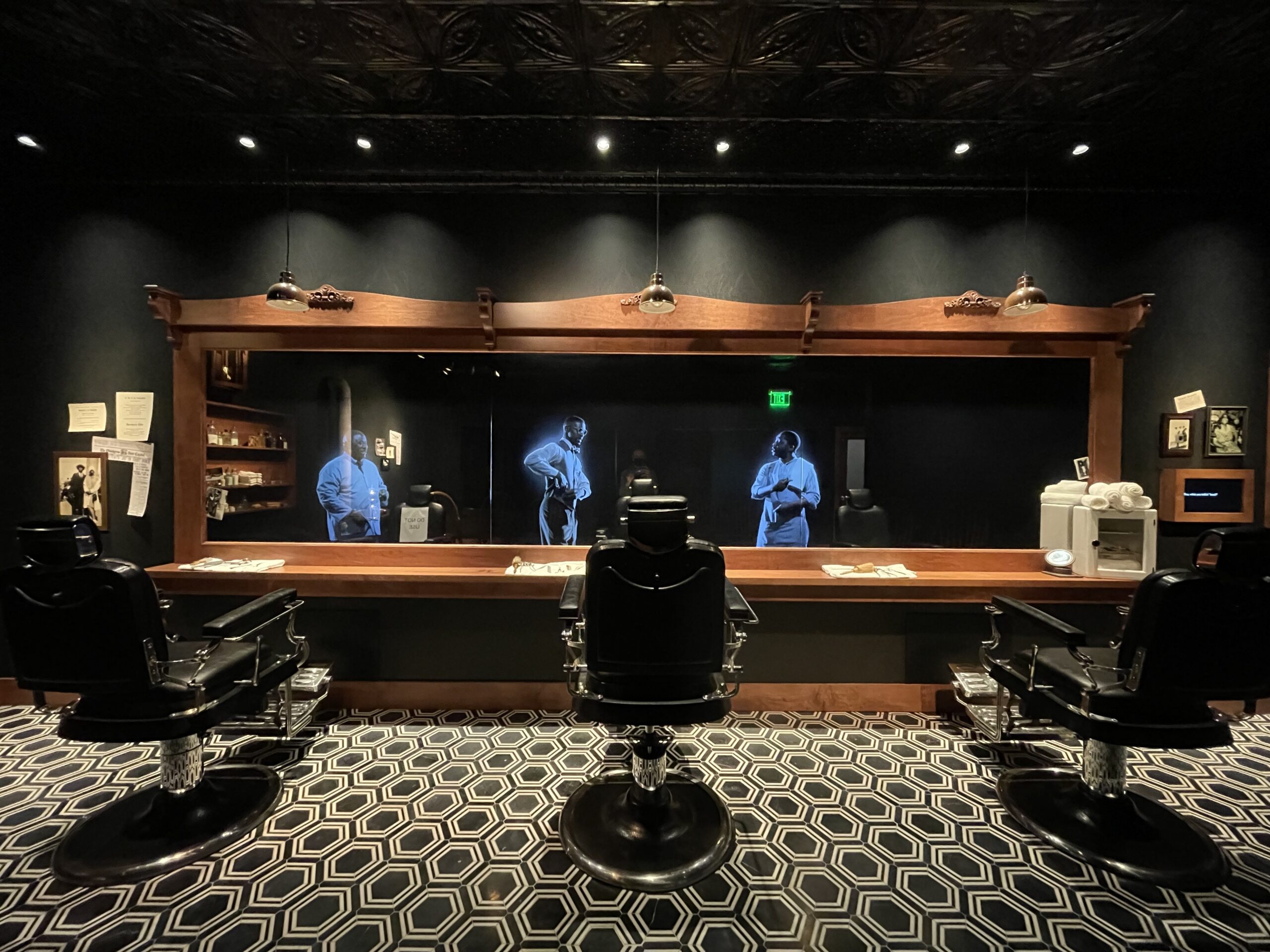
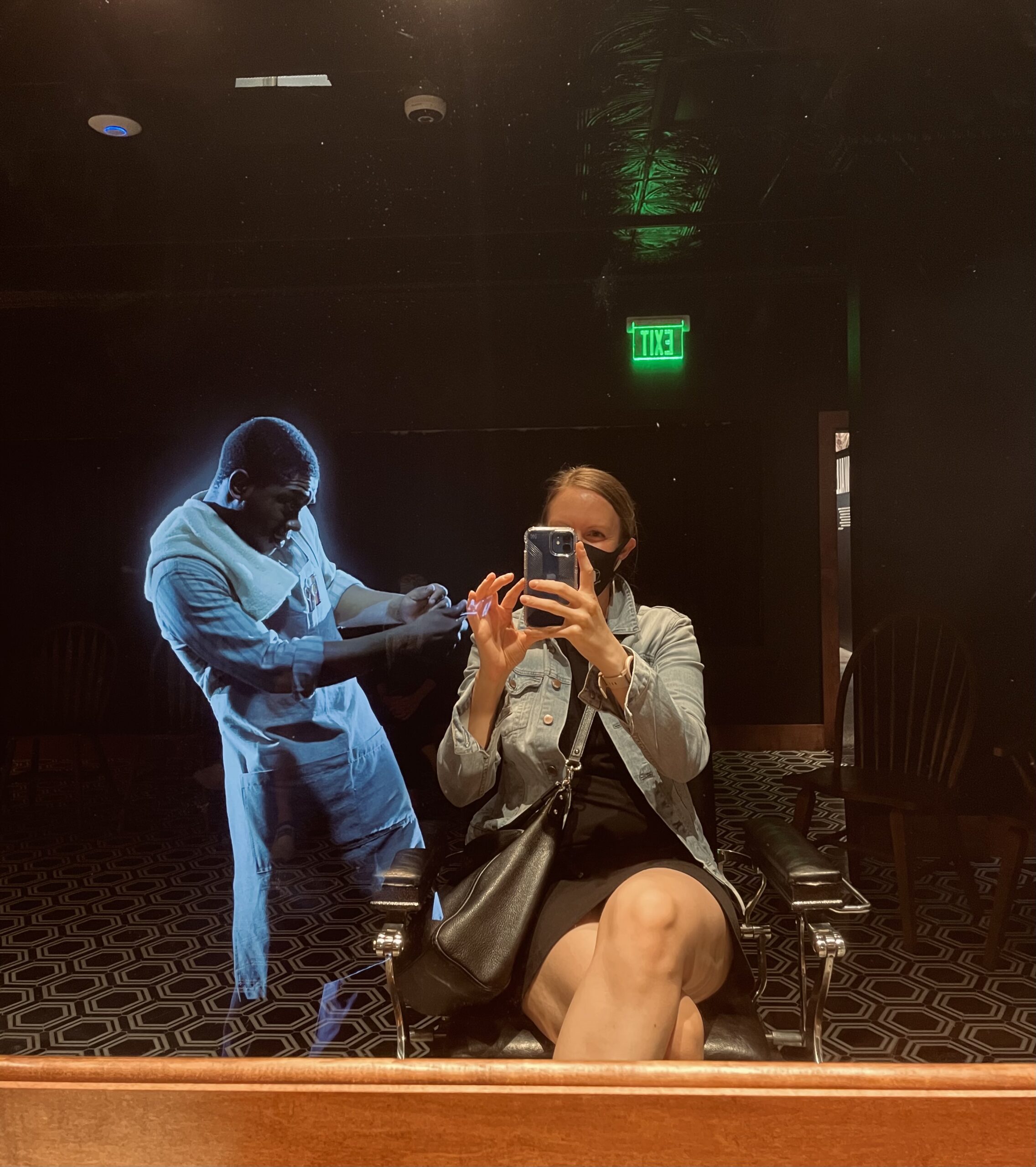
As you continue to move through the space, you are ushered into a holographic experience of a period barbershop that you would have found during the lucrative days of the Greenwood Business District. The interactive experience allows you to sit and be a part of the conversation with the barbers, “shootin’ the shit” and talking about the everyday life of a black person living in Greenwood. This was one of my favorite parts of the entire journey.
Tulsa Race Massacre
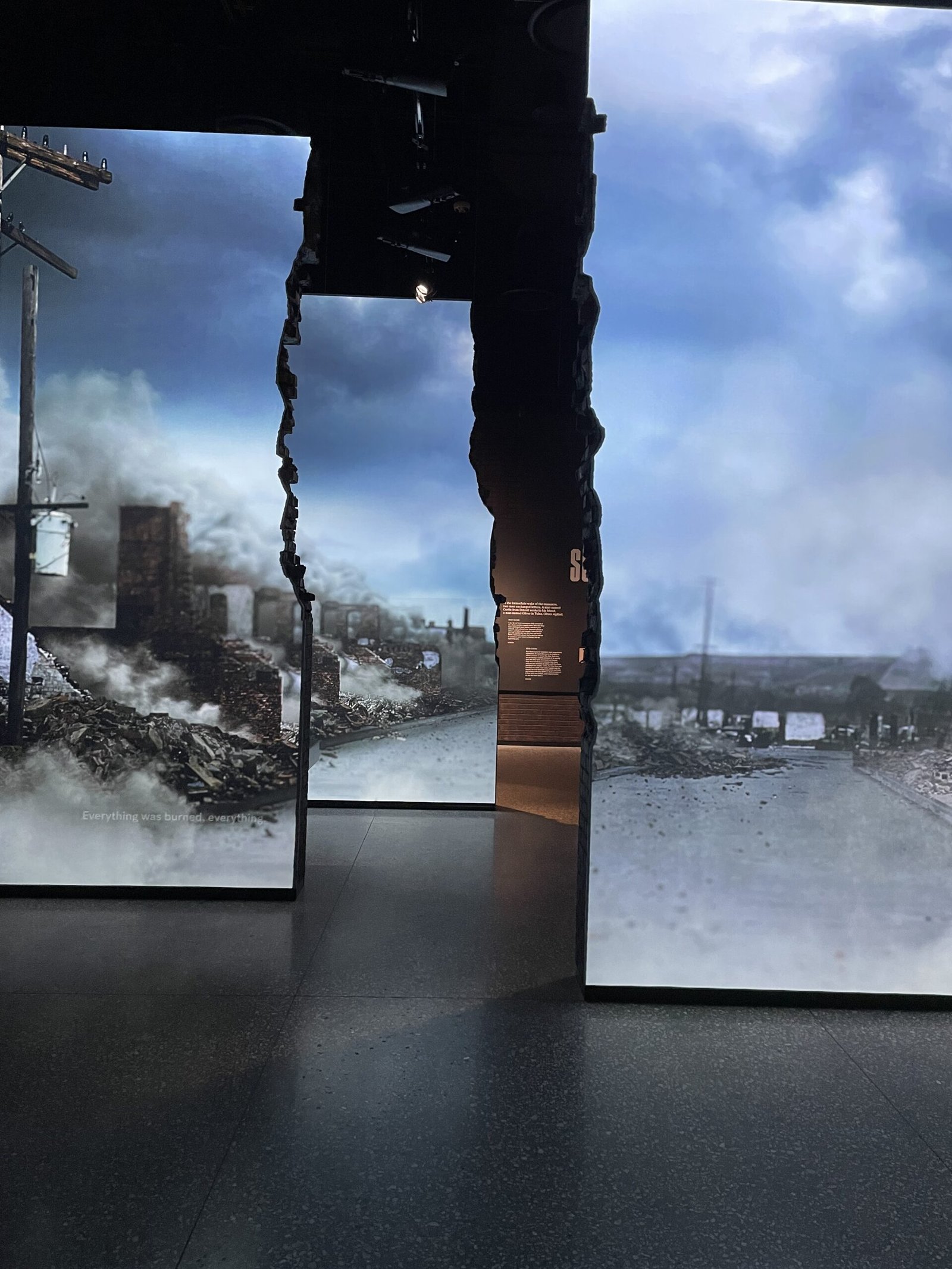
Next, prepare yourself for an immersive experience of the recounting of the race massacre. Multiple scenes are projected onto several floor-to-ceiling panels, showcasing how the event began and what ensued with hour-by-hour accounts.
Various images and voices from survivors’ perspectives recount what happened that first day. As I sat and watched, I remember getting chills and eventually crying. I watched it several times before I got up and left for the next room.
But as soon as you come out of the dark and into the light, you encounter images and artifacts of how Greenwood immediately began to rebuild after the massacre. And despite continued struggles and the silence surrounding the attacks.
A “journey to reconciliation.”
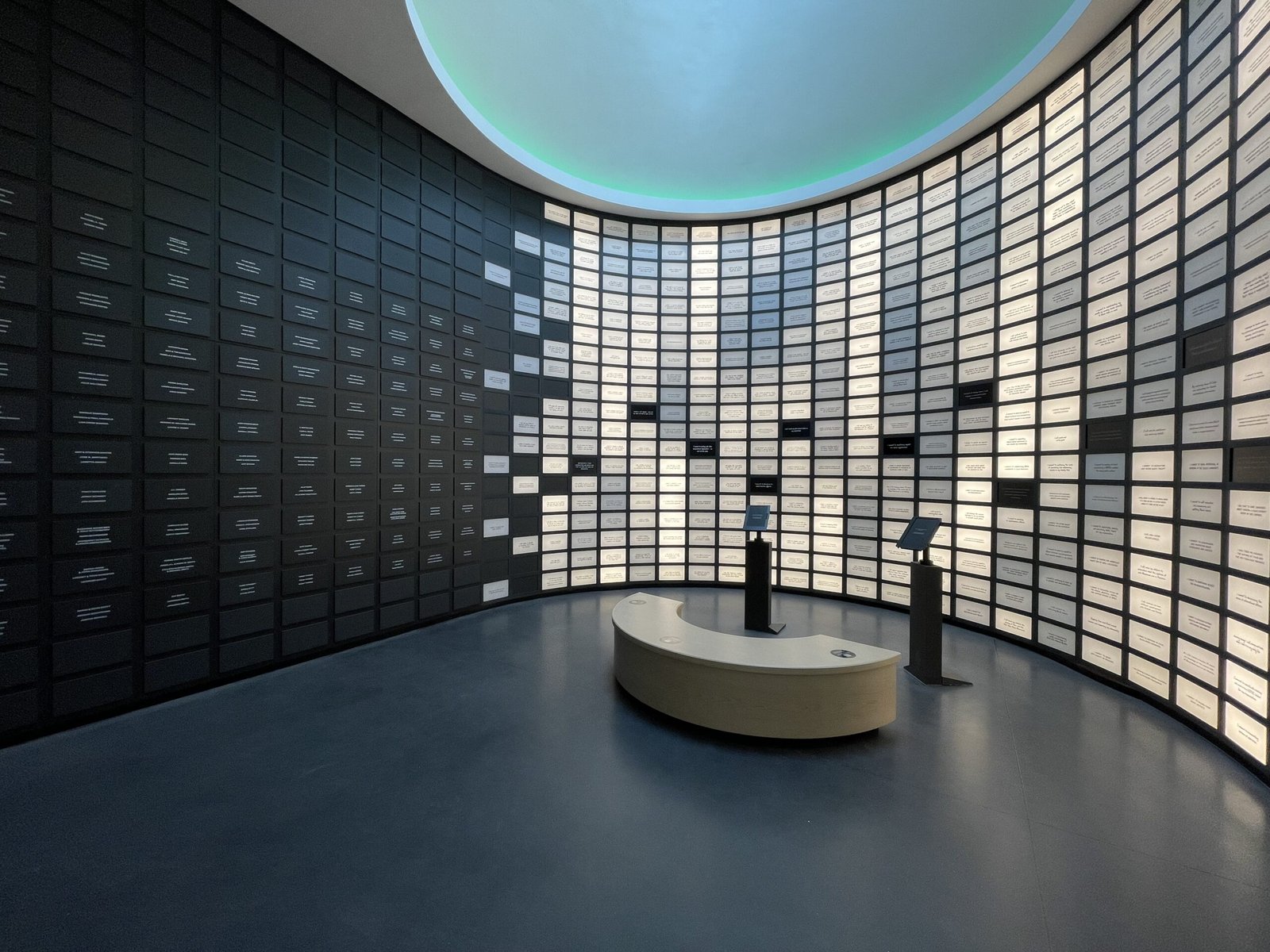
But perhaps the most striking addition to this museum is the last piece of the puzzle. Before you leave, visitors are prompted to make a personal dedication as to how they will commit to making efforts towards racial reconciliation. In addition to your commitment, which you can add to the digital display, you can also see everyone else’s commitments that they have shared. Leaving you with the knowledge that we can all rise together to create real change.
Know before you go:
- Entrance is FREE for the first year they are open until August 2022
- The museum is open six days a week, closed on Tuesdays
- Guided tours are available. You must register in advance online to reserve a spot.
- Website: greenwoodrising.org
*All images by Jessica Hughes.